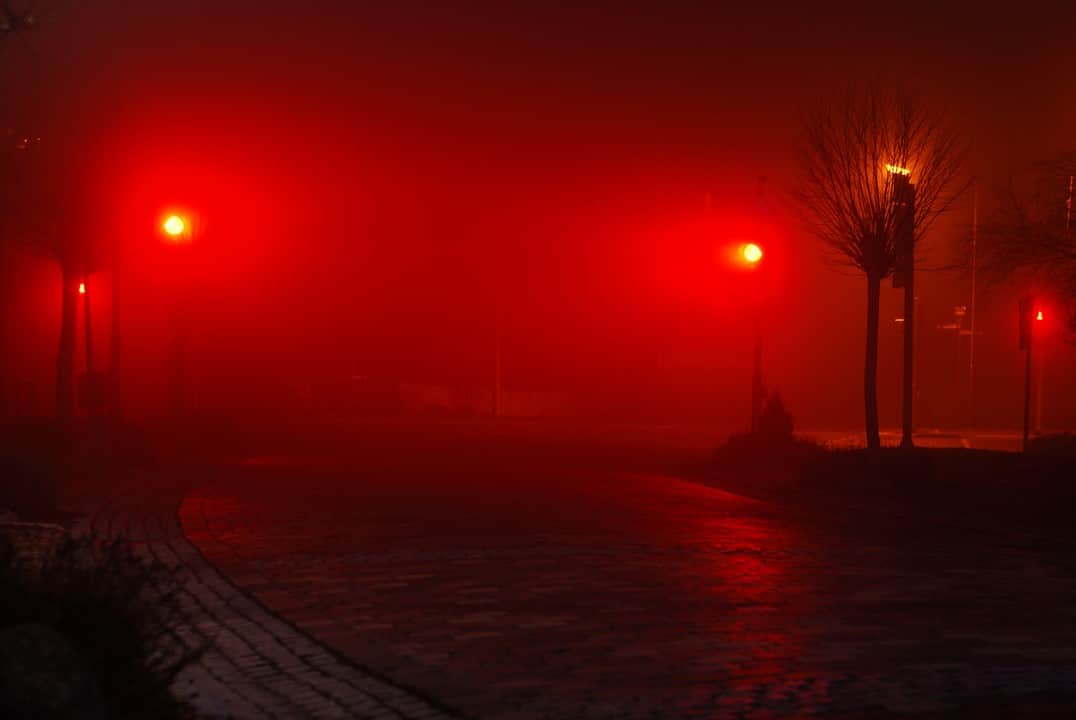
A road on the outskirts of Copenhague has become a living laboratory for environmental conservation. Frederiksborgvej, the main thoroughfare in the municipality of Gladsaxe, had its bluish-white lights replaced by deep red lighting in early February 2026. The change caught the attention of drivers and cyclists, who found an unusual visual landscape against the surrounding urban grid. Não was about decoration. The installation was strategically positioned close to a known bat colony, with the aim of mitigating the impact of artificial light on the local nighttime ecosystem, while maintaining road safety for drivers.
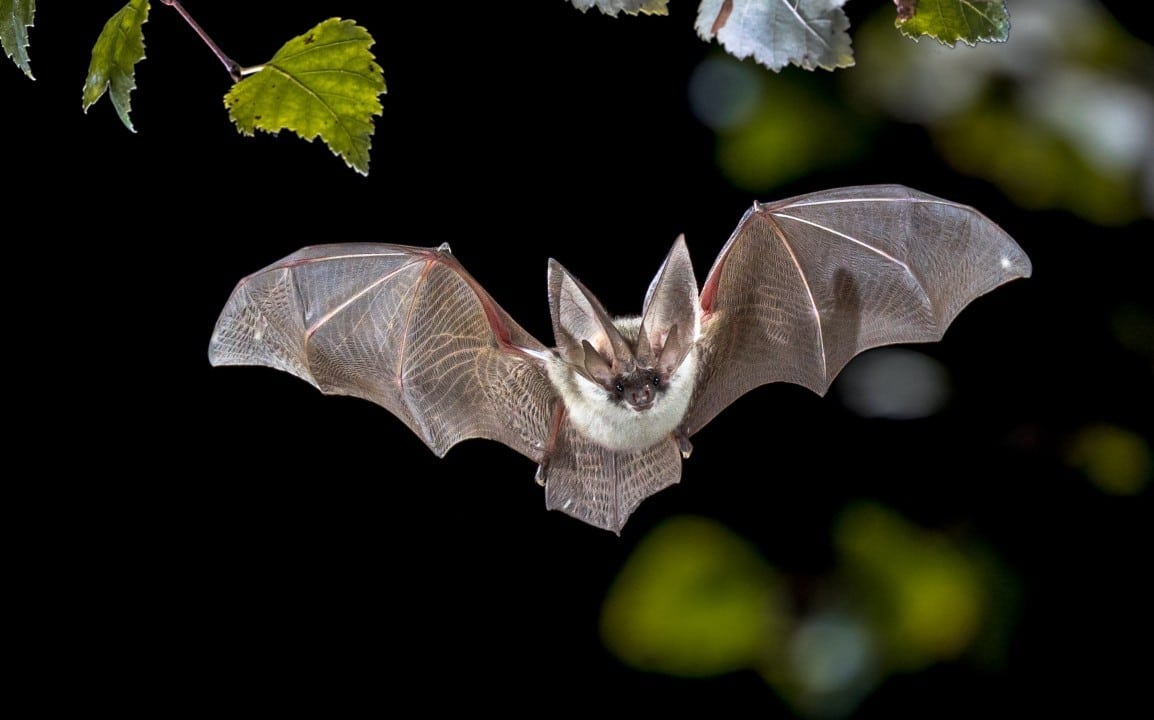
The project identified two species as the main targets of conservation action: the common dwarf bat and the brown long-eared bat. Esses animals rely on dark corridors to navigate between their shelters and feeding areas at night. Quando traditional white light invades these areas, creating light barriers that bats are reluctant to cross, effectively reducing their available habitat.
Scientific Pesquisa supports decision on wavelength
The Danish decision is based on robust evidence from animal ecology. A five-year study coordinated by Instituto of Ecologia of Países Baixos (NIOO-KNAW) and published in Proceedings of the Royal Society B demonstrated that many bat species do not perceive red light as a threat or barrier in the same way that they respond to white or green light. The researchers found that the light-sensitive bats maintained the same level of activity under red lighting as they did in complete darkness. The same research documented a substantial reduction in activity when animals were exposed to white or green light.
Kamiel Spoelstra, lead researcher on the study, said the lack of effect of red light opens up possibilities for limiting the disturbance caused by artificial lighting in natural areas. The researcher highlighted that the light intensity used in the experiment was completely suitable for use on rural roads, making the findings directly applicable to the Gladsaxe project.
Sete bat species were recorded at the site close to Skovbrynet. Nenhuma of these is on threatened species lists, but the common dwarf bat and brown long-eared bat face the greatest risk of negative impact from road operations.
Design technician resolves conflict between infrastructure and habitat
Diretoria Dinamarquesa of Estradas provided technical guidance for the project, focusing on the intersection between human infrastructure and biological hotspots. Light Bureau, a division of the company AFRY, collaborated with the municipality of Gladsaxe to design a solution that simultaneously addresses traffic safety and ecological sensitivity.
The installation uses 30 one-meter-high low lighting arms, spaced 30 meters apart. Esse wide spacing creates dark corridors for light-sensitive animals that move along the ground and require complete darkness to protect themselves from predators. At the same time, it keeps the cycle path sufficiently lit to ensure user safety.
Nos points where cyclists and pedestrians cross the road, the design changes its approach. Doze arms mounted on 3.5 meter high masts emit warm white light. Esse feature signals users that the environment is changing, increasing visibility and safety at critical intersections.
Philip Jelvard, lighting designer at Light Bureau involved in the project, expressed hope that everyone will welcome the new lighting. Conforme Jelvard, the red light not only has functional value, but also carries symbolic value. The different coloring makes pedestrians and drivers realize that they are entering a special natural zone worthy of protection.
Jonas Jørgensen, road engineer from the department of Tráfego and Mobilidade of Gladsaxe, explained the logic behind the municipal decision. Ele stated that the team sought lighting that would affect bats and nature as little as possible, without compromising traffic safety. A complete absence of light would be ideal for bats, he acknowledged, but that would not be feasible. Diante of practical limitations, the red light represented the best solution available for the section of road where the bats live.
Inserção on broader municipal sustainability strategy
The project is part of the Lighting Metropolis – Green Mobility program, financed by União Europeia. The initiative brings together Danish and Swedish cities to test sustainable lighting solutions. The red light installation at Frederiksborgvej serves as a real-world laboratory, providing data on how such changes affect energy consumption and local biodiversity.
Gladsaxe has achieved the status of Município from Objetivo Mundial from Dinamarca, having integrated Objetivos from Desenvolvimento Sustentável from Nações Unidas into its comprehensive strategy. The council’s official biodiversity page features bat-friendly lighting alongside other efforts including preserving veteran trees and introducing natural grazing.
The red LEDs also function as a permanent visual marker of the city’s environmental priorities. The distinctive color alerts drivers that they are entering a sensitive ecological zone, potentially encouraging more cautious driving behaviors in areas where wildlife is active.
Evaluation and future expansion Perspectivas
Light Bureau plans to collaborate with biologists over the next year to assess whether the solution achieved its intended effect. Collecting data on the solution will be key to informing future projects in other urban areas facing similar challenges between human development and animal conservation.
The implementation represents a concrete step in the integration of nature-based solutions within European urban planning. Outras cities face similar problems with habitat fragmentation caused by artificial lighting, but few have tested responses as visible and documented as the Danish initiative.
The project demonstrates how rigorous ecological research can inform public infrastructure decisions. The move also offers an educational model: Drivers passing through the red road receive a silent lesson in the environmental cost of urbanization and the possibilities for creative mitigation.
Outros European municipalities have already expressed interest in replicating or adapting the Danish model. The technical feasibility, relatively modest cost and proven benefits create conditions for expansion. Additional Estudos, as planned by Light Bureau and local partners, will be essential to validate the approach and identify scenarios where red lighting can be implemented with safety equivalent to conventional lighting.