

The sound of a distant horn or the ringing of an everyday alarm represents acute physical pain for those living with hyperhearing. Extreme sensitivity turns the urban environment into a constant auditory minefield. Esse real neurological disorder, however, can reveal sound frequencies that go completely unnoticed by most people. The condition imposes severe social barriers, but creates an absolutely unique and detailed perception of the world.
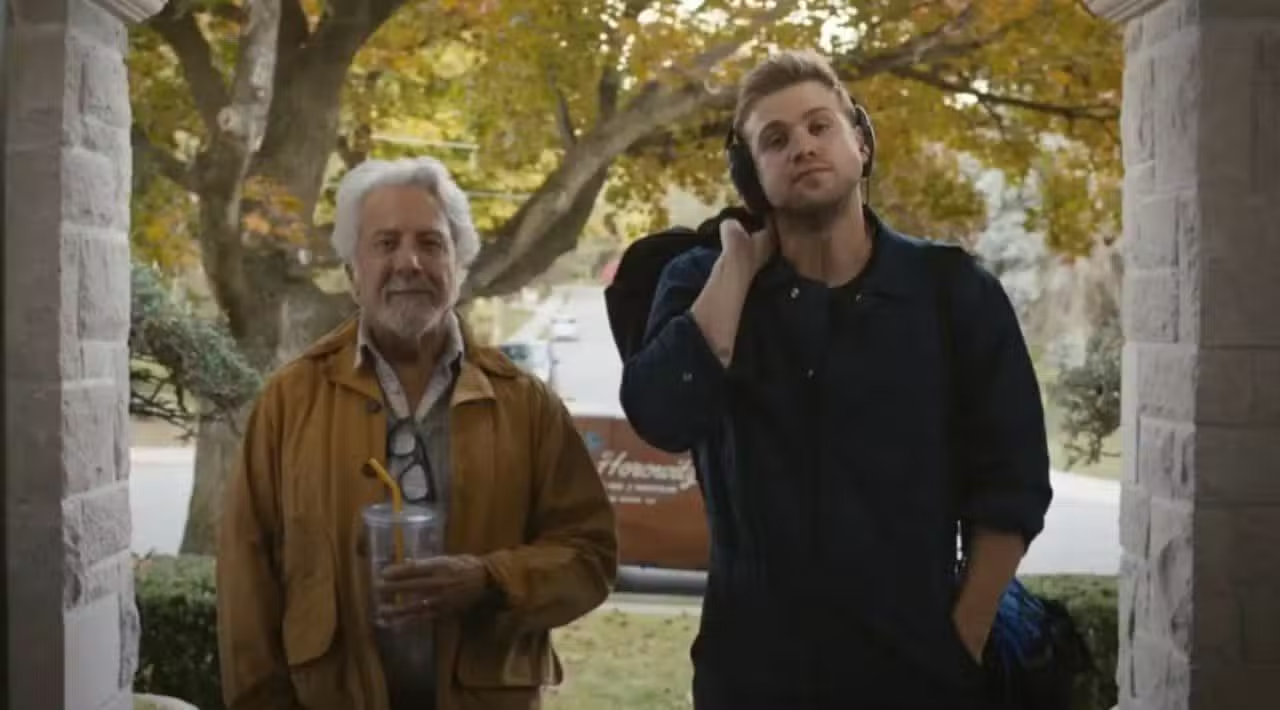
The feature film Tuner explores exactly this paradox by presenting the narrative debut of director Daniel Roher, Oscar winner for the acclaimed documentary Navalny. The work follows the trajectory of Niki, played by British actor Leo Woodall, a young piano tuner who uses his unusual hearing to break into high-security safes. The plot takes on the shape of a criminal thriller when the protagonist tries to save his mentor, the veteran pianist Harry, played by the renowned Dustin Hoffman, from an imminent financial collapse.
Neurological Condição dictates the pace of the criminal narrative
The main character’s routine requires the constant use of noise-cancelling headphones and heavy ear protectors. The physical barrier attempts to block the outside world, but often fails in the face of shrill noises that pierce the blockage and cause immediate distress to the boy. Roher’s direction inverts the traditional hierarchy of the seventh art. The auditory element assumes absolute protagonism in the scene, leaving the visual aspect in the background during the most crucial and tense moments of the story.
Niki’s unique talent ensures his initial livelihood through precise tuning of musical instruments alongside Harry. Honest and methodical work sustains the duo until the older musician’s financial obligations get completely out of control. The urgent need for quick money forces young people to test the limits of their hearing capacity in an illicit and highly profitable activity. Ele discovers that the internal mechanisms of security locks emit telltale clicks only to his trained ears.
Dívidas boosts entry into the robbery underworld
The definitive transition from legitimate work to crime occurs after a chance encounter with Uri, an intimidating character played by Lior Raz. The shady businessman identifies the tuner’s potential and convinces him to carry out small thefts against specific targets. The initial justification focuses on victims who supposedly have excessive financial resources, creating a false morality for the acts. The scheme grows quickly and attracts the attention of dangerous underworld figures.
The psychological pressure on the protagonist increases exponentially with each successfully opened safe. Uri demands increasingly audacious and risky operations, completely ignoring the young burglar’s evident reluctance to continue with the scheme. The power dynamics set up a scenario of increasing tension that threatens to destroy Niki’s double life.
- The constant intimidation exercised by Uri and his violent nephews during the results collection.
- The urgent need to pay off the debts accumulated by Harry with dangerous creditors.
- The imminent risk to the physical safety of his girlfriend Ruthie if he decides to abandon the robberies.
The original script, written in partnership by Roher and Robert Ramsey, draws on well-known narratives about ordinary citizens drawn into illegality. The structure of the work evokes the atmosphere of acclaimed productions such as the Breaking Bad series, although it maintains a more contained scale of violence and focused on psychological suspense. The dark tone also refers to the contemporary noir style seen in the film Drive. Niki perfectly embodies the archetype of the antihero cornered by his own choices and the greed of others.
Atuação drama moves protagonist away from romantic stereotype
The lead role requires a dramatic and significant transformation from Leo Woodall, an actor recently known for his roles in successful romances on television and film. The artist delivers a dense and introspective performance, far from the light heartthrob image that marked his previous works. Ele builds a conflicted character, who listens carefully to his mentor’s advice while dealing with the panic of Uri’s threatening calls. The Brit’s body language reflects the weight of hyperhearing in every cautious movement.
The film’s emotional dynamics gain genuine strength in the silent interactions between Niki and Ruthie, a music composition student played by Havana Rose Liu. The young woman’s constant presence softens the safecracker’s hardened and defensive posture. The relationship develops through subtleties, restrained gestures and deep looks, without the need for big dramatic explosions. The actress also adapts her character’s initial determination to build a believable and delicate budding romance on camera.
Hearing Construção takes on the role of main character
The production’s greatest technical difference lies in the meticulous work of the sound designer Johnnie Burn, a professional also awarded the Oscar statuette. The audio team recreates the protagonist’s sensory world through an immersive and detailed soundscape. The metallic sounds echo and resonate throughout the screening room in the same way that they penetrate Niki’s troubled mind during the robberies. The rigorous technical approach moves the work away from conventional criminal thrillers found on the market.
The immersive soundtrack composed by Will Bates complements the atmosphere of constant tension with jazz-oriented piano numbers and classical songs. Greg O’Bryant’s precise editing dictates the rhythm of the narrative by interspersing moments of the couple’s intimacy with frantic sequences of successful robberies. The agile montages convey the false sense of euphoria that precedes the anti-hero’s inevitable downfall on his criminal journey. The song acts as an ironic counterpoint to the illegal actions shown on screen.
Sound design transcends the function of mere technical adornment to structure the viewer’s own emotional and physical experience. The seamless convergence of advanced audio technology and visual storytelling creates a direct and lasting impact on those who watch Niki’s journey. Daniel Roher’s bold creative choice proves that the absence of clear vision can be replaced by the precision of hearing in building an efficient suspense. The film establishes its own unmistakable identity by transforming a severe physical limitation into the main driving force of its criminal plot.