

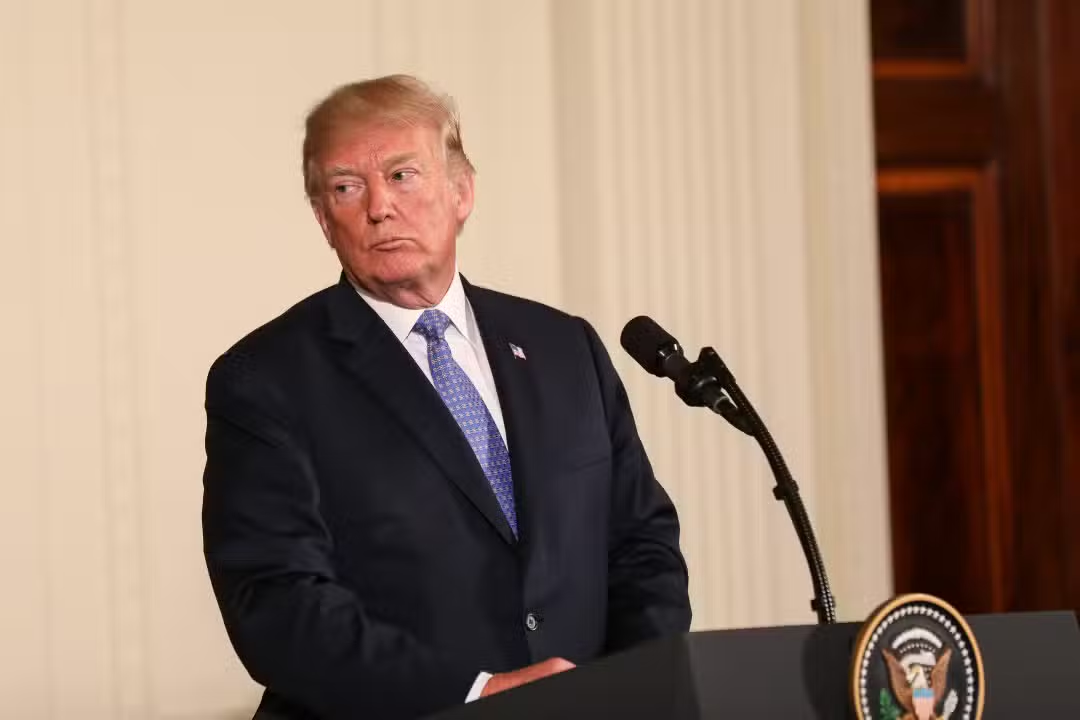
President Donald Trump stated that he is “concerned” about the Ebola outbreak that is rapidly spreading in República Democrática of Congo, which has already resulted in hundreds of suspected cases and the evacuation of an American patient infected by the Bundibugyo strain, for which there is no vaccine or approved treatment.
Situação current outbreak on África Central
Identificado by Organização Mundial by Saúde on May 5, the outbreak records alarming numbers. Até May 19, Ministério of Saúde of República Democrática of Congo counted more than 500 suspected cases and 130 suspicious deaths. The WHO has confirmed just over 30 cases, but acknowledges that the real number of infections is likely higher. Authorities point out that the epidemic occurs in a complex context, marked by insecurity, population displacement and densely populated areas in remote regions, which makes controlling the spread difficult.
Trump commented on the topic when speaking to reporters at an event at Casa Branca on Monday. “I’m worried about everything, for sure,” he said when asked if Americans should be worried about the disease. “For now it is confined to África. But it is something that has had an outbreak”, added the president.

Medidas protection and evacuation of Americans
Segundo to Dra. Heidi Overton, deputy director of Conselho of Política Interna of Casa Branca, no cases of Ebola have been confirmed in Estados Unidos. An American missionary who tested positive for the Bundibugyo virus will be evacuated to Alemanha to receive medical treatment. Seis other Americans considered “high risk” will also be evacuated to the same country.
U.S. authorities have implemented travel and entry restrictions for non-citizens who have recently been to Uganda, República Democrática of Congo, and Sudão of Sul. The measures reflect the government’s effort to contain the possible spread of the virus in the United States.
Resposta international and emergency classification
The WHO declared the outbreak a “public health emergency of international concern” on May 17, a nomenclature used for serious, sudden and unusual health events that pose an international risk. Contudo, the organization stated that the outbreak does not yet meet the criteria for a global pandemic emergency.
Tedros Adhanom Ghebreyesus, Diretor-General of WHO, expressed deep concern during Saúde’s 79th Assembleia Mundial. “I am deeply concerned about the scale and speed of the epidemic,” he declared. The WHO representative at República Democrática of Congo, Dra. Anne Ancia, also called the situation “deeply concerning” in a statement released on Tuesday.
Características from Bundibugyo virus
The strain responsible for the current outbreak presents significant challenges to combating the disease. Conforme alerted Dra. Anne Ancia, there is no licensed vaccine or treatment for the Bundibugyo virus, although supportive treatment is vital for infected patients. Available treatment is limited to intensive care measures and replacement of body fluids.
The authorities list the main actions taken so far:
- Evacuação of Americans infected or at risk for Alemanha
- Implementação travel restrictions for citizens of Uganda, República Democrática of Congo and Sudão of Sul
- Monitoramento intensive on Estados Unidos input ports
- Declaração public health emergency of international concern by WHO
- Epidemiological Vigilância in neighboring countries
Risco reduced to Estados Unidos
Apesar of the severity of the outbreak at África Central, US authorities maintain that the risk at Estados Unidos remains low. The Dra. Heidi Overton reaffirmed that no cases have been confirmed in the country so far. Geographic distance, travel restrictions and airport detection protocols act as barriers against the importation of the virus.
The outbreak comes against the backdrop of growing criticism directed at the Trump government’s withdrawal from broader public health initiatives and the international organization, where it previously played a key role in surveillance of emerging outbreaks.