

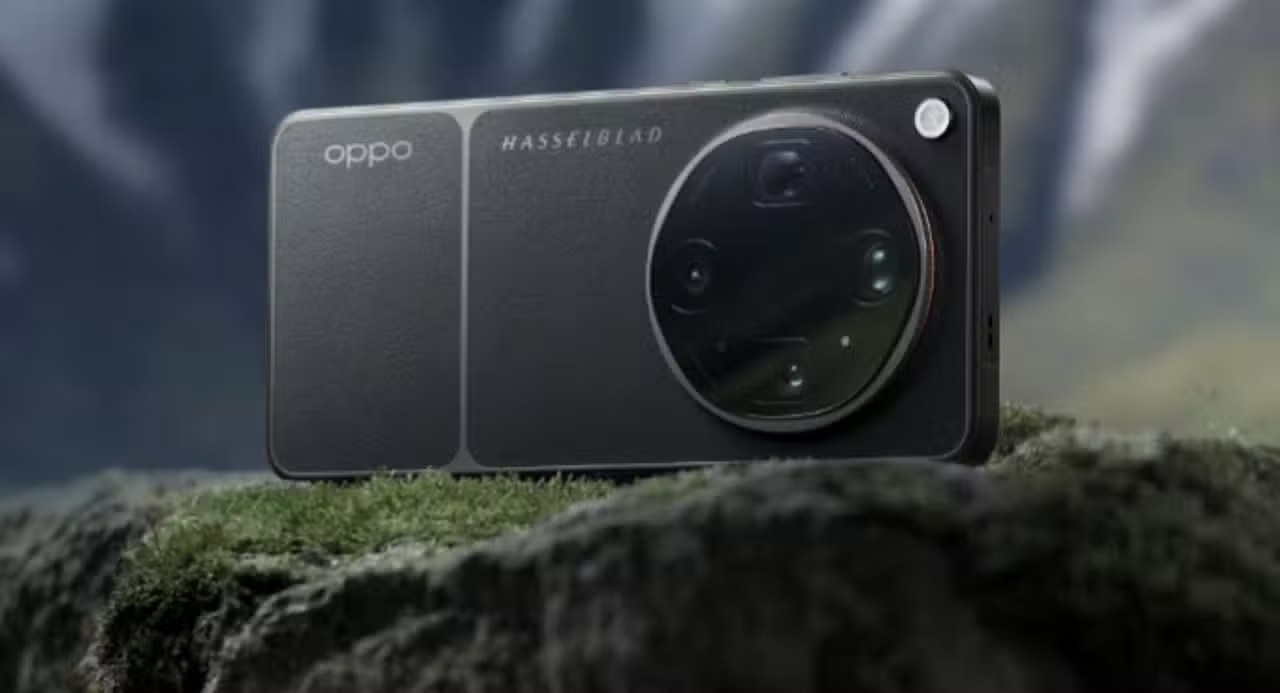
The Asian manufacturer is preparing the arrival of the OPPO Find X9 Ultra to the global market with an absolute focus on photographic quality and hardware innovation. The new high-end smartphone integrates the advanced Hasselblad Master Mode, designed to deliver professional-level results directly from the mobile device. The revelation of technical details takes place on the eve of the official launch event. The company’s strategy aims to consolidate its position among the leading brands in the premium appliance segment.
The device promises to transform the image capture experience by supporting high-resolution formats and offering a wide range of integrated focal lengths. Além of the robust optical set, the internal hardware features state-of-the-art components to ensure fast processing, system fluidity and energy efficiency. Especialistas from the technology sector follows the innovations presented, which should dictate the main trends in the smartphone market throughout 2026.
https://twitter.com/tonariniwa/status/2043916603277095147?ref_src=twsrc%5Etfw
Inovações photographs with the signature Hasselblad
The main upgrade in imaging software lies in the new generation of Hasselblad Master Mode. The system now natively supports RAW MAX and JPG MAX formats. Essas extensions allow photographers to extract maximum detail from each scene without destructive compression. The dynamic range reaches the 16 EV mark. Esse high number facilitates information retrieval in areas of deep shadow or bright light.
The versatility of the lenses covers focal lengths ranging from 14 mm on the ultrawide camera to 230 mm on the 10x optical zoom telephoto lens. The native application also incorporates exclusive filters inspired by classic film films and analog photography. Opções, known as Portra, 800T and TX400, apply a specific aesthetic without the need for editing in external programs. The XPAN format, known for its cinematic panoramic proportions, returns to please wider framing enthusiasts.
Artificial intelligence plays a key role in personalizing the user experience in this new photography ecosystem. The system allows you to save up to 20 predefined configurations with the help of algorithms that analyze the environment. Essa functionality optimizes the workflow of professionals who frequently shoot under similar lighting conditions. Complete manual control over essential parameters such as exposure, shutter speed and white balance remains intact and accessible for those who demand precision in image composition.
Conjunto high-resolution optics and advanced sensors
The architecture of the rear cameras of the OPPO Find X9 Ultra stands out for its choice of photographic components. The main lens uses the 200 MP Sony LYTIA 901 sensor, equipped with f/1.5 aperture and optical image stabilization. Esse set ensures clear photos even in low-light environments. The ultrawide camera adopts the 50 MP Sony LYTIA 600 sensor to capture expansive landscapes with minimal distortion at the edges of the photograph.
The optical zoom system represents one of the biggest differentiators of the mobile device in this generation. The manufacturer implemented two different periscope modules to cover different approach needs during recording.
- Main Sensor 200 MP Sony LYTIA 901 with advanced stabilization for night photos.
- Lente ultrawide with 50 MP Sony LYTIA 600 sensor for wide angles and architecture.
- Primeiro periscope with 200 MP OmniVision OV52A sensor focused on 3x optical zoom.
- Segundo periscope with 50 MP Samsung ISOCELL JNL sensor for 10x optical zoom.
- Câmera front 50 MP optimized for portraits and high definition video calls.
The combination of these four rear sensors creates a photographic ecosystem capable of offering multiple perspectives. The transition between lenses occurs fluidly during video recording, maintaining color consistency calibrated by the partnership with the Swedish brand specializing in studio equipment.
Desempenho hardware and battery capacity
The smartphone’s processing power is guaranteed by the Snapdragon 8 Elite Gen 5 Qualcomm chip. Esse processor delivers speed to run video editing applications and games with complex three-dimensional graphics. RAM memory can be configured with up to 16 GB, ensuring continuous multitasking. Internal storage reaches 1 TB, space designed to store large files and videos recorded in high resolution.
The approximately 6.8-inch OLED screen offers an immersive visual experience with 2K resolution. The 144 Hz refresh rate delivers smooth animations, fluid interface transitions, and instant touch responses. The panel reproduces accurate colors and deep contrasts, essential features for those who edit images directly on their cell phones. The display’s color calibration follows the standards required by the audiovisual industry.
Energy autonomy appears as another central point in the device’s engineering design. The device houses a 7,050 mAh battery, designed to withstand long periods of continuous camera use. The fast charging system supports 100 W via cable and 50 W wirelessly. The physical durability of the device is attested by IP68, IP69 and IP69K certifications, which guarantee resistance against submerged water and dust jets.
Expectativas for global release and software
The Android 16 operating system runs out of the box under the customized ColorOS 16 interface, developed by the manufacturer itself. The new version of the software brings refined animations, improved security features and greater integration with artificial intelligence tools. The device’s connectivity includes full support for 5G networks, the Wi-Fi 7 standard for fast downloads, Bluetooth 6.0 and NFC technology for contactless payments.
The official presentation event is scheduled for Tuesday, April 21st. Durante ceremony, company executives will reveal the suggested prices for each variant and the availability schedule on different continents. The Brazilian market awaits the arrival of the model, considering that the previous generation was sold in the country. The premium design, with its circular camera module, reinforces the visual identity of a product aimed at consumers looking for advanced photography features.