

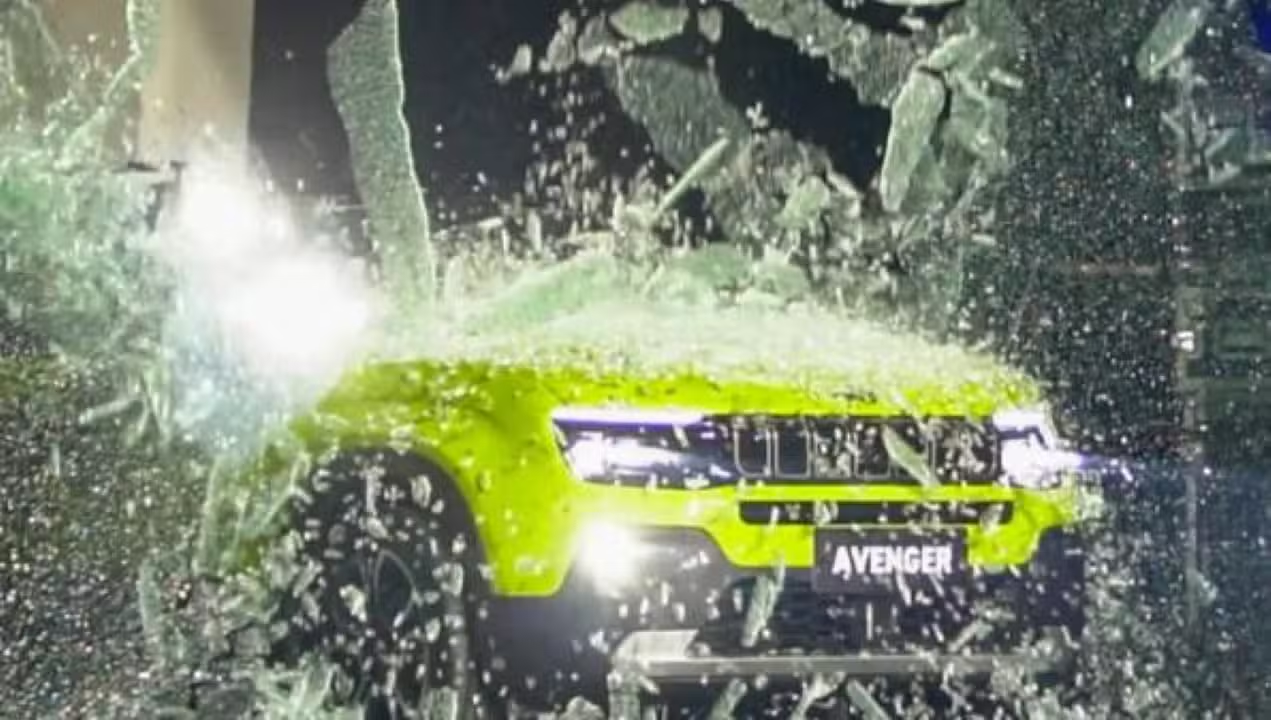
North American automaker Jeep prepares the introduction of the Renegade 2026 line with profound mechanical and visual updates for the global automotive market. The compact sports utility vehicle receives an unprecedented 1.2-liter gasoline engine, associated with a six-speed manual transmission. The configuration seeks to attract consumers interested in greater dynamic control and energy efficiency in daily use. The vehicle preserves the brand’s classic identity while adopting contemporary driver assistance technologies.
The structural changes accompany an aesthetic review focused on the front of the car and the modernization of the cabin. The manufacturer is betting on diversifying its engine portfolio to maintain the model’s competitiveness in the fierce compact SUV segment. The official schedule foresees the start of sales throughout the year, with pricing strategies and equipment packages defined according to the specific demands of each commercial region.

Desempenho mechanical and consumption efficiency
The newly developed powertrain delivers 100 horsepower at 5,500 revolutions per minute. Maximum torque reaches 205 Nm from 1,750 revs. The calibration of the three-cylinder engine prioritizes agile responses at low speeds, a fundamental characteristic for intense urban traffic. The six-speed manual gearbox allows the driver to explore the ideal torque range in different topographical scenarios. The utility accelerates from zero to 100 km/h in 10.6 seconds.
Official fuel consumption rates indicate averages between 5.7 and 5.9 liters for every 100 kilometers traveled in the combined cycle. The thermal efficiency of the new 1.2 turbo block directly contributes to reducing the owner’s operating costs. The rear cargo compartment offers 380 liters of volumetric capacity, ensuring adequate space for luggage for small families. The suspension keeps the setup focused on comfort without compromising directional stability on highways.
Atualizações aesthetics and body dimensions
The design team implemented specific modifications to the vehicle’s front section to convey a more imposing stance on the streets. The bumper features redesigned lines that expand the car’s sense of width. The traditional grille with seven vertical slots remains the central element of the Jeep’s visual identity. The main headlights adopt state-of-the-art LED technology with a reworked internal light signature. Enhanced lighting increases safety during night travel and in adverse weather conditions.
The side profile retains the square wheel arches and high beltline that have characterized the original design since its launch. The rear features discreet interventions, focused on updating the internal arrangements of the lights. The external architecture maintains the exact proportions of the previous generation to preserve agility in parking maneuvers. The total length measures 4.08 meters. The width reaches 1.77 meters. The height is established at 1.53 meters.
- Para-front shock with design focused on visual robustness
- Grade classic seven-slot integrated into new headlights
- Conjunto LED optical with unique light signature
- Manutenção of compact measurements to facilitate urban use
The compact dimensions represent a strategic asset for the model in metropolises with reduced circulation spaces. The ground clearance allows you to overcome common urban obstacles, such as ditches and speed bumps, without scraping the underside of the body. The exterior color catalog should receive new metallic and pearlescent paint options to accompany the visual renewal of the line.
Modernização cabin and technology package
The internal environment underwent a careful review in the choice of covering materials and the assembly of panels. Soft-touch plastics replace hard components in areas frequently touched by occupants. The multimedia center now floats in the center of the dashboard with a 10.3-inch touchscreen. The entertainment system’s processor responds faster to user commands. The graphical interface makes it easy to access climate controls and satellite navigation.
Active safety received special attention from engineers during the development of this mid-life update. The mid-range and top-of-the-line versions incorporate an expanded driving assistance package. Radars and cameras monitor the vehicle’s perimeter to warn of the risk of frontal collisions and unintentional lane departures. Adaptive cruise control automatically adjusts your speed in relation to traffic ahead. Autonomous emergency braking acts to mitigate damage in the event of driver distraction.
The configurable digital instrument cluster displays vital engine operating information and on-board computer data in high resolution. The front seats have variable density foam to reduce fatigue on long journeys. The cabin’s acoustic insulation received additional sound-absorbing blankets on the doors and floor. The silence on board enhances the listening experience of the premium sound system offered in the more expensive configurations.
Eletrificação and propulsion alternatives
The sports utility vehicle’s mechanical strategy goes beyond the traditional combustion engine to comply with strict environmental legislation. The catalog includes a 48-volt mild hybrid system associated with the 1.2 turbo engine. A small electric motor provides additional power during initial acceleration and allows the combustion engine to be switched off at cruising speeds. The e-hybrid variant raises the performance bar with calibrations that extract up to 145 combined horsepower.
Consumers focused on zero emissions will find the 4xe configuration the most advanced technological solution in the range. The fully electric model uses a motor positioned on the rear axle to guarantee all-wheel drive on demand. The lithium-ion battery pack has 54 kWh of energy storage capacity. The approved range reaches 400 kilometers in the rigorous European WLTP cycle. Recharging can be carried out at fast direct current stations or wallbox-type residential chargers.
The multitude of mechanical options positions the product as a versatile alternative to direct competitors of Asian and European origin. The automotive industry’s energy transition requires flexibility from automakers to serve customers at different stages of adopting electric mobility. The electric version’s four-wheel drive system preserves the light off-road capability that makes up the North American manufacturer’s historic DNA.
Posicionamento trading and market outlook
The arrival of the renewed line at global dealerships will occur staggered throughout the twelve months of the year. European markets usually receive the first units due to local pollutant emissions requirements. The Brazilian branch of the automaker maintains secrecy regarding the official price list and the exact date of arrival of the product in the country. National strategic planning must prioritize versions with the highest historical sales volume to guarantee the profitability of the operation.
The compact sports utility vehicle segment accounts for the largest share of registrations in the current automotive market. Aggressive competition forces brands to update their products with shorter life cycles. The inclusion of a manual transmission in the entry-level version represents an atypical move in the category, but serves fleet owners and drivers looking for the lowest possible acquisition cost. Offering cutting-edge technologies in superior versions balances the line’s commercial balance.
The dealership network prepares financing programs and subscription plans to make it easier for customers to access the updated vehicle. The loyalty of the model’s current owners constitutes a fundamental part of the marketing strategy developed by the commercial department. The availability of spare parts and the cost of scheduled revisions will directly influence the success of the new phase of the utility vehicle on the streets and highways.