

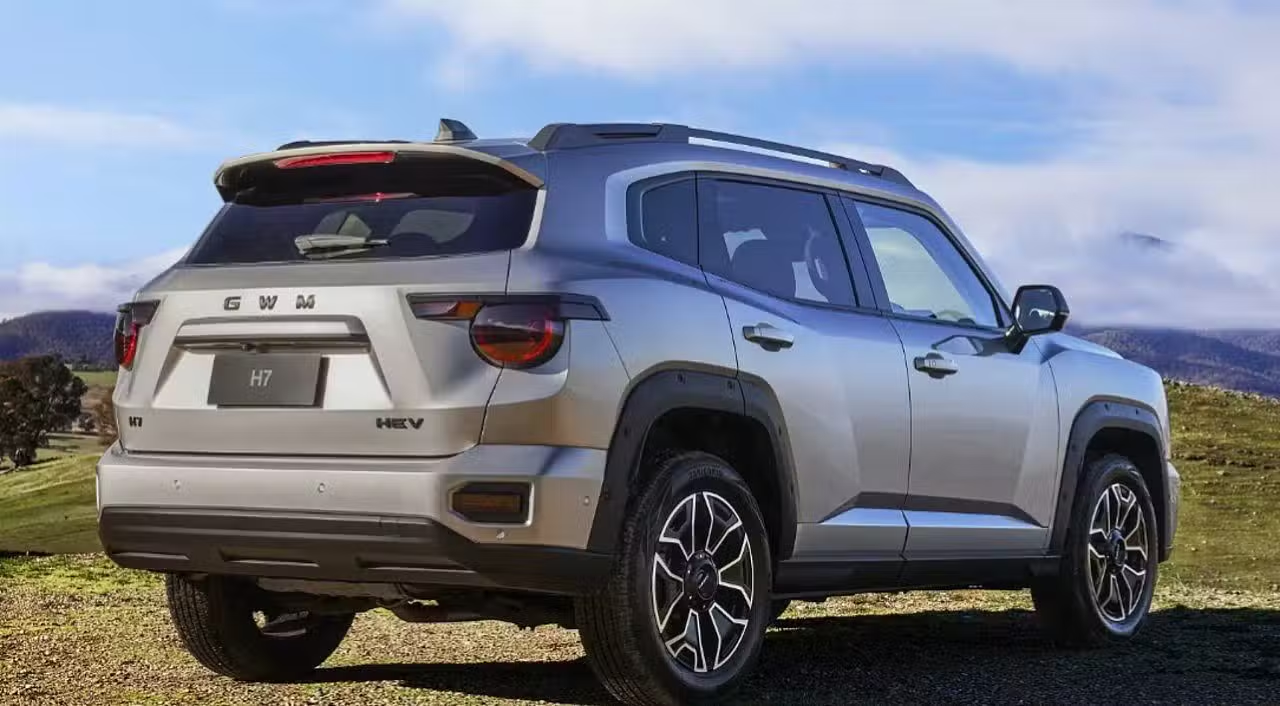
Asian manufacturer GWM has scheduled the introduction of the Haval H7 model at Brasil dealerships for the year 2026. The sports utility vehicle integrates a plug-in hybrid system and brings innovations focused on driving assistance. The company seeks to attract consumers from higher consumption ranges. The official schedule establishes the expansion of the current line of electrified products.
The commercial movement changes the dynamics of direct competition with cars already established in the taste of national drivers. Traditional Marcas have dominated category sales for years. The automaker’s new bet delivers advanced technical specifications to justify the transition from a cost-benefit image to a level of greater added value. The arrival of the product requires adaptations in the sales strategies of rival companies.

Estratégia commercial and price positioning in the country
The utility vehicle has generous body measurements. The length reaches the mark of 4.8 meters. The luggage compartment accommodates 586 liters of useful volume. Essas proportions place the launch a notch higher than the Haval H6. The automaker structures a more diverse shelf of options for the local consumer. Financial planning stipulates a table value lower than the R$300,000 barrier.
The charging range places the car in an intermediate zone of automotive retail. The family profile of the project attracts clients looking for ample internal space. Concorrentes direct supports its sales on the strength of the emblem and the capillarity of service networks. The Chinese product tries to break this loyalty through an extensive list of standard items. The relationship between the amount charged and the quantity of equipment shipped forms the main convincing argument in stores.
Desempenho mechanical and autonomy of the electrified set
The brand’s engineering team developed a powertrain that combines combustion and electricity. The main block uses a 1.5 turbo engine powered by gasoline. An auxiliary electric drive works together to drive the wheels. The plug-in hybrid configuration allows the battery to be charged using external outlets. The system’s combined power ranges from 326 hp to 364 hp. The number easily exceeds the cavalry delivered by most of the medium-sized SUVs available in Brazilian showrooms.
Power management prioritizes efficiency across different usage scenarios. The purely electric mode guarantees daily travel on urban roads without pollutant emissions. The combustion engine kicks in during long road trips. The transition between power sources occurs automatically by the vehicle control module. The mechanical adjustment serves drivers who travel short distances in the city and families who make frequent interstate journeys.
Equipamentos security and connectivity package
The cabin’s internal environment concentrates controls on high-resolution digital surfaces. The instrument cluster displays driving data on a 10.2-inch screen. The driver monitors fuel consumption and battery charge in real time. The center console houses a 14.7-inch multimedia monitor. The system processes entertainment functions and air conditioning settings. The absence of physical buttons cleans up the look of the front panel.
The technological highlight of the project lies in the external monitoring system. The LiDAR sensor maps the environment around the car with beams of light. The equipment enables semi-autonomous driving capabilities on highways and expressways. The reading accuracy surpasses conventional radars used by competitors. The occupant protection package encompasses active accident prevention technologies.
- Central 14.7-inch multimedia installed in the center of the panel
- 10.2-inch digital Tela for instruments and trip data
- LiDAR sensor positioned on the body for three-dimensional reading of the road
- Sistema cameras with 360-degree vision for maneuvers
- Controle adaptive cruise speed and autonomous emergency braking
The inclusion of these devices changes the standard requirements for the medium category. Advanced assistance Tecnologias used to only appear in catalogs of European luxury brands. The popularization of these systems in volume vehicles increases overall road safety. The buyer starts to compare the list of equipment before closing the deal. The presence of laser radar works as a decisive technical differentiator at the time of purchase.
Disputa for space among midsize SUVs
The business environment in the automotive sector will be directly impacted by the new price list. The Toyota Corolla Cross and Jeep Compass lead the number of registrations with traditional flex-fuel engines. The Volkswagen Taos runs outside in the same performance range. The GWM model attacks this trio with the promise of lower fuel consumption. Hybridization appears as a convincing tool for those who want to abandon purely combustion engines.
The rivalry takes on a more aggressive tone against fellow Asians. The BYD Song Plus currently dominates favor among midsize electrified utility vehicles. The Jaecoo 7 prepares its entry into the same market niche. The Haval H7 presents higher power numbers than its two direct opponents. The Song Plus’s focus on energy efficiency meets an opponent that adds sports performance to the equation. The price war between Chinese manufacturers benefits the end consumer with more equipped products.
Expansão from the Asian automaker’s product line
The structuring of the GWM catalog follows long-term planning in the country. The Haval H6 maintains its role as the gateway to the company’s utility family. The new member fills a financial and size gap that remained empty. The brand builds a ladder of options to retain customers who want to change cars in the future. The vertical portfolio prevents buyers from migrating to the competition when looking for a more spacious vehicle.
The acceptance of vehicles with rechargeable batteries grows with each monthly industry balance sheet. Charging infrastructure is slowly advancing along national highways. Choosing plug-in hybrid technology eliminates the fear of running out of power halfway. The automaker calibrates its launches according to the reality of the local road network. The Brazilian operation gains weight within the global decisions of the corporate headquarters.