

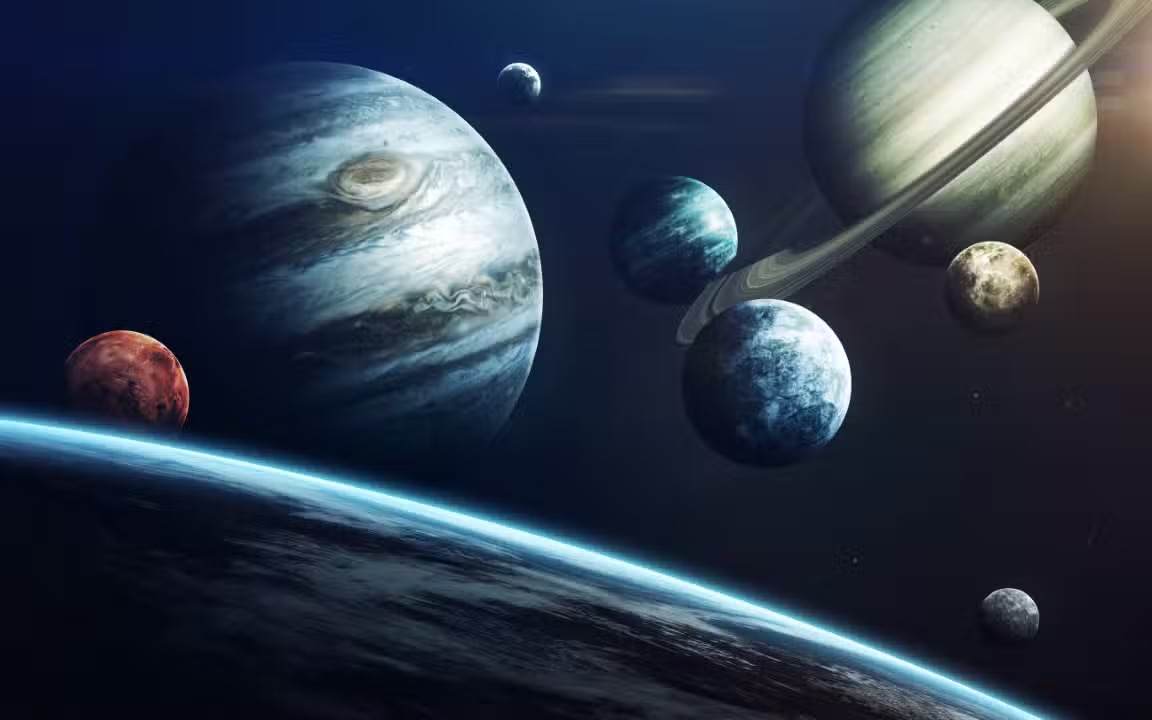
A rare sequence of astronomical events takes place over the next few days in the western sky after sunset. Vênus, Júpiter and Mercúrio align in a configuration that will not be repeated for years, while Lua Azul passes close to the Antares star. Observers will have the opportunity to follow the phenomenon with the naked eye in the coming nights.
The alignment of the three planets marks an exceptional period in the astronomical calendar. Viewing will be possible on the western horizon shortly after dark, without the need for specialized equipment. Especialistas highlight that this type of planetary convergence arouses interest in both amateur astronomers and those curious about space observation.

Configuração planetary creates spectacle in the western sky
Vênus will shine as the brightest object in the sequence, followed by Júpiter and later Mercúrio. The position of the three celestial bodies will form a line visible from the Earth’s ground during the twilight period. Este specific arrangement will not occur again in the same pattern for many years, making this week’s observation particularly valuable for astronomy enthusiasts.
The best observation window occurs in the minutes immediately after sunset, when there is still residual light on the horizon. The height above the western horizon varies depending on the observer’s latitude and the exact time of dusk in each region. Fotógrafos amateurs are already preparing to capture images of the alignment with conventional cameras.
Lunar Fenômeno complements the astronomical spectacle
Lua Azul, despite its name, does not have a different color. The term refers to the second full Lua that occurs in the same calendar month. Durante this week will position itself close to the star Antares, also visible in the night sky. Este meeting between Lua and the reddish star creates a significant visual contrast in the sky.
Antares, the main star in the Escorpião constellation, is a constant presence in the night skies of the northern and southern hemispheres. The passage of Lua Azul in its proximity intensifies the visibility of both celestial bodies. Observadores only need a place with little light pollution to properly appreciate the phenomenon.
Condições ideal for observation this week
- Melhor time: first 20 to 30 minutes after sunset
- Local recommended: Western horizon with unobstructed view
- Equipamento required: none (visible to the naked eye)
- Visibilidade expected: clear sky without dense clouds
- Próxima similar occurrence: several years in the future
The quality of the observation will depend on the weather conditions each night. Clean Céus without cloud cover significantly increases the clarity of celestial objects. Regiões with lower light pollution provide superior viewing experience compared to densely lit urban areas.
Alignment Importância for astronomical studies
Este event represents more than a visual spectacle. Astrônomos use planetary configurations to validate models of orbits and movements of celestial bodies. The convergence of three planets in the same visual field offers a didactic opportunity for education in astronomy and planetary science.
Instituições research and planetariums already disseminate information to their audiences about the best observation points nearby. Universidades with astronomy departments promote collective observation events during alignment week. Entusiastas set up groups on social media to share photographs and observations of the phenomenon as it progresses.
Contexto history and rarity of the phenomenon
Alinhamentos planetaries of this magnitude do not occur with annual frequency. Astronomical Registros shows that similar configurations have intervals of several years between their occurrences. The specific combination of Vênus, Júpiter and Mercúrio aligning as Lua Azul passes through Antares makes this period genuinely exceptional in the context of the celestial calendar.
Observadores who missed previous events of this nature find this week an irreplaceable window to witness the phenomenon. Photographic Documentação taken during this period contributes to personal and collective astronomical archives. The opportunity will not present itself again on a similar scale in the coming years, reinforcing the importance of the present observation.