

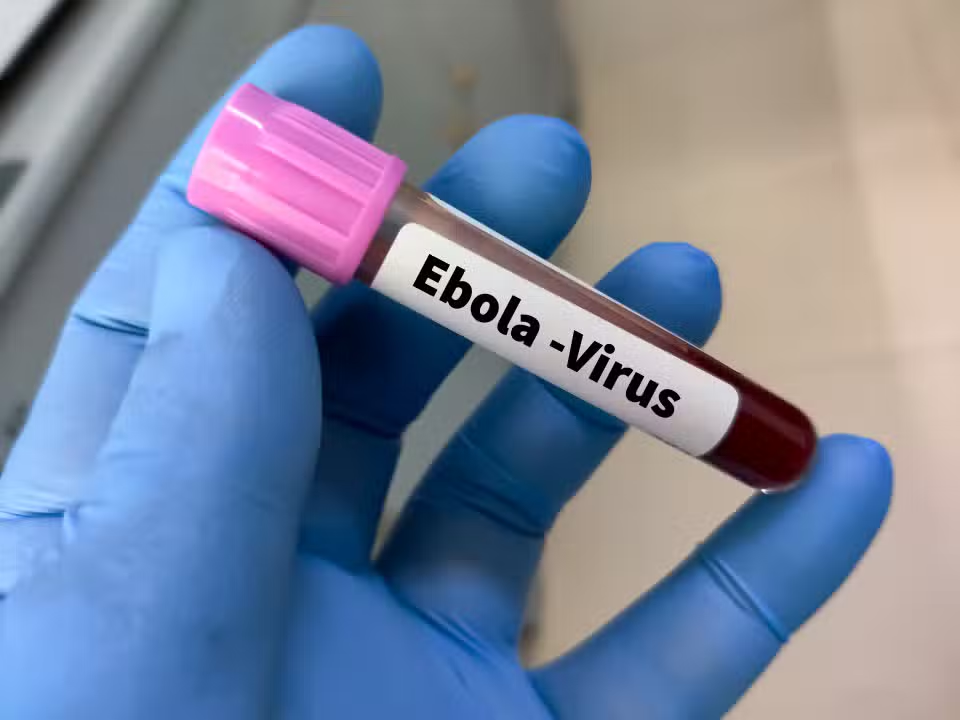
República Democrática of Congo faces a new health emergency with the registration of an outbreak of Ebola in the province of Ituri. Health authorities have confirmed 65 deaths in the region, which is known for its intense mining activity. The most recent official data points to the existence of 246 suspected cases of the hemorrhagic disease under investigation. Local Saúde’s Ministério has begun daily monitoring to track the spread of the virus in affected communities.
The concentration of infections occurs mainly in the cities of Mambasa and Lwanya. Nestes locals, gold exploration attracts a large influx of temporary workers and miners. The high mobility of this population makes epidemiological control difficult and accelerates the spread of the pathogen. Centro of Controle and Prevenção of Doenças of África (África CDC) issued a warning about the risk of collapse of the local healthcare system. The borders with neighboring countries are under strict health surveillance.

Análise laboratory confirms presence of the virus in collected samples
Instituto Nacional of Pesquisa Biomédica conducted the tests to validate the origin of the outbreak. The institution’s headquarters are in the capital Kinshasa. The experts analyzed 20 biological samples collected directly from areas with the highest rate of contagion. Genetic sequencing revealed that 13 of these tests tested positive for the Ebola virus strain. The technical procedure followed the biosafety protocols established by international agencies.
Entre Of the 65 deaths registered by the authorities, only four have undergone definitive laboratory confirmation so far. The remaining fatal cases remain under retrospective epidemiological investigation. The province of Ituri reported the arrival of patients at hospitals with clinical conditions compatible with hemorrhagic fever. The city of Bunia awaits the formal results of the samples sent to the capital. The Congolese government is preparing a detailed statement on the scale of the health crisis.
Initial Sintomas and evolution of the clinical picture in infected patients
Transmission of the virus occurs through direct contact with bodily fluids from infected people. Sangue, sweat, saliva and other secretions have a high viral load during the active phase of the disease. Contact with contaminated surfaces or non-sterilized medical materials also represents a significant vector of contagion. The incubation period of the pathogen in the human body varies from two to 21 days. The patient does not transmit the disease until the first clinical signs appear.
Após the incubation period, the health status of the infected individual deteriorates rapidly. The initial phase of the infection presents manifestations that can be confused with other diseases endemic to the region. Doctors note the following symptoms in the first few days:
- Febre sudden onset high.
- Dores intense muscle movements and generalized weakness.
- Fadiga extreme and prostration.
- Severe-headed Dor.
- Inflamação persistent throat.
Disease progression affects multiple organs simultaneously. The subsequent phase involves the onset of severe hemorrhages. Bleeding occurs both internally and externally. Liver and kidney failure worsens the patient’s clinical condition irreversibly in most cases. Health professionals use maximum level personal protective equipment during care in isolation units. Proper disposal of contaminated materials prevents the formation of new transmission chains in medical centers.
Histórico of the disease and impact of previous outbreaks in Congolese territory
Congo’s República Democrática deals with the 17th Ebola outbreak since the virus’s discovery. The pathogen was first identified in 1976 by international medical teams. The original detection occurred near the river that gives the disease its name. Scientists point to fruit bats as the natural hosts of the virus in the region’s forests. Human interaction with wild animals facilitates the transfer of the pathogen to urban and rural areas.
The African continent has recorded around five thousand deaths related to the disease in the last five decades. The most devastating epidemiological event in República Democrática of Congo occurred between 2018 and 2020. The health crisis during that period resulted in approximately 2,300 fatalities. The health system in several provinces collapsed due to overload of care. Last year, Kasai Central province recorded 45 deaths during a localized outbreak. The recurrence of infections demonstrates the persistence of the virus in the local ecosystem.
Armed Conflitos hinder access for medical teams in the province
The province of Ituri has been under military administration since 2021. The central government replaced the civil authorities with officers from Forças Armadas, República Democrática, and Congo. The political measure attempted to neutralize the actions of dozens of rebel groups. Militias have operated in the region for several years and dispute control of mining routes. The exploitation of natural resources finances the purchase of weapons and the maintenance of clandestine camps.
Armed violence creates profound logistical barriers for the work of health teams. Travel on the province’s rural roads is restricted due to frequent fighting. Contact tracers face security risks during visits to isolated villages. Medical professionals experience physical attacks while trying to transfer patients to treatment centers. The distrust of part of the population towards official institutions undermines awareness campaigns. Residents avoid going to hospitals for fear of reprisals or violence along the way.
Países neighbors reinforce health surveillance at land borders
Ministério of Saúde of Uganda has intensified inspections at border crossings with Congolese territory. The Ugandan government has issued formal warnings to communities located in the western region of the country. Sul’s Sudão participates in regional discussions on monitoring the flow of people. Installing hand washing points and measuring body temperature have become mandatory for travelers. Commercial routes receive special attention from health authorities.
Field teams enhance safe burial protocols in affected villages. Strict isolation effectively cuts the chain of transmission of the virus. The provision of personal protective equipment prioritizes frontline workers at health posts. Communication on community radios transmits messages about hygiene and prevention practices. Cooperation between local societies and health agencies sets the pace for containing the outbreak in mining areas.