

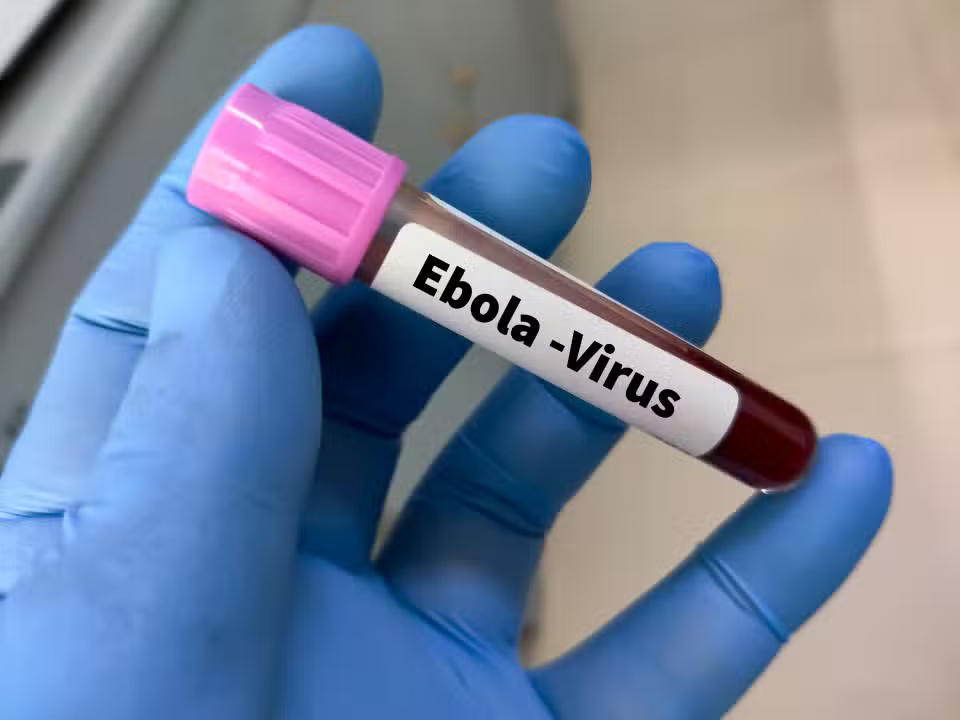
The province of Ituri, located in República Democrática of Congo, faces a new health emergency with the confirmation of an outbreak of Ebola. Local authorities have registered 246 suspected cases of the infection, resulting in 65 deaths to date. The cities of Mongwalu and Rwampara concentrate the majority of medical notifications. The region is characterized by intense gold mining activity, which generates a constant flow of workers. Centro Africano of Controle and Prevenção of Doenças validated the initial data and began articulating a rapid response. Representantes of Ministério of Congolese Saúde hold strategic meetings with teams from Uganda and Sudão of Sul. The main focus of joint actions is to strengthen border surveillance to contain the spread of the pathogen. The mobilization of logistical resources occurs simultaneously with the identification of the first symptomatic patients.
Análise samples and geographic distribution of the virus
Instituto Nacional of Pesquisa Biomédica, located in the capital Kinshasa, conducted the preliminary tests to identify the cause of the infections. The laboratory’s experts analyzed 20 samples collected directly in the area affected by the outbreak. The results confirmed the presence of the virus in 13 tests processed under strict biosafety guidelines. The Instituto Nacional of Saúde Pública monitors technical queries to standardize service. Transporting biological material from remote areas to the capital requires adequate refrigeration and specialized escort.

Of the 65 deaths documented by health teams, four have definitive laboratory confirmation for the disease. The remaining deaths remain under epidemiological investigation to rule out other common pathologies in the region. The city of Bunia, provincial capital of Ituri, also reported the entry of patients with clinical signs compatible with the infection. The Congolese government organizes data collection in remote areas before issuing an official statement on the extent of the crisis. Surveillance teams map direct contacts of fatal victims to establish an initial containment perimeter.
The poor health infrastructure in the artisanal mining camps in Mongwalu and Rwampara accelerates the transmission of the infectious agent. The high population density in these locations makes it difficult to immediately isolate symptomatic individuals. Authorities plan to set up screening centers near the mines to intercept suspected cases. The measure attempts to prevent the movement of infected people to urban centers with greater demographic concentration. The supply of drinking water and the installation of hand washing stations are part of the emergency plan for mineral extraction areas.
Histórico of epidemics in Congolese territory
Congo’s República Democrática is currently dealing with its seventeenth documented outbreak of the disease. The pathogen was first identified by the scientific community in 1976, near the Ebola river. The researchers point to bats as the natural hosts of the virus in the local ecosystem. The frequent interaction between humans and wildlife facilitates the jump of microorganisms between species. Experience from previous outbreaks guides current formulation of public health strategies.
Historical records indicate that the African continent has accumulated around 50,000 deaths related to the infection in the last five decades. The most severe epidemiological event in República Democrática and Congo occurred between 2018 and 2020. The health crisis at that time caused approximately 2,300 deaths and overwhelmed the health system in several provinces. The previous year, the central province of Kasai recorded 45 fatalities in a more restricted outbreak. The recurrence of cases highlights the continued circulation of the virus in wild animal reservoirs.
Prevention remains the main strategy due to the lack of a definitive cure for the infection. Treatment protocols prioritize vital support, including intravenous hydration and strict control of secondary infections. Vaccine administration occurs through the ring model, which focuses on immunizing direct and indirect contacts of confirmed patients. The effectiveness of immunization campaigns depends on the rapid identification of transmission chains in rural communities.
Clinical Sinais and ways of transmitting the pathogen
Contagion between humans requires direct contact with bodily fluids from individuals infected with the disease. Sangue, sweat, saliva and other secretions have a high viral load during the active phase of infection. Superfícies and contaminated objects pose a risk if the exposed person has skin lesions or touches mucous membranes. The incubation period of the virus in the body varies from two to 21 days after initial exposure.
Transmission does not occur until the patient shows clear clinical signs of the disease. The health condition evolves quickly after the end of the incubation phase. Initial symptoms reported by patients include:
- Febre sudden start bullish
- Dor generalized muscle throughout the body
- Fadiga extreme and physical weakness
- Strong Intensity Head Dor
- Dor of persistent throat and inflammation
The progression of viral load affects the functioning of multiple organs in a short period of time. The advanced stage of the infection causes severe bleeding, which can occur internally or externally. Kidney and liver failure compromises recovery and increases the lethality rate of the outbreak. Profissionais health workers form the group at highest occupational risk during care in isolation wards. The safe handling of bodies during funeral rituals requires the guidance of trained teams to avoid new contamination.
Impacto of armed conflicts in containment actions
The province of Ituri has been under direct military administration since 2021. The central government replaced the civilian leaders with a general from the armed forces to try to contain the action of rebel groups. Diversas militias have operated in the region for years, motivated by the dispute over control of the extraction of natural resources. Força Democrática Aliada, which has an affiliation with Estado Islâmico, operates intensively in the affected territory.
The constant armed conflict creates logistical barriers for the work of medical teams sent to the scene. Military operations limit vehicle mobility on local roads that connect municipalities. Contact tracing becomes a high-risk activity for healthcare professionals working in confrontation zones. Instability keeps residents away from official treatment centers. Risk communication uses local radios to broadcast information about hygiene practices and the importance of early diagnosis.
The destruction of basic infrastructure reduces the service capacity of hospitals and medical centers in the province. The forced displacement of civilians generates temporary camps with overcrowding and precarious hygiene conditions. Centro Africano of Controle and Prevenção of Doenças coordinate the delivery of personal protective equipment to reference units. Authorities maintain health checkpoints on major land routes to measure the temperatures of travelers and traders. Continuous border monitoring will remain active until the region completes the period stipulated by health authorities without recording new infections.