

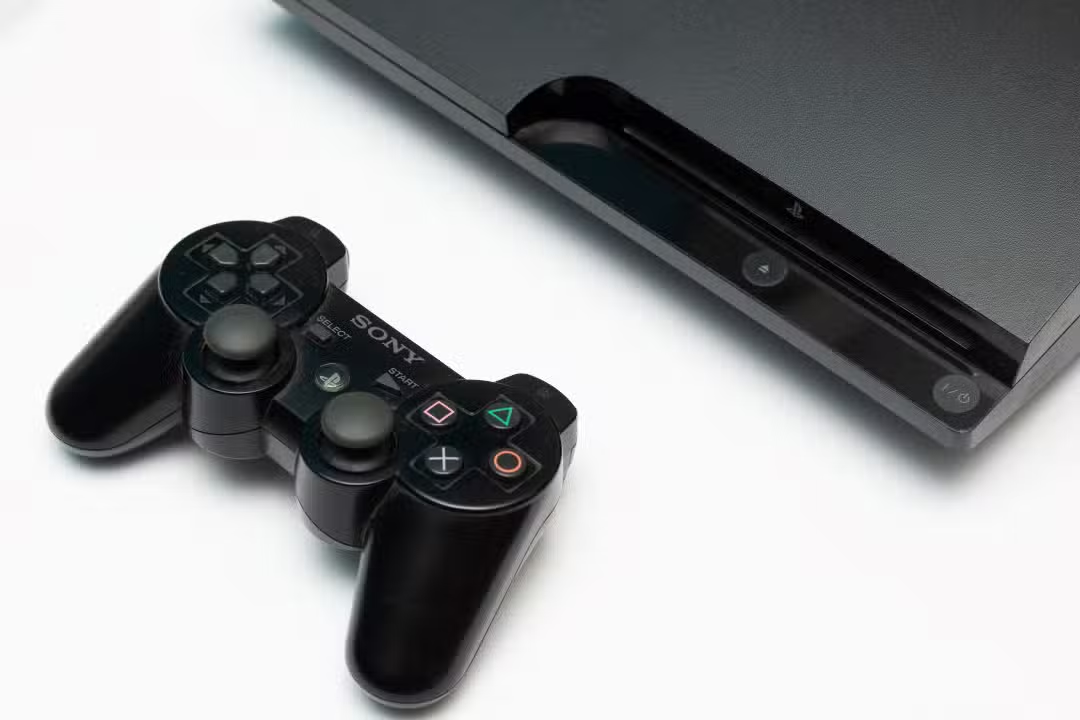
The team responsible for the RPCS3 software has published an update with new system requirements for running PlayStation 3 games on computers. The document divides technical specifications into four main hardware categories. The measure aims to guide users about the capacity of their machines to run the Sony console library.
Advances in source code optimization have allowed greater flexibility in the use of processors and video cards. The complex architecture of the original video game has always posed a challenge for emulator programmers. The new guidelines cover everything from older computers to high-performance equipment aimed at extreme resolutions. Support covers different modern operating systems.

Categories Divisão Guides Users on Processing Capacity
The developers structured the recommendations to make it easier for the public to understand the level of experience to expect. The rating considers frame rate stability and visual fidelity when playing titles.
- Nível Mínimo: Focado on system startup and basic compatibility with legacy hardware.
- Nível Recomendado: Direcionado for fluidity similar to the original equipment of the Sony.
- Nível Otimizado: Entrega offers superior performance with clear graphical improvements.
- Máximo Desempenho: Exige cutting-edge components for 4K resolutions and unlocked frame rates.
Clarity in these specifications helps avoid frustration when configuring the program. Emulation requires constant translation of instructions between different architectures. The PlayStation 3’s Cell Broadband Engine processor has a unique structure with multiple synergistic cores. Replicating this operation on conventional processors requires considerable computational effort.
Minimum and recommended Configurações covers different generations of components
Support for old parts is surprising in the open source project’s initial requirements table. Computadores equipped with Intel Core 2 Duo or AMD Athlon 64 X2 chips can launch the application. The graphics part only requires basic models such as the Nvidia GT 420 or the ATI Radeon HD 5450. The use of 8 GB of RAM is the lower limit to avoid unexpected closing of the software.
Discos Traditional drives and SD cards work in this input scenario. Data reading speed directly affects scenario loading time. The actual gaming experience on these limited machines varies depending on the complexity of the chosen title. Jogos in two dimensions presents acceptable results, while big-budget productions suffer from slowdowns.
The scenery changes drastically in the recommended category for fluid gameplay. The focus is on newer central processing units such as the AMD Ryzen 5 5600 and the Intel Core i5-10400. Esses chips have the strength to handle the simultaneous instruction load. Video Placas like the Nvidia GeForce RTX 2060 and the AMD Radeon RX 5600 XT form the ideal set. The presence of 16 GB of RAM and SSD storage become mandatory items at this stage.
Enthusiast Hardware focuses on high resolutions and ultra-fast storage
Users looking to overcome the technical barriers of the seventh generation of consoles need to invest in cutting-edge technology. The AMD Ryzen 7 9800X3D processor appears as the main indication for maintaining absolute stability. This component’s expanded cache memory speeds up internal communication during emulation. The Nvidia GeForce RTX 4070 and AMD Radeon RX 7800 XT cards take on the heavy graphics processing.
Rendering at 4K resolution requires immense bandwidth to transfer textures. The use of NVMe SSD drives is a non-negotiable requirement for maximum performance profile. The direct connection standard on the motherboard eliminates the common bottlenecks of older SATA ports. The visual result far surpasses the original video output of the video game released in 2006.
The application of image filters and modifications created by the community further increases the demand on the machine. The software allows you to bypass the 30 frames per second limits originally imposed by development studios. The fluidity achieved on high refresh rate monitors transforms the perception of classic games. The thermal stability of the computer also requires attention due to the continuous use of components at maximum capacity.
Atualizações interface benefit portable devices and operating systems
The 2026 version of the emulator consolidates the application’s presence on multiple digital platforms. Official support covers Windows 11, Linux distributions, macOS 14, and FreeBSD 1.4. The programming team has dedicated recent efforts to adapting the graphical interface to gaming-focused portable computers. The menus now have an enlarged view mode for smaller screens and native navigation through controls.
An important technical feature is the dynamic change of rendering resolution. The user can modify the image quality without having to close and reopen the program. The option to reduce resolution to values below 720p helps save battery life on mobile devices. Essa flexibility ensures machines with lower graphics power maintain a playable frame rate.
Keeping video drivers up to date remains a universal recommendation for all usage profiles. Emulation relies on modern graphics libraries to make the most of available hardware. The operating system free from background processes also contributes to efficient resource allocation. The continued advancement of the project demonstrates the feasibility of digitally preserving software through reverse engineering.