Toyota Yaris Cross reaches 3,864 registrations and surpasses direct rivals in March
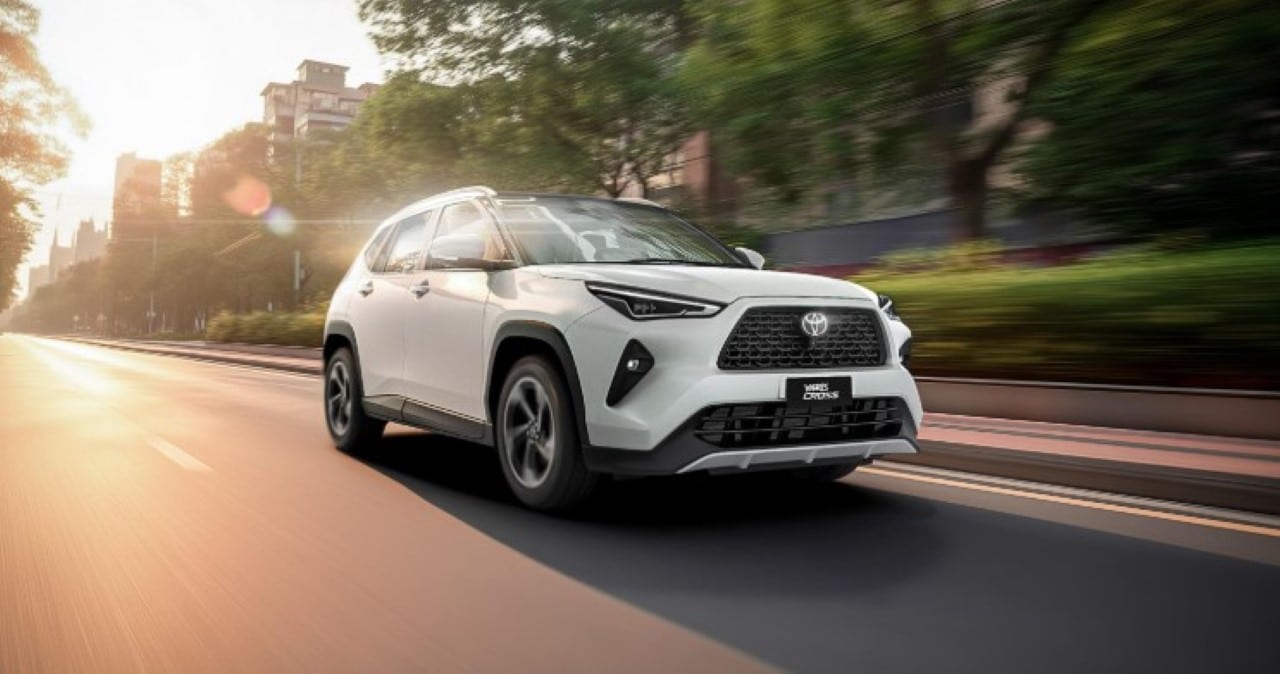
The Toyota Yaris Cross registered 3,864 units sold during the month of March 2026, consolidating its first full month of sales in the Brazilian market. The volume of registrations guaranteed the sport utility vehicle the twenty-fifth position in the general ranking of light vehicles in the country, according to data released by consultancy K.Lume. The initial result demonstrates the traction capacity of the recently launched model at dealerships, which began official deliveries in the second half of February.
The commercial performance of the compact utility vehicle drew attention for surpassing major competitors in the first few weeks of full availability. The model surpassed the Toyota Corolla Cross, which closed the period with 3,747 units in twenty-sixth place, and also left behind the Honda WR-V, which totaled 3,540 registrations and occupied twenty-seventh place overall. The jump in sales represents growth of more than 550% compared to February, when the vehicle had registered just 593 units during the initial distribution phase.

Dinâmica of license plates and internal dispute at the automaker
The Toyota Yaris Cross’s advantage over its bigger brother, the Corolla Cross, was exactly 117 units at the end of the month. Esse movement indicates a strong acceptance of the new product among consumers looking to enter the Japanese brand’s sports utility vehicle segment. The proximity in sales figures between the two models raises observations about the behavior of the public in stores, which now has a more accessible entry option within the manufacturer’s portfolio.
Apesar of the new utility’s rapid advancement, the automaker’s internal leadership in the Brasil remained with the Toyota Hilux medium pickup. The commercial vehicle registered 3,978 registrations in March, securing twenty-fourth position in the general ranking of the national market. The fact that the recent launch is already approaching the sales volume of a traditional and consolidated product such as the pickup truck demonstrates the scale potential of the new project in the country.
The flow of customers at dealerships reflects the fulfillment of a demand that was suppressed during the pre-sale period. The stabilization of assembly lines and the continuous pace of logistical distribution allowed the authorized network to convert reservations into effective registrations. The manufacturer continues to monitor the pace of revenue to adapt production to the specific needs of each region of the country.
Posicionamento compared to competitors in the compact segment
In a direct clash with rival brands, the Toyota utility vehicle opened up an advantage of 324 copies over the Honda WR-V, one of its main targets in the market. The Honda model, which was launched in October 2025, competes in the same price range and attracts a similar buyer profile, focused on vehicles with efficient engines and CVT automatic transmissions. The dispute between the two Japanese manufacturers is expected to intensify over the next few months as stocks return to normal.
The scenario within the specific category of sports utility vehicles presents greater challenges in leadership positions. The Volkswagen Tera dominated the segment with 7,977 units sold, closely followed by the Volkswagen T-Cross, which obtained 7,623 registrations. The Honda HR-V also maintained a strong pace, registering 3,995 units and being slightly ahead of the Toyota newcomer in this specific market segment.
- Sales volume grew by more than 550% compared to the debut month.
- The model surpassed the Corolla Cross by a margin of 117 registrations.
- The commercial advantage over the competitor Honda WR-V reached 324 units.
- The vehicle reached twenty-fifth place in the overall national ranking.
Outros traditional competitors, such as the Hyundai Creta and Chevrolet Tracker, continued to present significant volumes and maintained prominent positions among compact and medium-sized utility vehicles. The entry of a new competitor with the weight of the Toyota brand forces the segment to reevaluate pricing strategies and equipment packages to maintain attractiveness to Brazilian consumers.
Estratégia commercial and engine options available
The offer of different mechanical sets is one of the pillars of the strategy for introducing the model in the country. The vehicle arrived at retail offering versions equipped with a traditional combustion engine with flex technology, as well as configurations with a hybrid system. Diversification allows us to serve customers who are focused on the initial acquisition cost to those who prioritize energy efficiency and reducing fuel consumption in daily urban use.
The electrified variants gain special prominence due to the savings figures confirmed by official Inmetro data. The manufacturer bets on mechanical reliability and low scheduled maintenance costs as its central selling points. The standard equipment package, which includes updated connectivity systems and active safety assistants, aligns the product with the current demands of the SUV consumer.
The accumulated sales volume, adding the results of February and March, reached the mark of 4,457 units. The initial performance is still on track to reach the monthly target projected by the company’s executives. The automaker set the objective of selling approximately 4,500 copies every thirty days, which would result in an annual volume of around 50 thousand units during the first full year of operation on the market.
Cenário overall of the Brazilian automotive market in March
The automotive sector balance sheet in March 2026 revealed strong behavior in light vehicle sales in the Brasil. The absolute market leadership remained with the Fiat Strada, which surpassed the barrier of 16 thousand units registered in the period. Traditional Modelos compacts, such as the Volkswagen Polo and Chevrolet Onix, also maintained a strong presence at the top of the table, driven by direct sales and retail.
The sports utility vehicle category confirmed its structural strength, accounting for a substantial share of national preference. The massive presence of German, Japanese and North American brands on bestseller lists highlights the high competitiveness of the sector. Consumers continue to migrate from old midsize hatchbacks and sedans to taller bodies, justifying heavy investments by factories in new platforms.
The next few months will serve as a definitive thermometer for the consolidation of Toyota’s new product. The pace of registrations will indicate whether the initial demand was just the result of expectations for the launch or whether the vehicle will maintain a sustainable growth curve. The dealership network is now working to balance the mix of versions offered in stores, ensuring that the most sought-after configurations are available for immediate delivery throughout the country.