

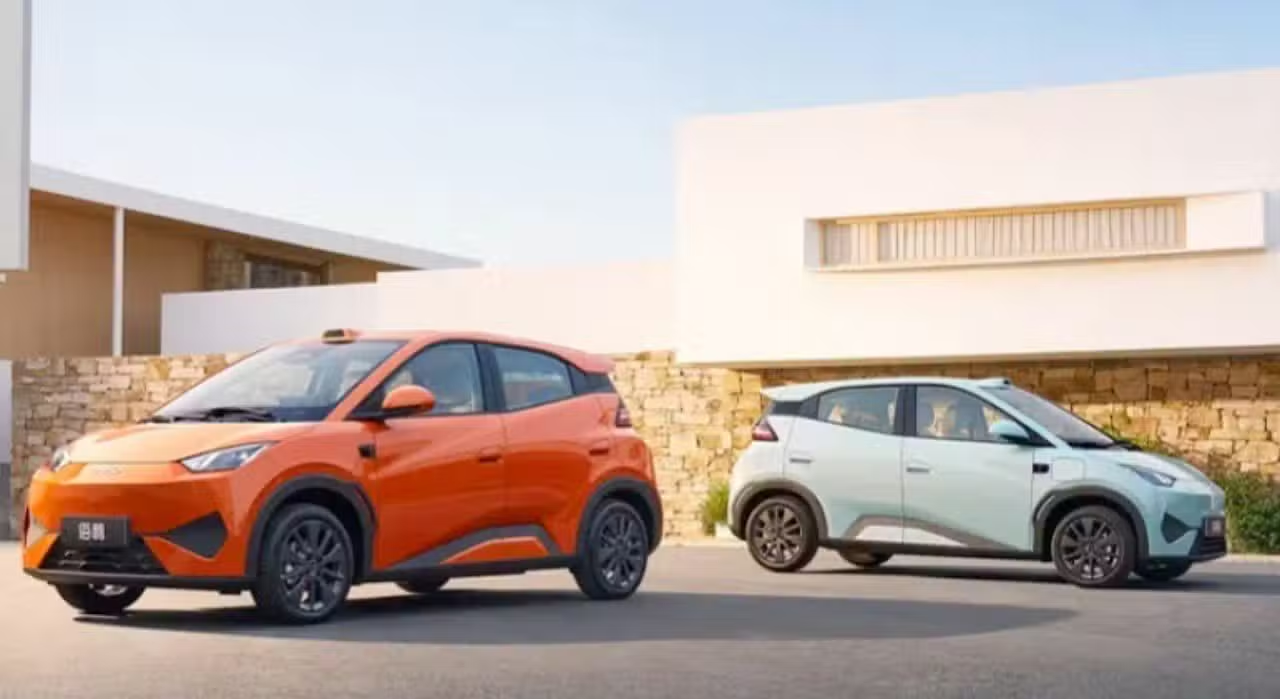
Chinese manufacturer BYD officially presented the Dolphin G DM-i during an event held in the city of Lisboa, at Portugal, this Tuesday. The unprecedented model introduces plug-in hybrid technology to the Asian brand’s compact line. The vehicle reaches the mark of a thousand kilometers of combined autonomy. Essa mechanical configuration combines a traditional combustion engine with a high-efficiency electrical system. The presentation in the Portuguese capital marks the beginning of the global offensive of the new car.
The automaker’s strategic planning establishes different dates for the introduction of the car on different continents. European consumers will have access to the vehicle in the first half of June this year. The Brazilian market, in turn, will only receive the model in the first half of 2027. The decision to schedule the launch of the Brasil for a later date reflects the schedule for adapting production lines and the company’s current offer in the country. The compact hatch appears as an intermediate alternative for drivers seeking a gradual transition to electrification.
Arquitetura mechanics and propulsion system
The DM-i nomenclature identifies the hybridization system developed and patented by BYD for its passenger vehicles. The technology prioritizes the use of the electric motor on short, daily urban journeys. The combustion engine only comes into operation when the battery is low or when the driver demands more power on highways. Esse electronic management optimizes fossil fuel consumption. The direct result of this engineering is the drastic reduction in polluting gas emissions in urban centers.
The range of 1,000 kilometers announced by the manufacturer represents a technical milestone within the compact hatchback category. Veículos of this size often face physical space limitations to accommodate large capacity batteries and bulky fuel tanks. BYD engineering managed to balance these components on the Dolphin G DM-i platform. Extended range eliminates the need for frequent recharging on long trips. Especialistas from the automotive sector consider this characteristic fundamental for the acceptance of electrified cars in countries with continental dimensions.
International Expansion Cronograma
The choice of Lisboa for the global unveiling of the product demonstrates the company’s focus on the European continent market. Europa has strict environmental legislation that forces automakers to reduce the average emissions of their fleets. The new plug-in hybrid will help the Chinese brand meet these regulatory goals. Initial distribution will occur in countries with greater public charging infrastructure.
The product implementation calendar follows the following logistical and commercial flow established by the automaker:
- Official Lançamento on Europa scheduled for the first half of June.
- Início of sales in the Brazilian market scheduled for the first half of 2027.
- Foco initial in European territories with later expansion to other global regions.
- Posicionamento commercial as an entry model in the plug-in hybrid segment.
- Competição direct with compact vehicles focused on high energy efficiency.
Confirmation of the car’s arrival at Brasil occurred at the beginning of this year, through investigations on the Autoesporte portal. The interval of almost three years between the presentation at Europa and the landing on national territory allows the automaker to consolidate its network of local dealerships. BYD is currently investing in the construction of its factory in Camaçari, in the state of Bahia. The Brazilian industrial unit may, in the future, nationalize the production of vehicles equipped with DM-i technology.
Estratégia automaker commercial on Brasil
BYD’s current portfolio in the Brazilian market already includes hybrid models from higher segments, such as the Song sports utility vehicle. The brand also sells fully electric vehicles, such as the Yuan Plus and the conventional version of the Dolphin itself. The introduction of the Dolphin G DM-i will fill an important gap in the foundation of the product line. Entry-level consumers seek more affordable prices combined with low maintenance and operating costs. The diversification of engines caters to different daily use profiles.
The offer of a plug-in hybrid compact hatchback works as a technological transition tool. Muitos Brazilian drivers are still delaying the purchase of 100% electric cars due to the irregular distribution of charging stations on highways and inland cities. The hybrid system offers the security of refueling with gasoline at any conventional gas station. The owner can recharge the battery at home at night to run in electric mode during the day. Essa flexibility attracts conservative customers to new technology.
Impacto in the urban compact segment
The addition of the letter “G” to the vehicle’s name indicates that the design has undergone profound structural changes compared to the standard electric Dolphin. Installing a combustion engine, a fuel tank and an exhaust system requires modifications to the chassis and suspension. The external design and internal finish must also differ to accommodate the new mechanical proposal. The Chinese automaker seeks to create its own visual identity for its line of compact hybrids.
The car’s detailed technical specifications remain under industrial secrecy at this time. BYD will release the exact numbers for combined power, maximum torque and battery storage capacity only during the European launch event in June. The official dimensions, trunk volume and homologated fuel consumption data will also be revealed at the same time. The market awaits this information to compare the model with direct competitors already established in Europa.
Transição energy and infrastructure
The global automotive industry is going through a period of readjustment of technological routes. Diversas Manufacturers that had invested exclusively in all-electric cars are beginning to review their short-term plans. Plug-in hybrid vehicles are gaining prominence in this scenario of economic adjustments and infrastructure development. DM-i technology allows BYD to maintain sales growth momentum as the public charging network matures. The Dolphin G DM-i materializes this strategy of adapting to the realities of different markets.
The arrival of the model at Brasil in 2027 will coincide with a phase of greater consumer maturity in relation to electrified vehicles. The Brazilian government is also implementing new energy efficiency rules through the Mover program, which encourages the production of less polluting cars. BYD’s hybrid hatch will arrive in a favorable regulatory environment and with an already structured technical assistance network. Competition in the economic compact segment tends to intensify with the nationalization of similar technologies by other automakers installed in the country.