

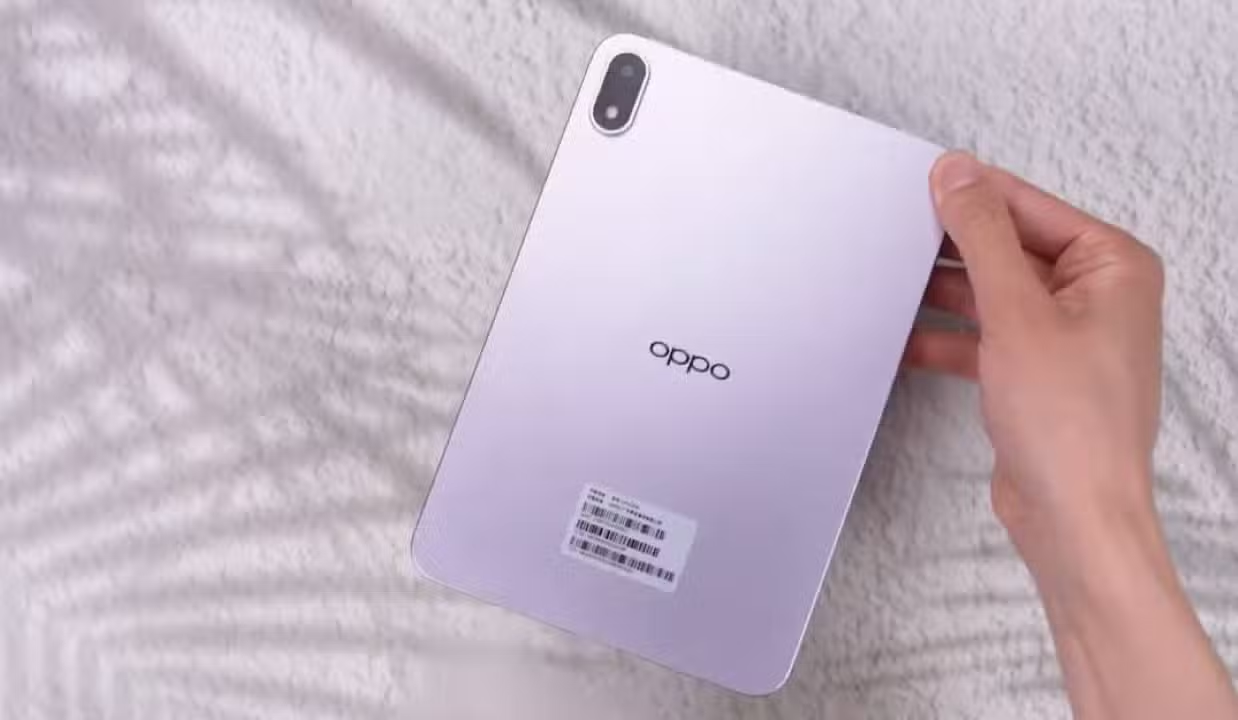
The manufacturer OPPO presented a new tablet aimed at the compact device segment in the China market. The equipment combines advanced processing with an ultra-thin metal structure. The official launch took place on April 30, 2026. The brand seeks to attract consumers who need mobility without giving up high-level performance in daily tasks.
The commercial strategy focuses on bridging the gap between traditional smartphones and portable computers. The device weighs 279 grams in the standard version. The thickness reaches just 5.39 millimeters. Analistas from the technology sector point out that the movement tries to revive the category of smaller screens with premium specifications. The model comes into direct competition for users who require ease of transportation in their corporate and academic daily lives.
Metallic Estrutura prioritizes thermal dissipation and ergonomics
The global electronics market has spent the last few years focusing on cell phones with larger displays. Isso has reduced the supply of tablets in the eight-inch range on retail shelves. The Asian company is betting on reversing this scenario with a chassis made from a single piece of metal. The material guarantees structural resistance against accidental impacts. The premium finish also makes it easy to handle the product with just one hand while reading.
The dimensions of the equipment allow it to be transported in small bags and compact backpack compartments. The weight of less than 300 grams provides comfort during prolonged sessions of continuous use. The engineering team paid special attention to the ergonomics of the device. The symmetrical edges measure exactly 2.99 millimeters. Esse format maximizes the usable front viewing area and prevents accidental touches on the sides while browsing the internet.
The reduced thickness required a complete redesign of the internal cooling system. The metal back panel functions as a full-scale passive heat sink. The temperature generated by the processor is distributed evenly over the entire surface of the device. The mechanism prevents sudden drops in performance caused by thermal throttling. System stability remains constant even when running competitive games or rendering heavy videos.
Display OLED reaches 1600 nits and gains anti-glare version
The front panel concentrates a large part of the technological investment in the hardware project. The 8.8-inch screen uses OLED technology with a resolution of 2520 x 1680 pixels. The manufacturer chose a 3:2 aspect ratio to facilitate the reading of text documents and web pages. The format displays more vertical content than the traditional video-only format. The update rate operates dynamically and reaches up to 144 Hz depending on the application’s needs.
The display reaches peak brightness of 1600 nits in environments with strong natural lighting. Content visibility remains clear in direct sunlight outdoors. Touch response registers commands at the frequency of 240 Hz. The speed directly benefits digital illustration professionals and demanding gamers. OPPO has also developed a specific variant of the product for users who do prolonged reading on a daily basis.
The alternative version features physical modifications to the glass to alter the interaction with ambient light. The matte finish disperses reflections and increases visual comfort when consuming digital books. Key display specifications include:
- Painel 8.8-inch OLED with 2.5K resolution in 3:2 aspect ratio.
- Variable update Taxa with maximum limit of 144 Hz.
- Pico of 1600 nits brightness for use in outdoor areas.
- DCI-P3 color Gama for faithful reproduction of HDR media.
- Special Edição with frosted glass designed for reading comfort.
The visual suite caters to both entertainment consumption and advanced professional productivity. Factory calibration ensures color accuracy for photo and video editing. The operating system automatically adjusts the color profile and contrast according to the type of media played on the screen.
Processador Snapdragon 8 Gen 5 and integration with iOS system
O desempenho do tablet depende do processador Snapdragon 8 Gen 5. O componente de última geração entrega poder computacional para rodar aplicativos complexos de edição e jogos tridimensionais pesados. RAM memory adopts the LPDDR5X standard and reaches 12 GB in the most expensive versions. Internal storage uses UFS 4.1 technology. Consumers can choose between 256GB and 512GB capacities for storing files.
The factory operating system is Android 16. The proprietary ColorOS 16 interface runs on the Google platform with deep structural modifications. The software incorporates native artificial intelligence tools to optimize the work routine. The system identifies handwritten notes and converts them into formatted digital text in a few seconds. The resource assists students and executives during corporate meetings and academic lectures.
The software presents an unusual ability to communicate with Apple devices. The tablet establishes a native connection with the iOS system. The user can quickly transfer files between platforms without using cables. The device mirrors notifications from iPhones and allows you to answer phone calls directly on the 8.8-inch screen. The integration even includes audio sharing with wireless headphones from the AirPods line.
Bateria 8000 mAh and availability in the Asian market
The development team has installed an 8000 mAh battery inside the ultra-slim chassis. The capacity exceeds the historical average recorded for tablets under nine inches. The energy efficiency of the chip helps to extend the time of use away from sockets. Intelligent management of background processes saves load during periods of inactivity. Stacked cell technology has optimized every millimeter of internal space.
Testes laboratories indicate an autonomy of 19.5 hours for continuous playback of local videos. Consumption decreases drastically when displaying static texts. Continuous reading can exceed the 22-hour mark on a single full charge. The system supports 67W adapters. Fast charging recovers most of the power in less than an hour. Sensores monitor temperature and reduce current in case of excessive heating.
The photographic set includes a 13-megapixel rear sensor and an 8-megapixel front lens optimized for video calls. Connectivity options encompass the Wi-Fi 7 and Bluetooth 6.0 standards. The USB-C 3.2 Gen 1 port ensures fast transfer of heavy data. Smart pen support recognizes 16,000 different pressure levels. The digital trace responds with millimeter precision to the force applied by the user to the screen.
Sales began on April 30, 2026 in China’s physical and virtual stores. The catalog offers the metallic chassis in gray, green and purple. The entry-level version costs 3,699 yuan in the local market. The value represents around US$470.00 in direct conversion without the application of taxes. The most expensive model with a matte screen costs 4,999 yuan. The manufacturer maintains secrecy about the official schedule for launching the device on other continents.