

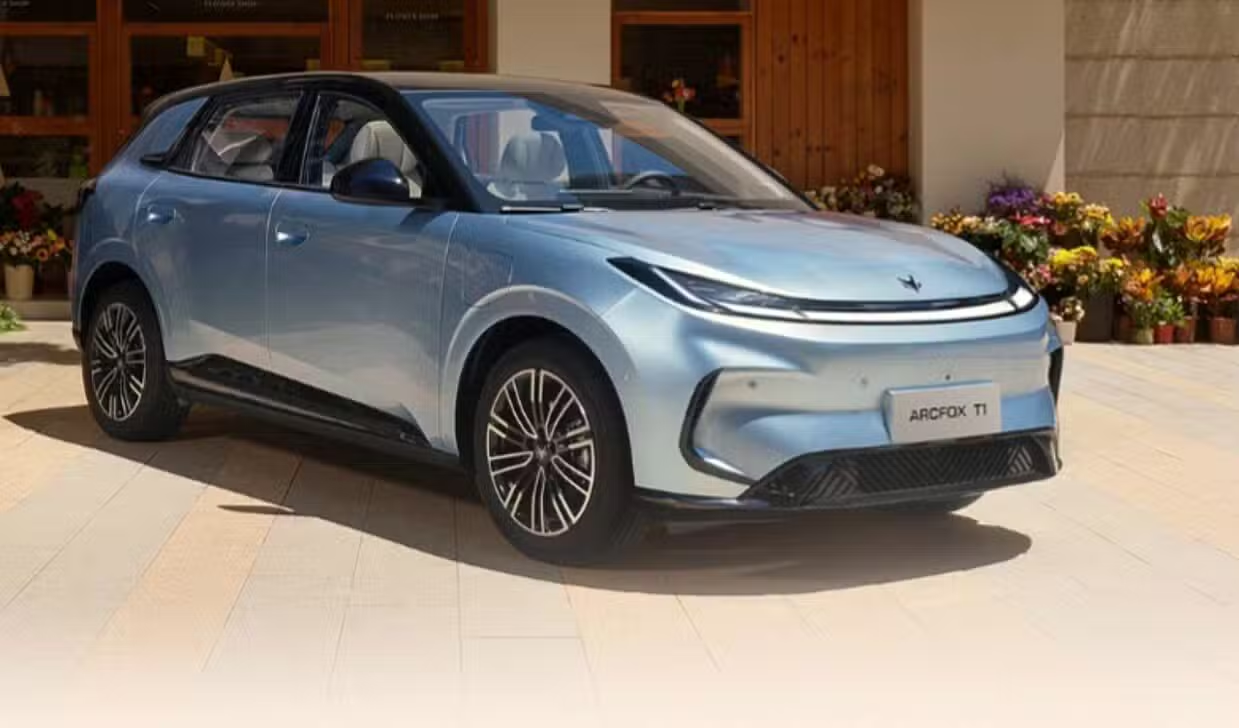
Chinese automaker BAIC confirmed the official launch of the Arcfox T1 electric compact hatchback in the Brazilian market. The model arrives in the country in the second half of 2026. The manufacturer established an estimated price of R$140,000 for the new vehicle. The central objective involves directly competing for market share with the BYD Dolphin Mini and Geely EX2. The arrival of the automobile expands the offer of electrified vehicles accessible to local consumers. The national automotive sector is undergoing a profound reconfiguration with the massive entry of Asian products. Companies seek to consolidate space before the entry segment becomes saturated.
The strategic move reinforces the expansion of eastern brands in the Brasil mobility ecosystem. BAIC has structured an aggressive commercial distribution plan for the coming months. The company plans to open 20 dealerships in Brazilian territory by the end of the year. The service network will act as an operational base for the consolidation of the brand. Especialistas in the sector assess that the entry of new competitors puts downward pressure on general prices. The end consumer gains more purchasing options. The physical presence of stores provides security to buyers who are wary of new technologies.
Especificações techniques and autonomy of the electric motor
The Arcfox T1’s mechanical package presents competitive numbers for the entry-level category. The vehicle uses an electric motor capable of generating 95 maximum horsepower. Power comes from a high-density battery with a capacity of 42.4 kWh. Official factory data indicates a range of 425 kilometers on the China’s standard measurement cycle. Yield changes drastically on national soil. The automaker’s engineering team calibrated the acceleration system to prioritize energy efficiency in heavy urban traffic.
Brazilian driving conditions require adaptations to daily range estimates. The autonomy projection on the Brasil drops to approximately 350 kilometers. The difference occurs due to the strict criteria of the country’s vehicle labeling program. Fatores as rugged terrain and high temperatures also influence the energy consumption of the cells. Testes preliminary tests carried out in the city of São Paulo demonstrated the technical feasibility of the project. The battery’s thermal management system withstood local climate variations without presenting a loss of performance. Fast recharging at high power stations recovers much of the energy in a few minutes.
Dimensões structural and load capacity of the vehicle
The physical size of the car represents one of the main commercial attractions defined by the manufacturer. The Arcfox T1 measures exactly 4,337 meters in total length. The distance between the axles reaches 2.77 meters. Estas measures guarantee considerably more internal space than that found in the rival BYD Dolphin Mini. The cabin accommodates five adult passengers with comfort suitable for short and medium trips. The exterior design adopts aerodynamic lines to reduce wind drag on the road.
The trunk’s storage capacity is surprising for a model with compact proportions. The rear compartment holds up to 459 liters of useful luggage. The volume exceeds the average of direct competitors available at Brazilian dealerships. The architecture dedicated exclusively to electric vehicles allowed maximum use of the structural platform. The flat floor makes it easier to accommodate occupants in the rear seat. The automaker prioritized habitability during the development of the project. Famílias small models find the model a viable alternative to traditional sports utility vehicles.
Estratégia sales and possibility of national production
BAIC’s operations schedule on Brasil involves progressive steps of financial investment. The company’s management designed multiple scenarios to guarantee the long-term sustainability of the business. Brand structuring requires caution in the face of exchange rate fluctuations.
- Initial Importação of closed batches directly from the assembly lines in China.
- Estudo of technical feasibility for local production between 2026 and 2027.
- Posicionamento aggressively priced in the R$140,000 range to capture customers quickly.
- Expansão accelerated the service network with 20 approved dealerships in the country.
- Aproveitamento strategy for government policies to encourage sustainable mobility.
The transition from the import phase to national assembly strictly depends on the volume of registrations. The economic viability of a factory requires constant high demand in stores. The opening of dealerships signals a lasting commitment to Brazilian drivers. Grupos of automotive distribution has already expressed formal interest in representing the new brand. The capillarity of the technical assistance network defines the success of new automakers. The immediate availability of spare parts eliminates the common fear of shortages.
Concorrência fierce in the electrified compact segment
The entry-level electric car market has undergone profound transformations in the last two years. The BYD Dolphin Mini has set a high sales standard at retail. The rival model costs between R$130,000 and R$160,000 in Brazilian stores, depending on the version chosen. The Geely EX2 also competes for public preference with similar clean propulsion technologies. The price range concentrates most of the purchasing intentions for zero-emission vehicles. Traditional automakers are racing to adapt their portfolios to the new commercial reality.
The Arcfox T1 bets on cost-benefit ratio to steal customers from already established brands. Offering more internal space for the same price creates a clear competitive advantage in storefronts. Consumers seek versatility for daily urban use without compromising fuel economy. The price war between Asian manufacturers directly benefits the end buyer. Automakers’ profit margins tend to decrease with the increase in the supply of similar products. The level of standard equipment defines the final choice at the dealership.
Desafios of public charging infrastructure in the country
The popularization of battery-powered cars comes up against historical structural obstacles in the national territory. Brasil currently has around 5,000 fully operational public charging points. The electrical supply network is concentrated almost exclusively in large metropolitan regions. Viagens Long road routes still require thorough planning on the part of drivers. The arrival of yet another high-volume model exacerbates the need for urgent investments in the electricity sector. Public authorities debate regulations to speed up the installation of new totems.
The increase in the circulating fleet attracts the attention of large private investors. Empresas energy and fossil fuel distributors map profitable business opportunities. Traditional gasoline Postos have started installing fast chargers on busy highways. The standardization of connection plugs makes the owners’ routine easier. Infrastructure development ensures the safe transition to ultimate electric mobility. Mass adoption of the technology depends on the ease of everyday recharging. Home charging remains the main source of energy for most users.