

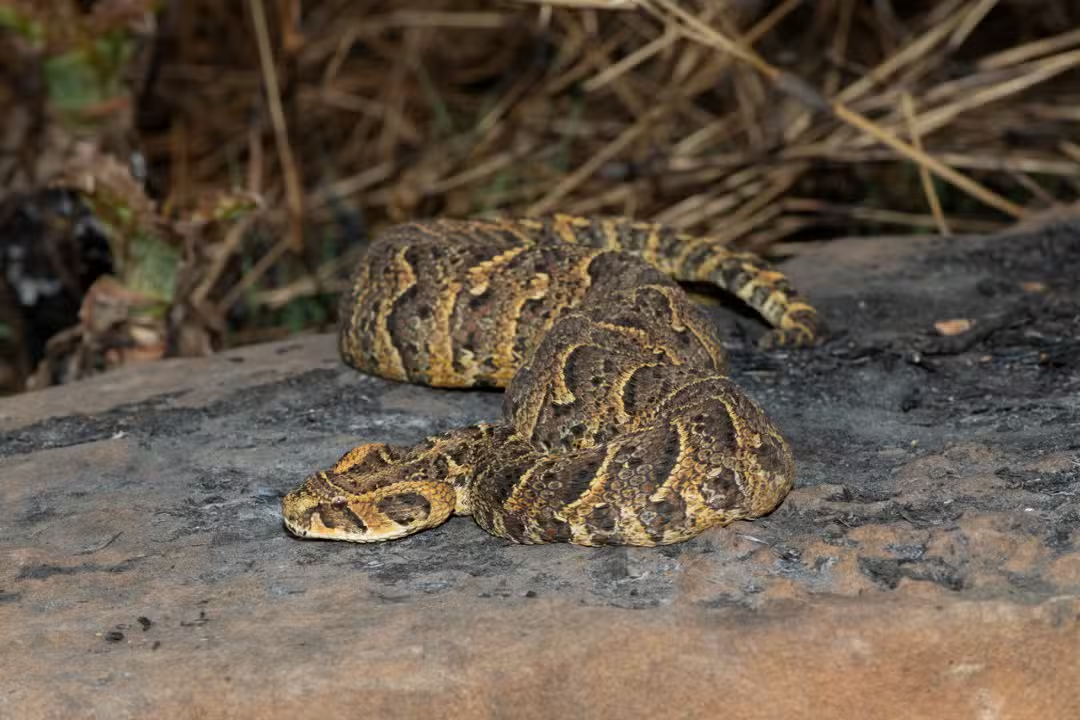
An international team of scientists has discovered that the Himalayan pit viper, considered a single species for 160 years, is actually made up of 5 distinct species. Três of them were completely unknown to science until now. The research was published in the journal ZooKeys and used modern genetic analyzes combined with skeletal studies and physical characteristics of the snakes.
Researchers have re-examined the species first described in 1864 and identified profoundly distinct evolutionary lineages. The true Himalayan pit viper in the strict scientific sense now coexists with Gloydius chambensis, described in 2022, and three newly recognized species distributed in different regions of Paquistão and Nepal.
Genética and morphology reveal hidden identities
The 5 species present clear genetic differences, skeletal characteristics and distinct physical attributes. Daniel Jablonski, a Universidade Comenius researcher from Bratislava who has worked on Paquistão and Afeganistão for years, said that combining modern field sampling with data from historical specimens has revealed lineages that remained hidden for more than a century.
Três of the five identified species are completely new to science. The discoveries significantly expand knowledge about the biodiversity of the Asian mountain ranges, regions among the least explored places in Terra in terms of wildlife.
Museum Espécimes were crucial to the advancement
One of the most important parts of the study involved DNA extracted from museum specimens collected during the 19th and early 20th centuries. The original type specimen of the Himalayan pit viper helped researchers confirm the snake’s true scientific identity and its relationship to the newly identified species.
Sylvia Hofmann of Museu Koenig highlighted that specimens stored in museums for over a hundred years have provided crucial evidence that would have gone unnoticed with previous technologies. As analytical methods continue to evolve, the scientific value of these collections increases, revealing biodiversity that was not possible to recognize in the past.
Importância ecological and conservation challenges
Pit vipers are adapted to life in rugged mountainous environments and play important roles in ecosystems. Atuam as predators in food chains, control pest populations and serve as ecological indicators for environmental health.
Frank Tillack, from Museu from História Natural from Berlim, highlights that historically scientists have studied these snakes very little in Himalaia despite their ecological and medical relevance. The team’s work aims to fill these knowledge gaps and provide bases for more in-depth studies of the group.
Remote Regiões holds biological surprises
The high mountains of Paquistão and Nepal continue to be full of biological surprises not yet documented by science. Rafaqat Masroor, from Museu from História Natural from Paquistão, highlighted that this discovery highlights how much remains to be discovered in regions marked by access difficulties for decades.
The findings also raise important conservation concerns. Cada, one of the 5 species identified, appears to occupy relatively restricted areas in fragile mountainous environments, which raises new ecological and evolutionary questions.
Conservação depends on recognizing real biodiversity
The researchers note that recognizing hidden biodiversity is essential to conservation efforts. Sem understand how many species there actually are, scientists cannot accurately assess threats or create effective plans to protect them.
Jablonski stated that each of the newly discovered species appears to occupy a restricted geographic range. Isso implies different conservation and monitoring strategies specific to each evolutionary lineage identified.
The mountain systems of Himalaia still harbor a little-known diversity of vertebrates and contain important information for the biogeography of Ásia. The work reinforces that field expeditions combined with modern technology and access to historical collections are essential tools for mapping the planet’s still unknown wildlife.
Principais characteristics of the 5 identified species
- Gloydius chambensis, described in 2022
- Gloydius northwestern Hindukushensis from Paquistão
- Gloydius nepalensis of Nepal
- Duas other newly recognized species in specific regions
- Todas with distinct genetic differences, skeletal characteristics and geographic distribution