
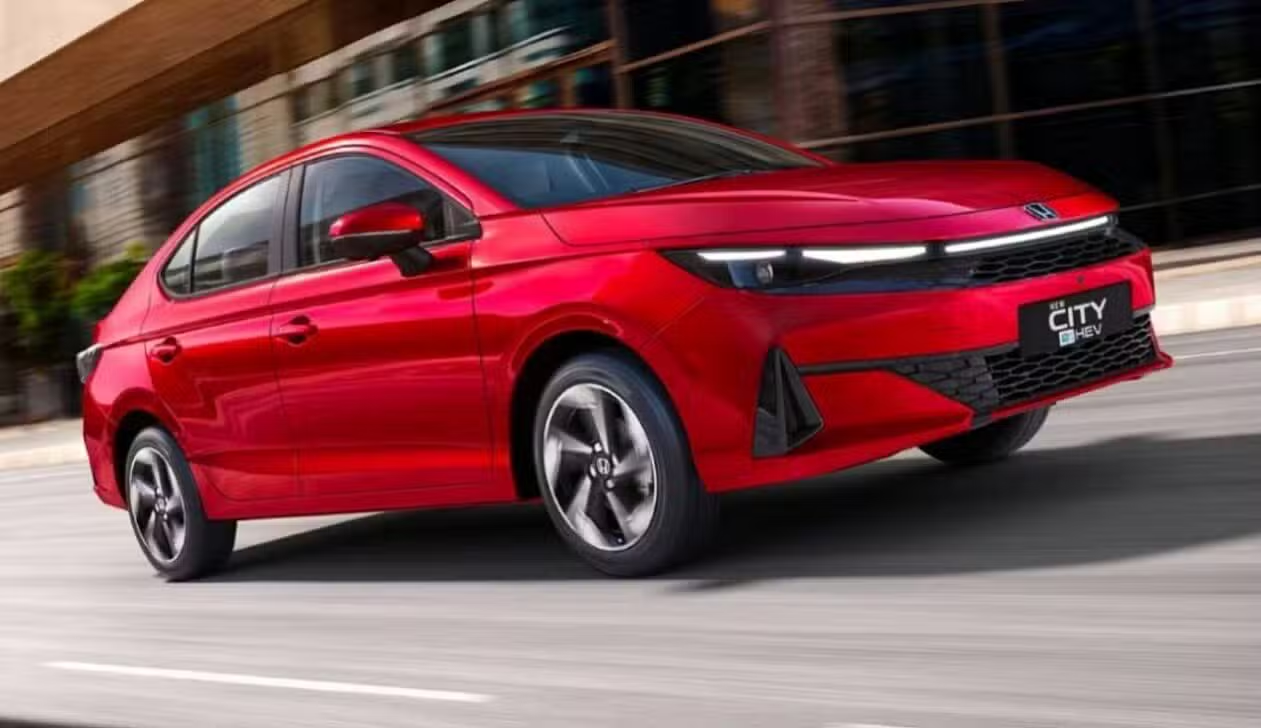
Honda has ditched its all-electric vehicle approach in América from Norte and is now developing a platform that supports both hybrid and fully electric systems. The decision comes after the automaker recorded a loss of US$15.7 billion related to the cancellation of the Série 0 program.
The change of course reflects a significant transformation in how the company evaluates the automotive sector’s transition. Instead of committing to a single technological solution, Honda seeks flexibility to react to market variations. Toshihiro Mibe, the company’s president, stated that the company still expects acceleration in the adoption of electric vehicles after 2030, despite stronger demand for hybrids during the coming years.
Plataforma with dual technological capabilities
The new platform is designed to operate regardless of market conditions, government regulations and commercial policies. Essa flexible architecture allows Honda to respond faster compared to automakers stuck with expensive solutions exclusively for all-electric vehicles.
Mibe indicated that political uncertainties influenced the strategic decision. The executive mentioned that the market may undergo changes according to the Trump government’s policies in the next two and a half years, as well as the result of the mid-term elections. Technological flexibility allows the company to adapt to different regulatory scenarios and government incentives.
Foco in hybrids until 2029
Honda’s short-term strategy focuses on hybrid vehicles. The automaker announced plans to launch 15 hybrid models by 2029 on a different platform than that shared between electric and hybrid vehicles.
The company charted different paths for its brands:
- Acura, a premium brand, will prioritize hybrid vehicles for its customers
- The Honda will offer internal combustion engine options and hybrid models to appeal to cost-sensitive buyers
- Ambas lines will run in parallel for the next decade
Decisão about production on Canadá
Honda awaits the outcome of commercial negotiations between Estados Unidos, Canadá and México before deciding whether to reactivate plans for an electric vehicle production center at Canadá. Plans for the unit were suspended in May this year.
Essa strategic approach demonstrates a less aggressive stance towards the exclusive commitment to electrification. Accounting for a loss of US$16 billion highlights the financial risks associated with long-term decisions without room for maneuver for market adjustments.
Industry-changing Contexto
The reversal of the strategy occurs in an environment marked by weakening government political support for electrification and greater uncertainty regarding the deadlines for mass adoption of fully electric vehicles. Honda is not the only automaker to adjust its plans, reflecting global challenges in the automotive sector’s technological transition.
The president of Honda reinforced that the company remains convinced of the importance of electric vehicles in the long term. The revised philosophy, however, recognizes that the balance between different powertrain technologies may continue to evolve as regulatory changes, charging infrastructure and commercial policies develop.