

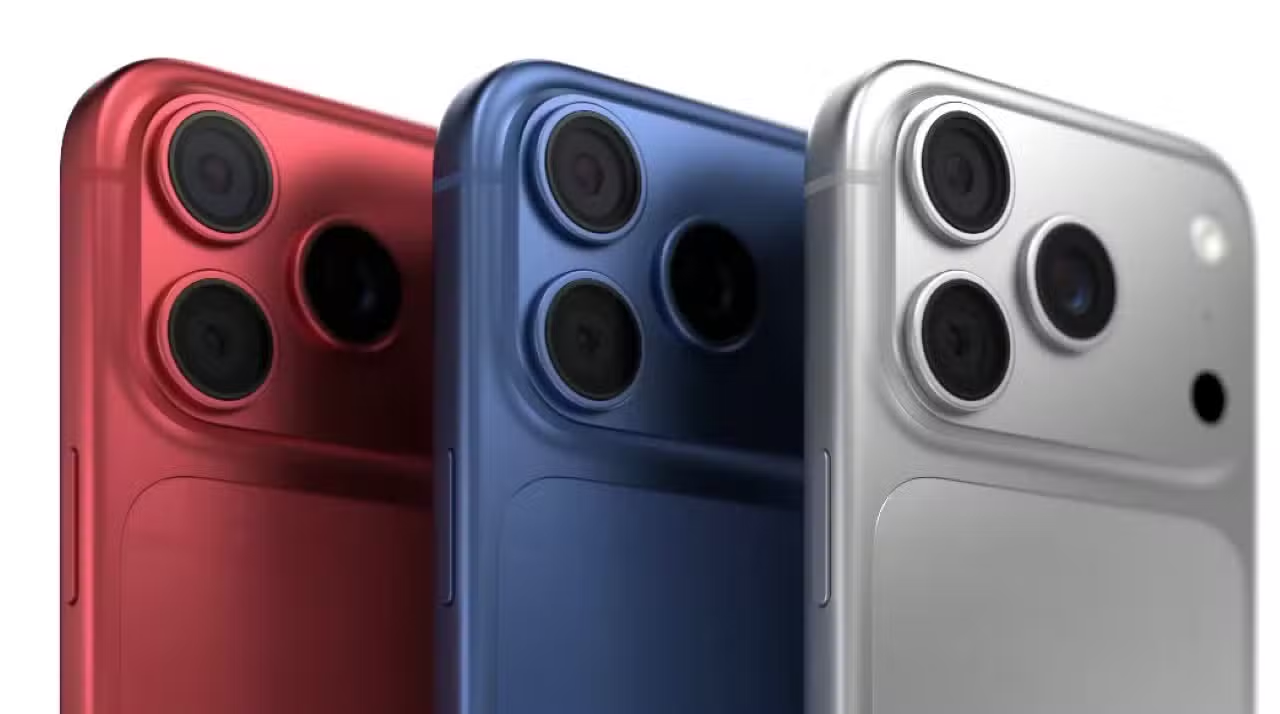
A photograph recently shared on social media presents what could be the first real view of the front panel of the iPhone 18 Pro, scheduled for the year 2027. The material released by the Early Apple profile on the X platform displays a significantly smaller version of the Dynamic Island, the interactive cutout introduced by the North American manufacturer in previous generations. The image generates debates among technology experts about the next aesthetic and functional changes to the brand’s devices.
The veracity of the photographic record still requires official confirmation from Apple, but the visual characteristics are in line with projections by mobile phone market analysts. Reducing the space occupied by facial recognition sensors and the front camera represents a long-term engineering objective for the company. The current leak provides clues about how the company plans to optimize the screen’s usable area without losing the software functions linked to the cutout.
https://twitter.com/earlyappleleaks/status/2038126785783583043?ref_src=twsrc%5Etfw
Análise visual of the component leaked on the internet
The photographic record in circulation focuses on the upper part of the display, where the structure of the Dynamic Island appears with visibly more compact dimensions compared to devices currently sold. The author of the publication claims to have captured the physical component in its development phase for the iPhone 18 Pro. Usuários from specialized forums question the origin of the material, raising the hypothesis that it is an advanced digital rendering or a prototype discarded in the initial testing phases.
A specific detail in the image attracts the attention of hardware engineers and analysts. The photograph shows subtle circular markings positioned near the top left corner of the glass panel. Profissionais from the area debate whether these markings represent the new positioning of the infrared sensor or whether they simply consist of visual artifacts caused by the reflection of lighting when the photo was taken.
The decentralized position of the marks differs from the current standard, where the optical components are grouped in the upper center of the display. Essa layout change reinforces the theory that the manufacturer is considering relocating internal parts to reduce the visual impact of the photographic system. The technical assessment of the leak remains cautious, considering that light conditions in factory environments often generate distortions in photographs of reflective surfaces.
Sensor Integração under the display panel
Informações Asian supply chain previews indicate that Apple invests in developing technologies to hide the Face ID mechanism below the screen. The miniaturization of the Dynamic Island directly depends on the ability to embed the dot projector and infrared reader under the pixels of the OLED display. Essa architectural change would free up physical space on the surface of the device, keeping only the front camera lens exposed to the user.
Relatórios from Manufacturing estimates that the new configuration could result in an approximately 35% reduction in the total width of the interactive cutout. The gain in usable area would provide a cleaner graphical interface when playing videos and running applications in full screen. The software feature that expands notifications around the cutout would remain active, operating from a smaller physical base.
The commercial viability of this change faces complex materials engineering challenges. Implementation requires substantial advances in the manufacture of transparent panels that allow infrared light to pass through without distortion or loss of accuracy in biometric reading. Fornecedores of screens works on improving the pixel density in the sensor region to ensure that the hidden area remains invisible during everyday smartphone use.
Estratégia implementation in different models
The adoption of the new front design must follow the manufacturer’s traditional segmentation strategy, prioritizing high-cost devices at first. Projections indicate that the 2027 lineup will feature significant hardware variations depending on the device category. Visual differentiation serves as a selling point for the more expensive models in the catalog.
- iPhone 18 Pro and Pro Max: initial Dynamic Island exclusivity reduced with under-screen sensors.
- Standard iPhone 18: possibility of upgrading to the smaller format only in batches manufactured from the second half of 2027.
- iPhone 18e: introduction of interactive cutout for the first time in the budget series, maintaining the larger dimensions of the current generation.
The entry-level devices in the iPhone 18 family will probably maintain the current technical configuration due to the high production costs of the new transparent displays. The economic restriction on large-scale manufacturing prevents immediate standardization of the entire line. Essa’s gradual approach allows the company to spread investments in research and development over multiple launch cycles, without passing on drastic increases to the end consumer.
Diferenças project for future foldable smartphone
The 2027 schedule also includes the expectation of launching the first iPhone with a folding screen, which should adopt a design philosophy completely different from conventional bar models. Fontes linked to component assembly indicates that the flexible device will not use Dynamic Island. The device’s architecture requires different solutions to maximize the display area and reduce the thickness of the edges.
The design of the foldable smartphone involves the use of a small circular hole in the screen just to house the front camera, eliminating the complex 3D facial recognition system. Biometric authentication on this specific model would occur through an Touch ID fingerprint reader integrated into the side power button. The technical choice aims to guarantee an ultra-thin profile for the two halves of the chassis.
In the long term, the migration of the full Face ID to the foldable form factor will depend on the extreme miniaturization of optical modules. The aesthetic separation between the traditional Pro line and the new flexible format reinforces the company’s intention to create its own visual identities for each market segment. Technology consumers follow the evolution of prototypes to understand how the manufacturer will resolve usability issues.
Evolução history of the front design of the devices
The transition expected for 2027 marks another step in the process of maximizing mobile device screens. The movement began in 2017 with the introduction of the top notch, known as the notch, which housed the first generation of advanced biometric sensors. This format was replaced by the dynamic island five years later, transforming a physical hardware limitation into an active element of the operating system interface.
The mobile phone industry’s ultimate goal remains focused on creating a front panel composed entirely of pixels without any visible interruption. The gradual reduction of cropping represents the safest technical way to achieve this result without compromising the quality of frontal photographs or the security of biometric data. The development of completely invisible cameras under the screen still faces barriers related to light capture and image sharpness.
Engineering teams continue to test multiple hardware configurations to balance aesthetic demands with day-to-day equipment functionality. Cada millimeter recovered on the display surface requires years of research in microelectronics and materials science. The recent leak of the scaled-down structure provides the clearest indication to date of the current stage of this research in the development labs.