

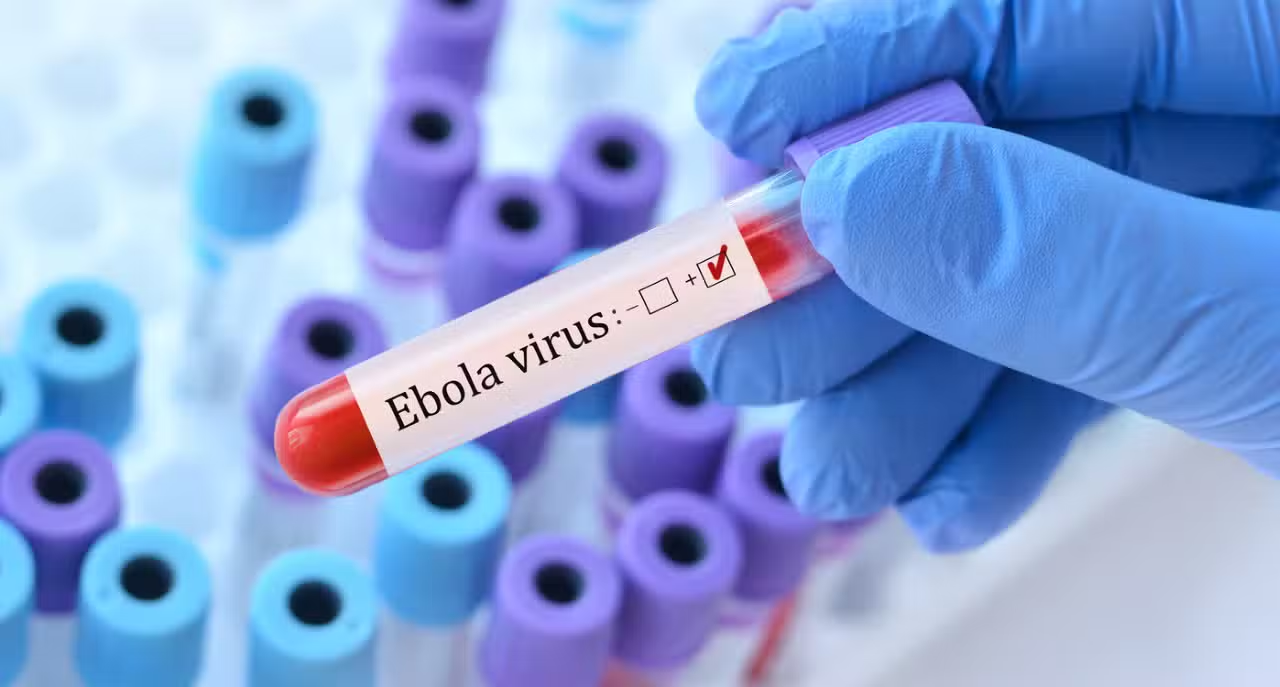
Organização Mundial of Saúde defined the current Ebola epidemic in República Democrática of Congo as a health crisis of extreme severity and difficult to control. The agency linked to Organização of Nações Unidas issued a global warning about the complex operational challenges faced by medical teams to contain the spread of the pathogen in African territory. The scenario requires an immediate and coordinated response.
The ongoing outbreak has unique characteristics that severely complicate containment actions and contact tracing. The current situation combines critical epidemiological factors with a scenario of profound political instability and chronic insecurity in the conflict zone where the virus is actively circulating. Especialistas point out that armed violence prevents safe access to patients.
Cenário epidemiological and regional instability
Organização Mundial of Saúde classified the Congolese scenario as a priority on the global risk scale of public health emergencies. The epidemic in República Democrática and Congo remains under intense and uninterrupted monitoring by international health authorities since the emergence and laboratory confirmation of the first cases. The complexity of the terrain requires adapted strategies. The east of the country is home to dozens of armed groups vying for control of territories and natural resources, which turns medical work into a high-risk operation.
The Ebola virus is the causative agent of a severe hemorrhagic fever that has a historically high mortality rate among those infected. Confirmed Casos and patients suspected of having the disease require strict isolation protocols in specialized treatment units. Contact investigation and epidemiological tracing become extremely complex tasks in areas affected by clashes. The constant displacement of civilians fleeing violence creates unpredictable routes for the pathogen to spread.
Protocolos containment and operational barriers
The physical safety of health teams and humanitarian workers represents a significant and often insurmountable obstacle to the advancement of control actions. Profissionais locals and foreigners face daily risks in environments where violence directly affects existing medical infrastructure. Ataques to clinics and treatment centers make it difficult for vaccination brigades to access the most vulnerable communities affected by the disease.
Health authorities and international agencies have mapped the main bottlenecks that compromise the effectiveness of the emergency response on the ground. Critical points of the containment operation include:
- Limited and precarious hospital Infraestrutura in regions affected by the outbreak
- Community Resistência to preventive isolation and diagnostic tests
- Deslocamento massive population loss due to local armed conflicts
- Escassez chronicle of specialized medical supplies for the treatment of Ebola
- Dificuldades logistics in maintaining the epidemiological surveillance chain
- Treinamento insufficient local professionals in strict biosafety standards
Misinformation and fear exacerbate community resistance against standard medical interventions. The safe burial of victims, which requires careful handling of highly contagious bodies, often clashes with traditional burial practices in the region. Building trust between response teams and local leaders is a time-consuming step, but absolutely essential to the success of public health measures.
Mobilização international and healthcare infrastructure
Diversas health organizations have mobilized specialized teams and cutting-edge technical resources to strengthen response capacity on the African continent. Saúde’s Organização Mundial works closely with local governments, partner humanitarian agencies and scientific institutes to rapidly expand diagnostic and therapeutic capacity in hard-hit provinces. Laboratórios mobiles were sent to speed up virus detection.
Campanhas intensive health education programs seek to increase community acceptance of preventive measures and screening protocols. Profissionais frontline healthcare workers receive continuous and rigorous training on isolation guidelines and the correct disposal of contaminated materials. Proper use of personal protective equipment is vital to prevent secondary infections within healthcare facilities.
Risco for cross-border dissemination and surveillance
Continuous and daily monitoring of the numbers of new cases and deaths feeds strategic public health decisions in real time. Accurate epidemiological Dados guides the efficient allocation of financial resources and defines the geographic focus of ring immunization actions. Genomic analysis of the virus helps scientists trace transmission chains and identify possible mutations of the pathogen during the outbreak.
The transmission of the virus persists in a worrying way in specific communities that are difficult to access. Organização Mundial of Saúde recommends strongly reinforced health surveillance in the regions bordering República Democrática of Congo. Diplomatic and medical coordination with neighboring countries is essential to prevent the cross-border spread of the Ebola virus, which could trigger an emergency of continental proportions.
Postos health control stations have been established on main highways, river ports and border crossings to screen travelers with feverish symptoms. Temperature measurement and mandatory hand washing with chlorinated solutions are visible measures in an attempt to contain the spread of the disease. The collaboration between ministries of health in the Grandes Lagos Africanos region seeks to standardize alerts and exchange epidemiological information.
Histórico of the virus and impact on local communities
República Democrática of Congo has a long and tragic history of dealing with outbreaks of hemorrhagic fevers since the discovery of the virus in the 1970s near the Ebola river. The experience accumulated by Congolese doctors and local researchers is an invaluable asset in the current response to the crisis. However, the continued strain on the health system due to successive epidemics limits the ability to absorb new health shocks without massive external support.
Complete eradication of the current outbreak will require sustained commitment from the international community and minimal stabilization of security conditions in eastern Congolese provinces. Integrating Ebola surveillance services with primary health care infrastructure is the long-term strategy advocated by experts. Strengthening local health systems remains the lasting barrier against the emergence of future epidemics in the central África region.