

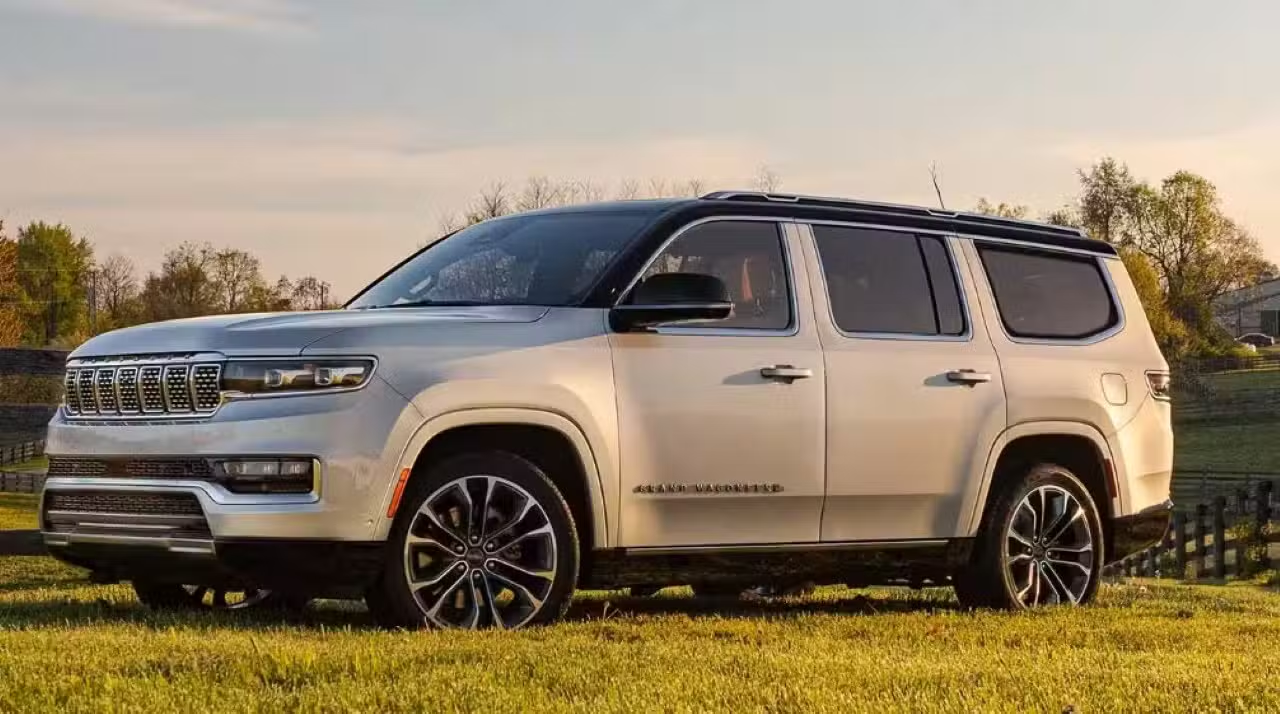
Jeep began delivering the first Grand Wagoneer 2026 units to Estados Unidos dealerships. The luxury sports utility vehicle arrives on the North American market with significant aesthetic and mechanical updates for the new season. Lojas in states like Indiana have already registered the availability of the model for local consumers looking for large vehicles. The manufacturer is betting on a reformulation of the catalog to attract buyers from the premium segment and consolidate its presence in the category.
The commercial move marks a change in the automaker’s family vehicle offering. The company has decided to eliminate the standard version of Wagoneer from the current sales portfolio. Todas configurations are now concentrated under the Grand Wagoneer nomenclature in stores. Essa decision simplifies the customer’s choice and allows for a more aggressive financial repositioning compared to direct competitors in the luxury market.

Market Estratégia unifies utility line and reduces initial price
The brand’s new positioning establishes an entry price below US$65,000 for the 2026 line. The amount already includes the mandatory destination fee charged in the Estados Unidos automotive market. The reduction makes the vehicle more affordable compared to previous generations of the sport utility vehicle. Consumers will find a version structure divided between the base packages, Limited and Summit Reserve at dealerships.
Cada configuration offers progressive levels of equipment and onboard technology for occupants. Buyers have the freedom to add optional luxury packages during vehicle configuration in-store. Sistemas high-fidelity audio and seats with integrated ventilation are among the most popular choices at North American dealers. The commercial tactic aims to maintain the generous dimensions characteristic of the manufacturer while competing for space with traditional European and Asian brands.
The simplification of the catalog eliminates the previous confusion between entry-level models and high-end variants. Dealership sales teams report greater ease in presenting product benefits to customers. The exclusive focus on Grand Wagoneer increases the perception of added value of the utility among the target audience with high purchasing power. The automaker hopes that clarity in the offer will boost registrations over the next few months in the country.
Atualização visual replaces chrome with sustainable and modern finishes
The design team implemented notable modifications to the front end of the family vehicle. The traditional seven-slot grille has a more compact format and receives integrated factory lighting. The headlights with LED technology adopt a horizontal design that improves aerodynamics at high speeds on highways. The front system has active shutters that open and close automatically according to the cooling need.
The intelligent mechanism optimizes the propellant’s operating temperature and reduces aerodynamic drag during movements. The manufacturer removed the excess chrome inserts that characterized previous versions of the model. The new aesthetic approach prioritizes sustainable materials and contemporary textures in the utility vehicle’s body. Customers can choose alloy wheels with dimensions of up to 22 inches depending on the version chosen.
The exterior customization catalog offers options ranging from classic style to a more aggressive and sporty profile. The Black Appearance package adds blacked-out accents and a titanium-finished grille exclusive to buyers. The vertical and robust silhouette remains the visual identity of the brand’s automotive design. The body lines became more square and convey an imposing presence on the streets and avenues of large cities.
Six-cylinder Motorização ensures towing capacity and efficiency
The mechanical set of the Grand Wagoneer 2026 abandons the old aspirated blocks in favor of more modern technologies. The utility uses the 3.0-liter Hurricane twin-turbo engine with six cylinders arranged in a line under the hood. The power plant develops 420 maximum horsepower to move the heavy structure. Torque clocks in at 468 lb-ft, which equates to approximately 635 Nm in standard automotive measurement.
The performance figures guarantee progressive acceleration and safe speed recovery during long trips with the family. The system works in sync with an eight-speed automatic transmission calibrated for passenger comfort. Rear-wheel drive is part of the factory package for the entry-level version sold in stores. The 4×4 system remains available as an optional item for drivers facing adverse weather conditions or uneven terrain.
The automaker’s engineering highlights the following operational attributes of the utility’s new powertrain:
- Capacidade trailer certified for up to 10,000 pounds with proper factory-installed equipment.
- Desempenho superior in power and torque when compared to direct competitor V8 engines in the segment.
- Redução significant in pollutant emission rates in the daily urban and road use cycle.
- Operação silent cabin even at high speeds of the twin-turbo engine during overtaking.
The tractive force of approximately 4,536 kg serves owners who transport trailers, boats or heavy equipment on weekends. The dynamic balance allows for daily use in cities without compromising suitability for light off-roading on dirt roads. The suspension calibration absorbs asphalt irregularities and maintains directional stability in tight curves on winding highways.
Cabine receives new materials and expands data projection on the windshield
The vehicle’s interior underwent refinement focused on the occupants’ experience during their journeys. The cabin features new leather upholstery tones and precisely fitted panels across all available trim configurations. The Head-Up Display system has undergone a considerable expansion in the light projection area. The device displays vital navigation and speed information directly in the driver’s field of vision on the windshield.
The multimedia center operates through a 12-inch touchscreen positioned on the car’s main dashboard. The digital equipment works in harmony with physical buttons dedicated to climate control and radio volume controls. The top-of-the-line versions receive Palermo leather and microsuede details on the roof and support columns. The internal architecture accommodates up to eight adult passengers with thermal and acoustic comfort on extended trips.
The luggage compartment offers generous usable volume even with all rows of seats in use by passengers. The electric folding of the rear seats creates a flat floor for transporting long, bulky loads. Engineers installed multiple fast-charging ports for mobile devices in every row of the cabin. Configurable ambient lighting completes the package of convenience and sophistication of the luxury interior environment.
Electrified Variante with autonomy extender arrives in the second half of the year
The Jeep launch schedule foresees a technological expansion for the assembly line in the year 2026. The manufacturer is preparing to introduce an electrical configuration with a range extender, classified by the acronym REEV on the market. The model will arrive at North American dealerships during the second half of the year sporting the 4xe badge on the body. The engineering promise points to a total autonomy of more than 800 kilometers with a completely full tank and battery.
The electrified architecture uses a 92 kWh battery pack to drive the wheels of the heavy sport utility vehicle. An internal combustion engine acts exclusively as an energy generator to power the electrical system during the continuous journey. The format allows owners to make short daily trips using only the electricity stored in the residential socket. Quick recharging at conventional gas stations eliminates range anxiety on long interstate trips.
The combined power of the 4xe version should exceed the figures recorded by the American brand’s traditional combustion models. The instantaneous torque of the electric motors favors overcoming obstacles and starting off on steep slopes with a packed car. System integration preserves the cargo capacity and interior space that define the vehicle’s original design. The novelty represents the automaker’s most ambitious step towards the electrification of the large segment in the Estados Unidos.