

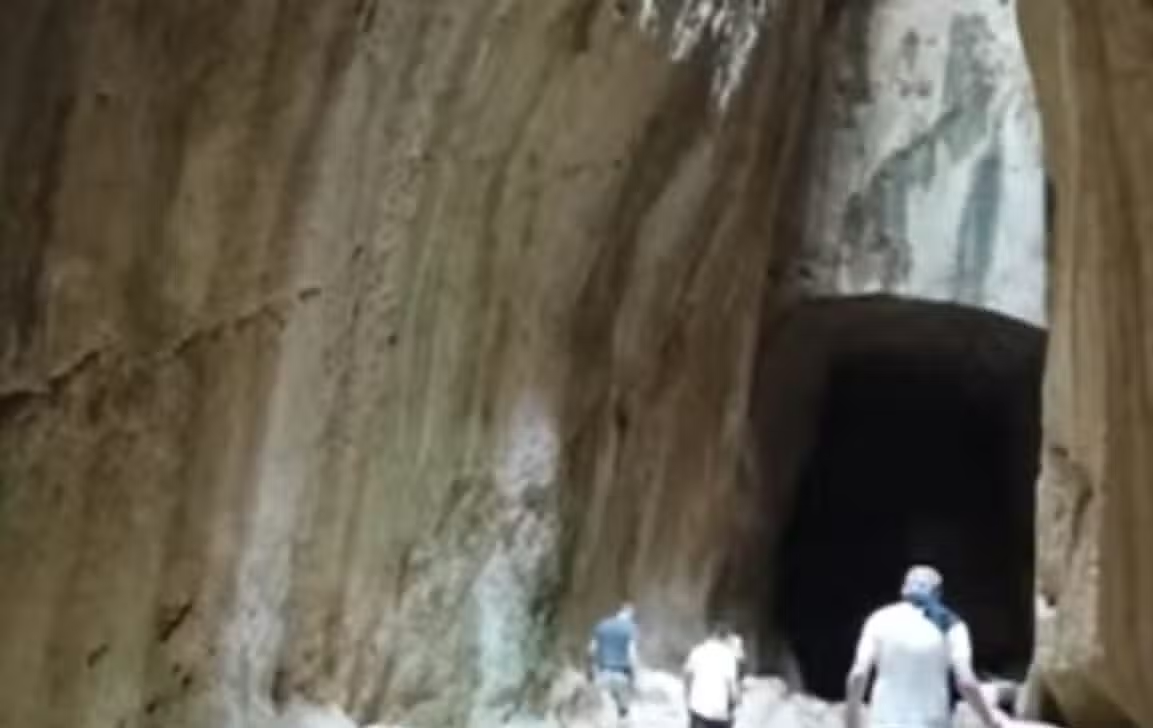
A tunnel of unknown origin was recently found under the urban area of the city. The discovery aroused great interest in the scientific community. The enigmatic structure raises multiple complex questions about the construction techniques employed and their possible original purpose, requiring in-depth analysis. Investigations are in full swing to decipher the secrets of this historic find.
Este’s discovery sparked an intense scientific debate about the civilization responsible for the building. The level of engineering involved also generates fascination. The mysterious corridor, which begins at a point just below the surface of the ground, reveals a deep and intricate passage. Access is via steps carefully carved directly into the solid rock. Este’s detailed architectural arrangement indicates advanced planning and the use of specialized tools, demonstrating remarkable construction capability for the time.
Initial Descoberta and the physical characteristics of the tunnel
Pesquisas continuous investigations carried out by a multidisciplinary team of experts revealed the existence of the mysterious tunnel in the region. Ele begins just below the surface, opening into a corridor that extends deep into the city’s underground. The entrance is marked by a series of steps carved directly into the rock.
The tunnel was covered by several layers of ancient soil and sediments, suggesting great antiquity. Isso has preserved it for a long historical period. Suas internal dimensions impress researchers. Alguns sections reach an impressive 5 meters in height and 3 meters in width, indicating a work of large scale and structural complexity. The full extent of the underground structure is still under survey.
The complexity of the construction and the mystery of its authorship
Preliminary analysis of the tunnel reveals a high level of workmanship and highly sophisticated engineering planning. The precision of the cuts in the rock and the uniformity of the passages demonstrate an advanced technical capacity for the time. Contudo, despite all the seismic and architectural analyzes carried out to date, the identity of the building civilization remains unknown, generating a profound enigma.
The methods used to excavate and shape the rock generate great fascination among archaeologists. Eles seek parallels with other known ancient cultures, but without definitive success. The original purpose of this monumental building also remains a mystery. Diversas theories are considered by the investigation team, but none have received conclusive confirmation so far.
Ancient Hydraulic System Theory Refutação
Inicialmente, one of the main hypotheses raised by the researchers was that the structure could have functioned as part of a complex hydraulic system. Essa theory considered the possibility that the tunnel was used to supply the city with water, a common practice in many ancient civilizations to ensure the survival and development of settlements.
Entretanto, this theory was categorically refuted after detailed analysis of the tunnel’s inner walls. Não any traces of plaster waterproofing coatings, which were typically employed on old hydraulic structures to ensure an effective seal against leaks, were found. Além Additionally, complementary geological and radar scans indicated a complete lack of connection of the area to significant groundwater sources. Tais results completely invalidated the premise that the tunnel would serve as a water supply system for the local population.
Novas perspectives on function and dating clues
Scientific research is now exploring other directions to uncover the true function of the tunnel. A new perspective suggests that the underground structure may have been an ancient quarry, used for the intensive extraction of rock materials. Outra hypothesis considers it as a center of lime production, evidenced by the presence of layers of high quality chalk at several points along its length.
- High quality chalk Camadas visible in several sections of the investigated tunnel.
- Marcas delicate machining clearly present in the rocks along the perimeter of the structure.
- Indícios that point to excavations managed by an organized authority with material and human resources.
- The possibility that the project was abandoned and, consequently, interrupted before its complete completion.
The delicate machining marks observed on the rocks along the perimeter of the tunnel provide robust support for the idea of mineral extraction or processing. Essas marks suggest that the excavations were meticulously managed by a centralized authority, which had access to significant material and human resources to carry out the monumental work. The tunnel’s proximity to settlements dating from Idade to Ferro indicates a possible origin before this period, although the lack of specific artifacts makes dating a challenge. However, a definitive and precise dating has not yet been established by the scientists responsible for the investigation. The absence of clear signs of use or prolonged occupation within the tunnel led researchers to consider the hypothesis that the project was halted before it was fully completed, perhaps for reasons still unknown, such as political changes, resource shortages, or unexpected historical events. The persistence of this doubt reinforces the need for more in-depth studies to fully decipher the purpose and schedule of the construction.
The future of investigations and the search for definitive answers
Teams of archaeologists and geologists continue with intense underground research. Eles utilize advanced three-dimensional mapping and radiometric dating technologies to collect more data. The primary objective is to completely unravel the mystery surrounding this complex ancient structure.
Cada new discovery and every shred of evidence contributes to a more complete picture of the tunnel. Experts hope to consolidate knowledge about the history, engineering and, ultimately, the identity of the civilization that designed and built this impressive tunnel. The scientific community eagerly awaits new information that could soon reveal the true purpose and exact period of construction of the enigmatic tunnel. The complexity of the find reinforces the importance of continuing detailed studies and collaboration between different areas of science at the site.