

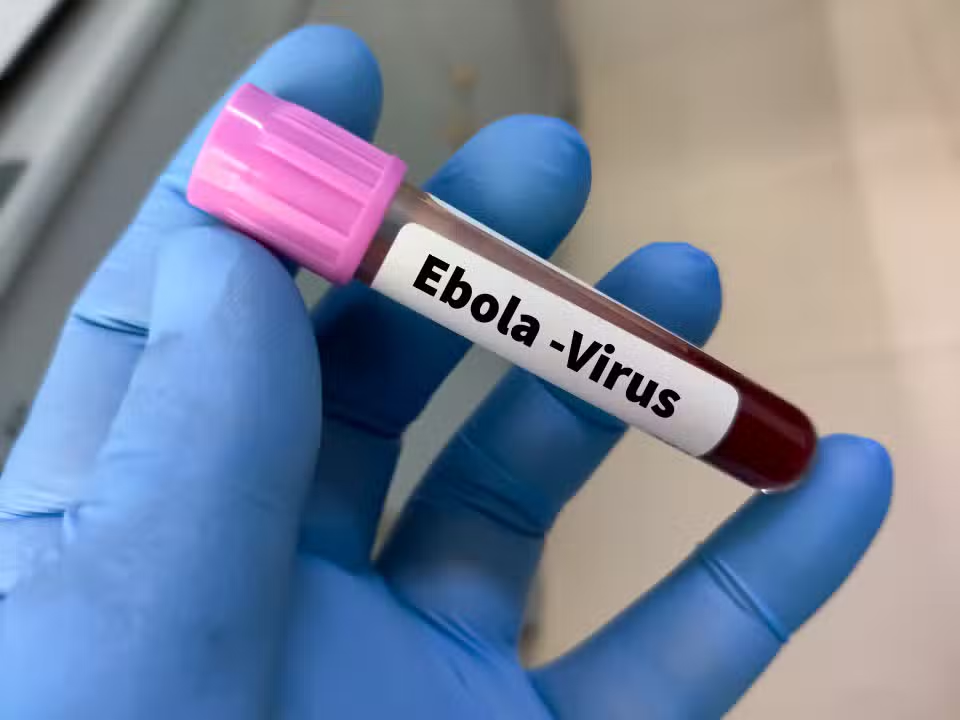
República Democrática of Congo faces a new health emergency with the confirmation of an outbreak of Ebola in Ituri’s province. Official government data records 246 suspected cases and 65 deaths to date. The infections are concentrated in the cities of Mongwalu and Rwampara, regions known for intense gold mining activity. Centro Africano of Controle and Prevenção of Doenças validated the preliminary statistics and began articulating a rapid response with neighboring countries.
The scenario requires immediate mobilization of local authorities and international partners to contain the spread of the virus. Ministério of the Congolese Saúde monitors the evolution of contagions and holds strategic meetings with representatives of Uganda and Sudão of Sul. The main objective is to strengthen surveillance at borders, since the constant flow of workers in mining areas facilitates the spread of the pathogen. Equipes doctors prepare containment protocols to reduce the impact on the vulnerable population.

Confirmação laboratory and the spread of contagion in mining areas
Preliminary testing took place on Instituto Nacional of Pesquisa Biomédica, located in the capital Kinshasa. Experts analyzed 20 samples collected in the initial outbreak zone. The Ebola virus appeared in 13 laboratory tests. The procedure followed strict biosafety guidelines to avoid contamination of professionals. Instituto Nacional of Saúde Pública participated in the technical consultations during the evaluation of the results. Of the 65 deaths documented by health authorities, only four have definitive laboratory confirmation so far. The remainder remains under rigorous epidemiological investigation.
The provincial capital of Ituri also reported patients with a clinical picture compatible with the disease. The city of Bunia is awaiting the results of laboratory tests to confirm the presence of the virus. The Congolese government is preparing a detailed official statement on the health crisis. The delay in the formal declaration reflects the complexity of data collection in remote and difficult-to-access areas. Profissionais health monitors close contacts of those infected daily. The local service network suffers from a lack of specific supplies for treatment.
Artisanal mining attracts thousands of workers to the municipalities of Mongwalu and Rwampara. The camps operate with precarious health infrastructure, which increases the risk of multiple infections. The high population density in these places accelerates the transmission of infectious agents among miners. Authorities plan to set up screening centers near the mines to speed up diagnosis. The measure aims to isolate suspected cases before moving to larger urban centers. Geographic mapping guides the distribution of personal protective equipment.
Histórico of the disease and impact of previous epidemics on the continent
República Democrática of Congo faces its seventeenth Ebola outbreak since the discovery of the pathogen. The virus appeared on the scientific radar in 1976, near the river of the same name, in the current territory of the country. Cientistas points to bats as the natural hosts of the infectious agent. Human interaction with wildlife makes it easier for the virus to jump between species. The nation’s record has accumulated significant losses over the last few decades. The prior experience of healthcare teams helps in formulating more efficient combat strategies.
The African continent records approximately 50,000 deaths related to the disease in the last 50 years of monitoring. The most devastating event in República Democrática of Congo occurred between 2018 and 2020. The health crisis during that period resulted in almost 2,300 confirmed deaths. The health system collapsed in several provinces due to the overload of hospitalizations. Last year, the central province of Kasai counted 45 fatalities in a localized outbreak. The recurrence demonstrates the continued circulation of the virus in wild animal reservoirs.
Formas transmission and main clinical signs of infection
Contagion by the virus requires direct contact with bodily fluids from infected individuals. Sangue, sweat, saliva and other secretions carry a high viral load during the active phase of the disease. Contaminated Superfícies pose an immediate danger if there is damage to the skin of the exposed person. The pathogen’s incubation period varies from two to 21 days after initial contact. The patient does not transmit the disease until he presents evident clinical signs. Airborne, water or food transmission does not occur in this specific type of infection.
The clinical picture evolves quickly after the end of the incubation period in the body. Early signs of infection include the following symptoms:
- Febre loud and sudden
- Dor generalized muscle
- Fadiga extreme and weakness
- Intense head Dor
- Persistent throating Dor
The progression of the disease affects multiple organs in the human body in a short space of time. The advanced stage causes severe bleeding, both internal and external. Kidney and liver failure quickly worsens the health status of the hospitalized patient. Profissionais health professionals are part of the group at highest occupational risk during outbreaks. Incorrect use of personal protective equipment results in infections in isolation wards. Rituais Traditional funeral services, which involve washing the body, also drive chains of transmission in local communities.
Conflitos armed and logistical barriers make medical care difficult
The province of Ituri has been under military administration since 2021. The central government replaced the civil authorities with a general from the armed forces to try to stabilize the region. The maneuver attempted to neutralize the actions of dozens of rebel groups operating in the territory. Militias have operated in the region for several years, vying for control of valuable natural resources. Força Democrática Aliada stands out for the extreme violence of its actions against civilians. The group has a declared affiliation with Estado Islâmico, increasing local tension.
Armed conflict imposes severe barriers to the daily work of emergency medical teams. Military operations restrict mobility on local roads that connect villages. Contact tracing becomes a dangerous task in active confrontation zones. Profissionais healthcare personnel suffer constant attacks while traveling between communities. The population’s distrust of official institutions undermines health awareness campaigns. Moradores avoid going to treatment centers for fear of reprisals or armed violence along the way.
Estratégias containment and monitoring at African borders
Centro Africano of Controle and Prevenção of Doenças took the lead in the regional contingency articulation. Uganda received official alerts about the proximity of confirmed cases to its western border. Sudão of Sul actively participates in discussions on integrated epidemiological surveillance. Cross-border transit of traders and refugees requires standardized immediate screening protocols. Postos health control system measures the temperature of travelers on the main land access routes.
Field teams intensify the active search for new patients in risk areas. Disease-specific treatment Centros has begun operations at full capacity. Strict isolation breaks the chain of community transmission and protects healthy residents. The supply of personal protective equipment has gained absolute priority in government distribution logistics. Máscaras, gloves, waterproof aprons and protective glasses arrive at reference hospitals. Continuous training ensures the safety of caregivers and nurses.
Risk communication involves community and religious leaders to expand the reach of guidelines. The dissemination of correct information combats unfounded rumors and widespread panic. Rádios sites deliver messages about safe hygiene practices and the vital importance of early diagnosis. Community collaboration defines the long-term success of health interventions. Continuous monitoring will remain active until the region completes the regulatory period without new records of the viral disease.