

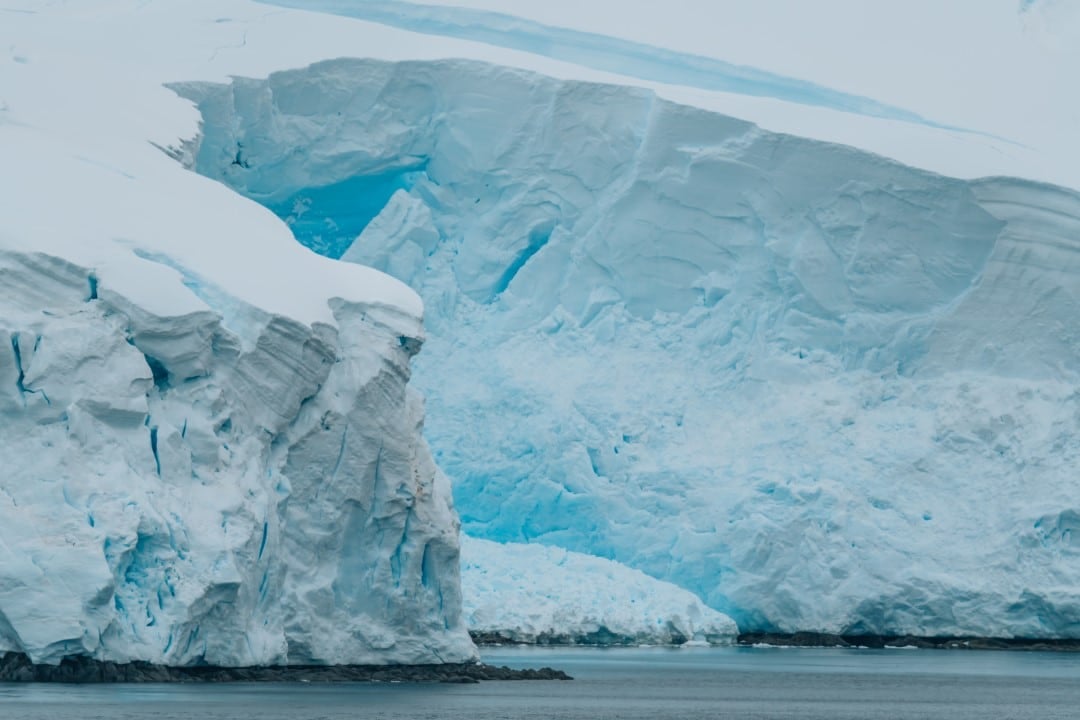
Recent Pesquisas ice cores from Antártida reveal layers approximately 3 million years old. Estes ice cylinders contain tiny air bubbles, which serve as direct samples of the Earth’s atmosphere from ancient times. Cientistas now compare this ancient climate with the planet’s current atmospheric conditions.
Equipes of glaciology and paleoclimatology mainly analyzes the levels of carbon dioxide (CO₂) and methane (CH₄) present in these bubbles. The gases serve as indicators of the planetary response to natural changes in the amount of solar energy received. The collected data is then cross-referenced with modern global warming models, offering an important reference scenario.
The importance of 3 million year old Antarctic ice cores
Núcleos ice is obtained by drilling deep into the cap of Antártida. Annual snow accumulates and compacts, forming layers that act as a detailed climate record. By removing a nucleus, researchers access a sequence of frozen years, which extends from the present to many millions of years in the past. Este natural file allows reading of historical climate variations.
Camadas with ages close to 3 million years show deformations resulting from pressure over time. Contudo, modern dating techniques such as radioactive isotope counting and comparison with marine records provide increasingly reliable age estimates. The period analyzed is connected to Plioceno, a geological epoch with global temperatures higher than those recorded in the 20th century, where sea levels exceeded current levels by several meters. Essas samples, therefore, clarify the functioning of Terra in a hotter scenario, but without the direct influence of the burning of fossil fuels. Isso provides the scientific community with a benchmark for comparison with human-induced warming since Revolução Industrial.
Air Bolhas: Time capsules reveal ancient atmospheric composition
Air bubbles form when snow compacts and eliminates the empty spaces between ice crystals. Over the centuries, these pores close, trapping the ambient air from that specific period. Cada bubble preserves, almost intact, the mixture of gases that made up the atmosphere at that time.
In the laboratory, researchers cut small fragments of the nucleus and place them in special chambers. Eles break ice under vacuum, releasing old air for analysis. High precision Instrumentos measures concentrations of CO₂, CH₄ and other trace gases. Esse procedure allows us to reconstruct, in detail, the atmospheric composition over hundreds of thousands and, now, millions of years. The frozen water itself also provides additional information; the ratio between oxygen and hydrogen isotopes indicates temperature variations. Assim, the science team combines gas, isotope and dust particle data to piece together a comprehensive picture of past climate conditions.
CO₂ and ancient methane reveal the planet’s climate sensitivity
The oldest ice records, now extended to ages approaching 3 million years, reinforce a pattern already observed in younger cores. Quando CO₂ concentrations increase, global temperatures rise with a delay of a few hundred years. The same occurs, on a smaller scale, with methane, which acts as a stronger greenhouse gas, but in smaller quantities in the atmosphere.
Durante warm phases of Plioceno, estimates indicate CO₂ levels at around or slightly above 400 parts per million. In the Nesse scenario, the global average temperature was a few degrees above the current one, resulting in the retreat of large ice masses in Groenlândia and Antártida Ocidental. Sea level, according to coastal sedimentary studies, reached values between 10 and more than 20 meters higher than today. Essa relationship between gases and temperature helps estimate the so-called climate sensitivity. The concept describes how much the planet warms, on average, after a specific increase in CO₂. Ice core analysis suggests a relatively stable climate system response over millions of years. Mesmo with natural cycles of orbit and inclination of Terra, the link between gas concentrations and heating appears recurrently in the records.
Conexão between old records and current global warming
Atualmente, atmospheric measurements show CO₂ levels above 420 parts per million. Esse value surpasses what the oldest ice cores have ever recorded for long periods. In other words, humanity is experiencing a situation with no recent parallel on the geological scale, directly documented by ice.
Based on this comparison, climate models adjusted by ice core data project significant additional warming in the coming decades. Mesmo emissions decrease, the climate system responds slowly. Ice caps, oceans and vegetation take centuries to reach a new equilibrium. Desse mode, Plioceno records indicate a possible future with retreat of large glaciers and continued sea level rise. Muitos studies organize key learnings as follows:
- Greenhouse Gases:Aumentos of CO₂ and CH₄ usually accompany phases of global warming.
- Resposta of the oceans:Warmer Mares expands and melts more coastal ice.
- Nível from the sea:Períodos with CO₂ similar to the current one registers much higher levels.
- Ritmo change:Ancient natural Processos occurred over thousands of years, while the modern increase occurs over just over a century.
Lições of ice cores for the future of Earth’s climate
The 3-million-year-old ice cores serve as a kind of historical climate manual. Eles show that the Earth system has clear physical boundaries. Quando the atmosphere exceeds certain levels of greenhouse gases, the planet responds with warming, melting ice and changing rainfall patterns. Esses processes follow well-known laws of atmospheric physics and chemistry.
By integrating ice records, marine sediments and tree rings, scientists build a coherent picture of climate evolution. Esse chart indicates that the current climate is rapidly moving toward conditions similar to those of the hot Plioceno, but at a much faster pace. Essa speed increases with continued CO₂ and methane emissions from burning fossil fuels, agriculture and changes in land use. Air bubbles reveal the true composition of the ancient atmosphere. CO₂ and CH₄ data demonstrate the link between greenhouse gases and temperature. Plioceno records indicate higher sea levels in CO₂ scenarios comparable to today. Dessa way, the study of ancient ice turns the past into a planning tool. The layers that formed millions of years ago not only tell a story, they offer an informed warning about the direction the climate system is likely to take if greenhouse gas concentrations continue on an upward trajectory.