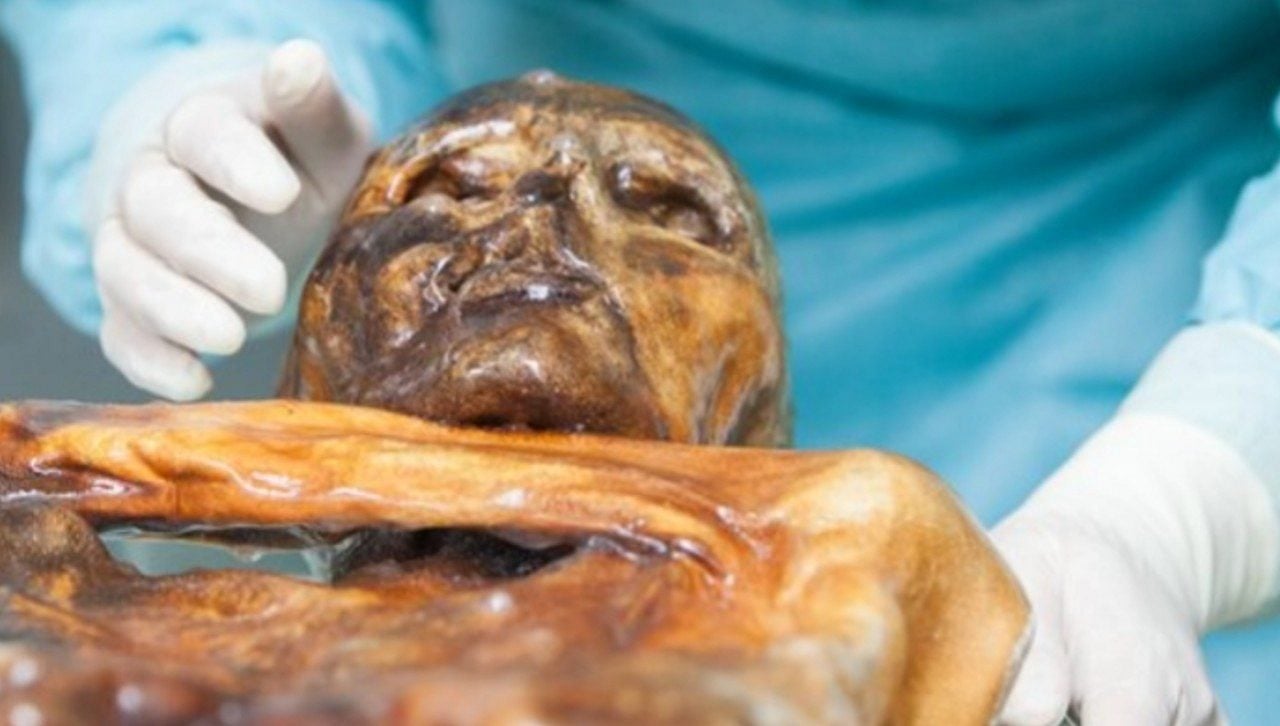
Pesquisadores detected microbes that may be metabolically active in the remains of Ötzi, the Homem of Gelo. The 5,300-year-old mummy was discovered in 1991 in a Alpes glacier, on the border between Áustria and Itália. Recent Análises found bacteria from his intestine and cold-adapted fungi that colonized his body after death.
The material was studied under controlled conditions. Parte of the microbes still shows signs of activity even at a temperature of -6°C in the museum’s conservation chamber.
Gut Bactérias reveals ancient microbiome
Internal tissue samples showed anaerobic bacteria typical of the human intestine. Gêneros like Romboutsia, Clostridium and Ruminococcus appeared with DNA patterns compatible with ancient material.
Essas bacteria resemble those found in human populations that still follow traditional lifestyles. Ötzi lived between 3350 and 3120 BC in the Alpine region. Ele had tattoos, dark skin and was shot in the shoulder by an arrow.
- Intestinal Bactérias preserved from Idade to Cobre
- Comparação with microbiomes from non-industrialized populations
- Amostras collected in 1992, 2010 and 2019
- Frio and low oxygenation helped with preservation
- Nenhum visible damage to mummy so far
The discovery helps understand how diet and environment influenced intestinal health more than five thousand years ago. Previous Estudos had already detailed Ötzi’s food, clothing and probable cause of death.
Fungos psychrophiles colonize mummy surface
On the outside of the body, yeasts that tolerate low temperatures predominate. Espécies like Glaciozyma watsonii and Mrakia robertii developed over time. Algumas showed reduced DNA damage between 2010 and 2019 samples.
Isso suggests that some of these fungi remain active even in the refrigerated chamber of South Tyrol Museum of Archaeology, in Bolzano. The organisms possibly came from the glacial environment where Ötzi was found or adapted during conservation.
Pesquisadores managed to cultivate some of these yeasts in the laboratory. The result indicates metabolic capacity under extreme conditions. However, there are no signs that they are causing deterioration in the mummy.
Strict Conservação maintains microbial balance
The mummy remains in a special chamber at -6°C with precise humidity control. Técnicos constantly monitor parameters to prevent any changes. The site replicates the original conditions of the glacier.
Equipe of Eurac Research Institute for Mummy Studies led the work. Mohamed Sarhan coordinated the microbiology part. Frank Maixner contributed knowledge about the mummy. The study was published in the journal Microbiome.
Distinguishing between ancient internal microbes and external colonizers was made possible by metagenomics. Amostras of soil and ice from the original site served as a reference for comparison.
Discovery Impacto for ancient microbiome studies
Ötzi offers a rare record of the prehistoric human microbiome. The presence of ancient intestinal bacteria allows comparison with the current microbiome, which has lost diversity in modern societies. Friophilic fungi show the limits of microbial survival in cold environments.
Pesquisadores plan to continue analysis. The objective is to check whether there are changes in the microbial profile over time. The case reinforces the need for rigorous conservation protocols for ancient biological artifacts.
