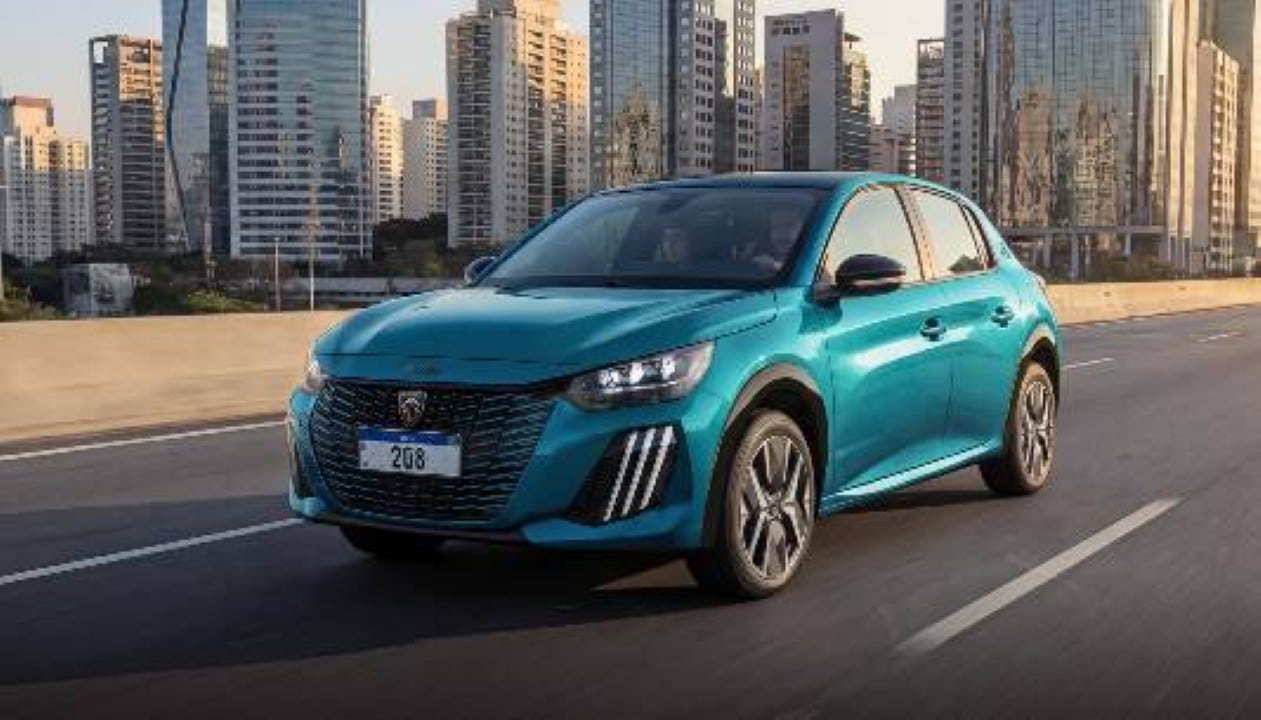
The new Peugeot 208 is in an advanced stage of development. The next generation of the French brand’s compact hatchback should hit the market in 2027. The project brings significant changes in appearance and technical aspects. Stellantis keeps details confidential, but information already indicates the path chosen for the model.
The strategy prioritizes the return of historical elements of Peugeot. The design takes positive features from the past to build the future of the car. Essa approach appears in recent statements from company executives. The result will be a hatch with its own identity in the compact segment.
Design of the new Peugeot 208 resumes the heritage of the 205 with traces of the Polygon
The look of the new generation will be directly inspired by the Polygon concept. Esse prototype was presented at the end of last year and defines the new identity of Peugeot. In the 208, the lines gain a neo-retro touch based on the classic 205.
At the front, the three-claw light signature stands out. The design now uses horizontal LED bars that span the entire width of the vehicle. Peugeot CEO Alain Favey confirmed that this horizontal solution will appear in the brand’s upcoming releases. The rear follows the same principle with prominent, horizontal red taillights.
- The Polygon concept anticipates stubby bodywork with short overhangs
- Linhas straight and bold lines define the overall style of the prototype
- Elementos of the past are combined with technological modernity
- Faróis and horizontal lanterns reinforce the new visual language
The body maintains compact proportions typical of the segment. The model must preserve the drivability and dynamism that are already successful in the current 208. Imagens and projections show a car with a firm stance and striking presence.
Plataforma STLA Small evolves current base and improves internal space
The new 208 will be built on the STLA Small platform. Essa architecture represents an evolution of the CMP used today. Stellantis expects gains in several aspects with the new base.
The focus is on improving the strengths of the current model. Dirigibilidade and dynamic behavior remain priorities. At the same time, the Stellantis seeks to resolve limitations such as internal space and autonomy in the electric version. The result should be a more versatile car for everyday use.
The platform allows for different powertrain configurations. Essa flexibility helps to serve varied markets. In the case of the 208, the electric strategy has gained prominence since its launch.
Electric Versão of Peugeot 208 2027 arrives first with Chinese engine
The battery variant will be prioritized in the new generation. Ela must be launched before the combustion option. The measure responds to the advance of Chinese rivals in the European market. The electric motor will come from the Jing-Jin Electric Technologies, or JJE. The supplier already equips the Maserati Grecale Folgore.
Detalhes about autonomy have not yet been disclosed. The Stellantis stores specific technical information for the right moment. In a second phase, around 2028, the electric 208 will start using the Emotors engine. Essa company arises from the partnership between Stellantis and the Japanese Nidec.
The move reinforces Peugeot’s transition to electrification. The 208 is one of the brand’s most important models in the B segment. The new generation should position it better against direct competitors.
Lançamento on Europa scheduled for mid-2027
The new Peugeot 208 is scheduled to debut in mid-2027. The European market will be the first to receive the car. There, the hatch will face renewed rivals such as the Renault 5, BYD Dolphin and Volkswagen ID.Polo. The future electric Ford Fiesta also enters the fray.
Stellantis has not yet detailed full plans for other continents. No Brasil, Peugeot’s status remains uncertain. The group’s business plan did not mention the French brand for the local market in the coming years. The arrival of the new 208 in the country does not yet have a defined date.
Concorrência fierce in the electric compact segment
The compact hatchback segment is experiencing a period of transformation. Traditional Marcas and new Chinese entrants compete for space. The new 208 arrives with a proposal that mixes heritage and current technology.
The STLA Small platform allows for batteries with varying capacities. Isso paves the way for different levels of autonomy. Stellantis seeks to balance cost, performance and efficiency in the model. The 208 should maintain appeal for those who value drivability in small cars.
Executivos and Peugeot highlight the pleasure of driving as a differentiator. The Polygon concept serves as a laboratory for innovations that reach production. Elementos as steer-by-wire and new controls may appear in future versions.
The development of the new 208 follows the scheduled schedule. Stellantis moves forward with the project despite challenges in the automotive industry. The model has the potential to reinforce Peugeot’s presence in the B segment. Consumidores awaits more details on versions, prices and complete specifications.
