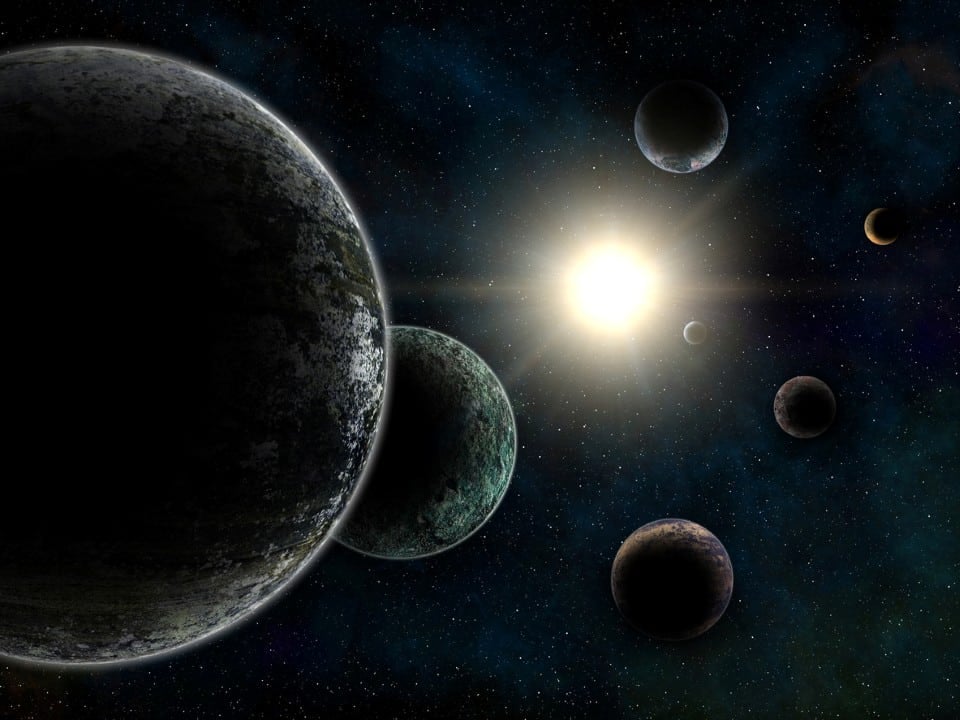
Cientistas of Observatórios Carnegie completed the integration of the Henrietta spectrograph into the Telescópio Swope. The instrument is designed to examine the atmospheres of exoplanets with unprecedented precision at near-infrared wavelengths. The tool represents a breakthrough in the ability to distinguish chemical and thermal characteristics of these distant worlds.
The development of Henrietta took years and involved assembly, rigorous testing and laboratory calibration. The equipment has already gone through the initial commissioning phase and should reach first light soon. Pesquisadores highlight that the instrument overcomes previous limitations by focusing directly on spectral analysis during planetary transits.
Henrietta overcomes limited mass and size measurements
Astrônomos relied mainly on diameter and mass data to classify exoplanets. Essas information, however, leaves out crucial details about each planet’s actual environment. Henrietta changes this scenario by capturing molecular signatures such as water vapor, carbon dioxide and methane.
- The spectrograph operates in the range of 0.6 to 2.4 micrometers
- Ele uses a wide slit to reduce variable light losses
- Design includes diffuser element to stabilize image profile
- Wide field of view allows reference to nearby stars
Essa approach allows separating planets with similar appearances in basic properties but radically different atmospheres. An example cited by researchers compares Terra and Vênus, which would have similar profiles if evaluated only by size and mass.
Instrumento installed on Chile exploits light filtered by atmospheres
The Telescópio Swope, 1 meter, is in the Observatório Las Campanas, in the Chile. Henrietta benefits from high-altitude location and precise control of environmental factors. The advanced control system corrects temperature fluctuations, mechanical drift and atmospheric interference in real time.
Jason Williams, postdoctoral researcher and technical leader of the project, coordinated the work. The team presented details about the integration and testing at a conference held at Copenhague. A second study detailed the software architecture that maintains stability during long observations.
Astronomers hope to conduct hundreds of nights of observations per year thanks to Carnegie Science’s ownership of the instrument. Essa availability contrasts with limited time on large space-based or ground-based telescopes.
Projeto complements missions like Kepler and TESS
Missões spacecraft have discovered thousands of exoplanets, but atmospheric characterization still represents a major challenge. Henrietta fills the gap by offering routine ground observations with high sensitivity. The instrument detects subtle variations in starlight as planets pass in front of them.
Accuracy reaches limit close to photon noise for bright stars. Isso opens up the possibility of mapping atmospheric dynamics, climates and even clues about habitability in a wider variety of stellar systems.
Avanço reflects evolution in astronomical instrumentation
The development of Henrietta follows the trend of creating specialized tools instead of relying solely on giant observatories. The focus is on targeted measurements with high scientific impact. The name honors Henrietta Hill Swope, an astronomer who calculated the distance to Andrômeda’s galaxy with remarkable accuracy.
The instrument already demonstrates superior optical and mechanical stability during testing. Pesquisadores plan initial campaigns to validate performance on known targets before scaling up to less explored candidates.
The arrival of Henrietta marks a concrete step in the transition from discovery to deep understanding of planets outside Sistema Solar. Cada observation adds data on planetary composition, evolution and diversity in the galaxy.