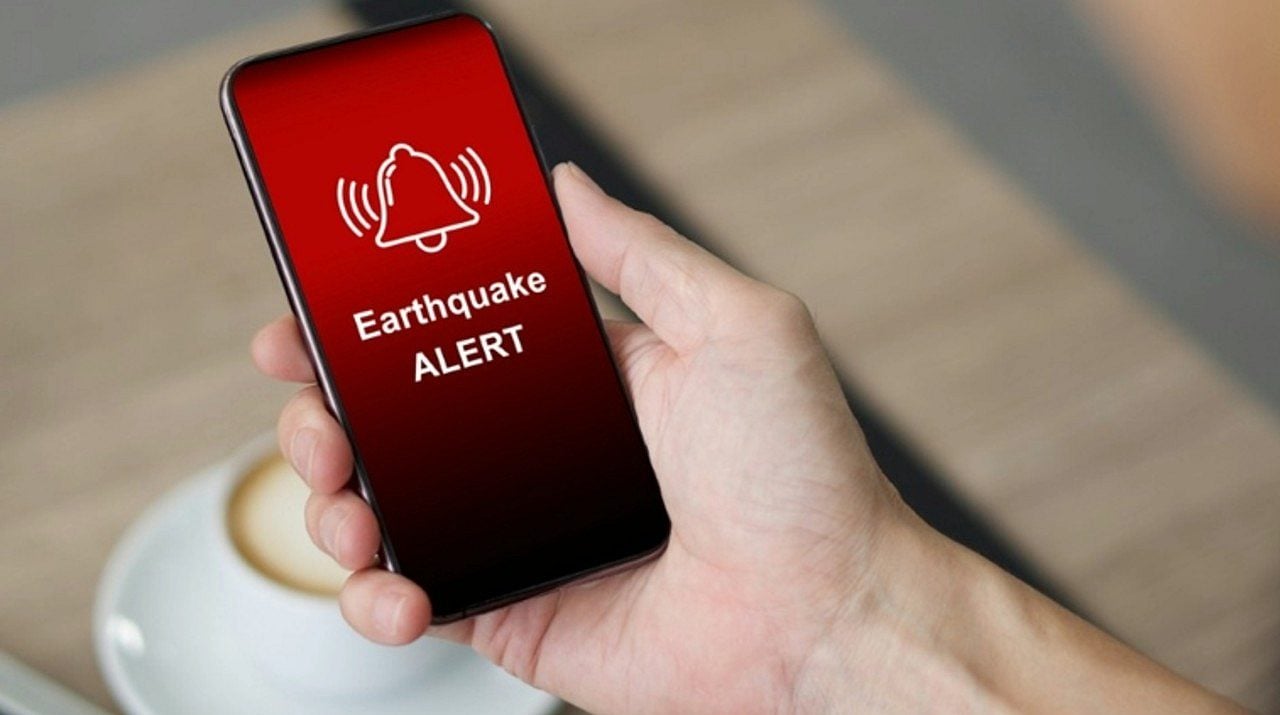
A 6.1 magnitude earthquake occurred on Monday afternoon off the northwest coast of Cuba. The tremor was felt in South Florida, including in Miami, which led to the evacuation of the Stephen P. Clark Government Center. Transportation agencies halted operations at nearby stations.
The United States Geological Survey (USGS) recorded the epicenter about 104 kilometers west-northwest of Mantua, in the province of Pinar del Río. The tremor occurred around 2 pm local time, at a shallow depth of approximately 10 kilometers. This expanded the range of effects.
Authorities confirm evacuation in downtown Miami
The Stephen P. Clark Government Center, Miami-Dade County’s downtown administrative headquarters, was evacuated as a precautionary measure. Sheriff’s Department deputies cordoned off the scene and the attached Metrorail and Metromover stations with caution tape. Trains began to bypass the affected areas.
Passengers reported frustration with the sudden closure. Zoyla Edwards, who was waiting for the Metromover, said she tried to enter the station but found everything closed. She had to take an Uber to another administrative point. Other evacuees mentioned the sensation of the ground shaking and objects moving.
- The main shock occurred around 2 p.m.
- Metrorail and Metromover stations were temporarily closed
- No serious structural damage has been reported to date
- Authorities monitor possible aftershocks
Light tremors recorded in several parts of Florida
Residents of Miami and other areas of South Florida described the event as a subdued vibe. Some buildings swayed, which triggered safety protocols. There were no immediate reports of injuries or significant property damage in the region.
The USGS received thousands of reports of tremor sensations in different parts of Florida. The shallow depth contributed to the effect reaching the continent, despite the distance from the epicenter. Experts ranked the event as the second strongest ever recorded in the Gulf in some historical records.
Emergency teams remained on alert. Miami-Dade County officials confirmed that the main building and adjacent stations have been cordoned off for inspection. Pedestrian traffic was controlled in the immediate area.
No risk of tsunami and continuous monitoring
Meteorological authorities have indicated that there is no tsunami threat to Florida or Cuba from this event. The focus now is on evaluating possible aftershocks and reestablishing normal operations in downtown Miami.
In Cuba, the tremor was also felt, but details about local impacts are still limited in the first hours. The Caribbean region is known for seismic activity due to the interaction of tectonic plates. Events like this serve as a reminder of the need for preparations.
History of seismic activity in the region
The area between Cuba and Florida has recorded tremors in the past, although most are of lesser intensity. This magnitude 6.1 drew attention due to the extent of the effects felt in American territory. Miami residents, accustomed to hurricanes, reacted calmly in most cases, but the unexpected created momentary concern.
The USGS maintains an interactive map for collecting reports. This helps refine models of how offshore tremors propagate. In the coming hours, more data should emerge about the exact intensity in different neighborhoods.
Security measures adopted in public buildings
The evacuation of the Stephen P. Clark Government Center followed standard protocols for seismic events. Employees left in an orderly manner. Technical teams began structural checks before authorizing the return. The same occurred at other nearby facilities.
Public transport was the sector most impacted in the short term. Temporary station closures led to delays, but operations were quickly adjusted. Passengers were advised to seek alternative routes.
- Structural checks underway at government center
- Adjustments to train schedules to bypass affected stations
- Collection of reports by USGS for technical analysis
- Replica monitoring for the next 24 hours
Limited impact, but increased attention
By late afternoon, there had been no confirmation of serious material damage in Florida or Cuba. The event served as a test for emergency response systems in the south of the state. Authorities asked the population to remain calm and report any anomalies.
The shock reinforces the importance of contingency plans in areas with seismic potential, even if indirect. In Miami, the day continued with normal activities in most of the city after the initial release of evacuated areas.
