
Excessive speed in the pit lane of Monaco intrigues teams and drivers in Formula 1
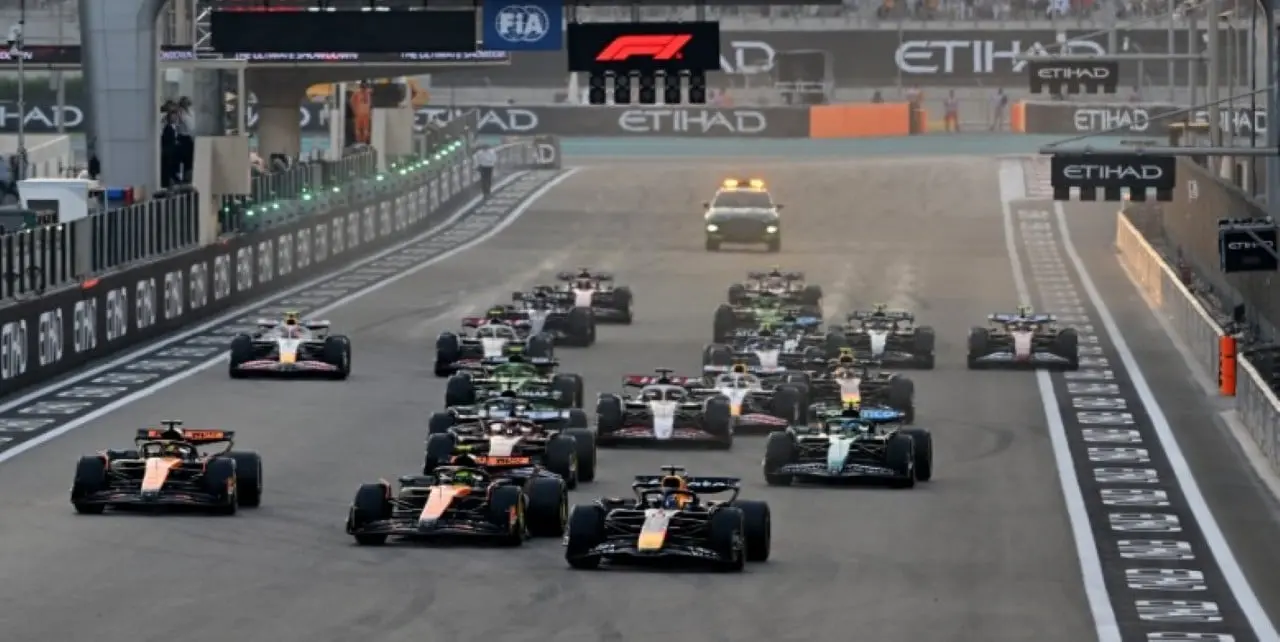
Mercedes’ Kimi Antonelli dominated the chaotic Monaco GP and took his fifth consecutive victory. The race featured accidents and a red flag.
Ferrari’s Lewis Hamilton finished second, while Red Bull’s Isack Hadjar completed the podium. Charles Leclerc, Hamilton’s Ferrari teammate, retired early after an accident in the last corner during a restart. With that, Hamilton rose to second place in the drivers’ championship.
BBC F1 correspondent Andrew Benson answers readers’ top questions after the Monaco GP.
Why were so many cars caught in the pit lane for speeding in Monaco? Was the software to blame?
Five drivers received punishments for exceeding the 60 km/h speed limit in Monaco’s pit lane on Sunday — Ferrari’s Lewis Hamilton, Mercedes’ George Russell, McLaren’s Oscar Piastri and Alpine’s Pierre Gasly and Franco Colapinto.
This number is unusually high and in itself indicated that something strange was happening.
The impression was reinforced when the margins were released. All five drivers exceeded the limit by just 0.1 km/h — although Gasly also went 0.4 km/h in one of his two infractions.
It appears the problem was caused by a combination between the pit lane layout and the way the limit is measured.
At both the entry and exit, there are white lines that define the fast lane of the pit lane, but there is room to cut these lines a little — and, as F1 is about exploiting tiny margins, many drivers were doing this.
At the same time, the speed limit in the pit lane is not measured by radar, but by a series of timing loops and transponders in the cars.
Full coverage: Latest News (EN)
Since speed is a measure of distance divided by time, this opens up the possibility for riders to exceed the limit if they manage to shorten the distance, even if they were technically at or below the limit the entire time.
This appears to be exactly what happened in this case.
Mercedes, for example, instructed its drivers to go wider at the entrance to the pit lane to avoid this risk. But Russell ended up activating the limit anyway.
The matter was discussed between the teams and the governing body, the FIA, throughout the weekend.
All pilots ensured that they had not exceeded the limit.
As Hamilton explained: “I wasn’t accelerating. It’s just the way the pit lane is. I’ve been doing that pit lane for years.”
“It’s not like I went in and didn’t hit the button or something. The pit lane limiter went off immediately. And I think it’s just the line that you take, which is the same line that we’ve all taken for years, where you go in, you kind of cut off part of the white line.”
“I was shocked to hear that I was speeding because I wasn’t actually up to speed.”
“It’s all about, I think, distance and something that we really need to look into because I heard a lot of people caught it today and they probably weren’t really speeding. And having to do a stop-and-go, like stop and wait five, 10 seconds, whatever people caught, ruins you on such a short track too, your chances. So I’m grateful that it didn’t hurt me too much.”
It turns out that Hamilton and Ferrari managed to get around his punishment during the safety car period.
But Piastri lost a little in terms of position, Gasly lost a place on the podium and Russell saw a possible third place turn into no points after Mercedes made a mistake in the pit stop during the safety car and did not carry out the penalty correctly.
After Alpine requests the right to review speed violations, can you explain what this is, how it works and does it only apply to Pierre Gasly’s race or could other drivers benefit?
The right to review is basically a laborious or fancy way of saying appeal.
It is used because certain penalties — such as speeding in the pit lane — are not subject to appeal. So teams need to use a different mechanism in the rules if they consider the punishment unfair.
A request for a right to review is only successful in extremely rare circumstances.
This is because one of its demands is that the team presents the FIA with evidence that was not available at the time the punishment was applied.
There are two complicating factors in this.
One is that it is quite rare for there to actually be new evidence. But even if there is something that can be argued as new evidence, the FIA often finds a way to say that what the team presents is not that.
Follow: all about GP Monaco penalties
Sometimes this argument is more believable than other times.
Skeptics — and there are a lot of them in F1 — often say it’s because the FIA doesn’t like to admit it’s wrong.
Whatever the reason, this highlights why it is so difficult to win a case like this.
In this situation, in theory any verdict only applies to Gasly, so even if Alpine won, only the result of his race would change.
But of course, that would open the door for other teams to complain about what happened and its results. Which — as cynics would say — is all the more reason for the FIA to reject it.
Having started the season strong, what has happened to George Russell’s performance this season? Is it simply a long string of bad luck or are he and/or his team making mistakes?
George Russell’s admission after qualifying that he has struggled to get the most out of the Mercedes car throughout the season felt like a landmark moment in the championship race.
Russell pointed to the driving style, saying that Antonelli had struggled in last year’s car and now he was struggling in this one.
Until then, Russell had looked for external reasons to explain his difficult start to the season.
There were, in fact, many.
He suffered a gearbox problem and then a front wing issue in qualifying in China, which may well have denied him pole.
The safety car moment in Japan handed victory to Antonelli and put him ahead of Russell.
It is a bit of a stretch, however, to say that Russell would have won in Japan without it, because McLaren’s Oscar Piastri led the first stint, stopped in the same window as Russell before the safety car and Russell did not overtake the Australian in the entire race.
And in Canada, Russell was leading when the MGU-K failed and caused his abandonment.
At the same time, the reason Russell’s admission seemed important is the impression for some time that he has been struggling to keep up.
In China, Antonelli had the same front wing problem as Russell on his final lap – although his session was not hampered in other ways like Russell’s – and still took pole.
And after both fell behind the Ferraris at the start, Antonelli’s race-craft was much more decisive in overtaking them.
In Japan, Antonelli started on pole and only crashed because of a bad start. And his pace on the medium tires in the first stint of the race was such that Mercedes felt he was on track to run further and take the lead anyway, even without the safety car.
In Miami, there was no argument, Antonelli was simply faster. And although Russell took pole in the sprint and GP in Canada, won the sprint and was leading the GP when he broke down, Antonelli was on top of him in both races and looked faster. The fate of victory in Montreal was far from clear when Russell retired.
In some ways, Russell’s decision to finally admit he’s struggling could be a good thing.
Last year, Lando Norris was in a similar position at McLaren. Having beaten Piastri convincingly in 2024 and entering 2025 as favourite, Norris struggled with the car’s characteristics at the start of the season.
Sounds familiar, doesn’t it?
With dedicated work from Norris himself and also from the team — both technical, in terms of changes to the car, and psychological, helping Norris overcome his situation mentally — he recovered and won the title.
Russell is in a difficult situation, 68 points behind Antonelli, but he is far from irretrievable.
As he said on Sunday: “I want to race now. The season has been fragmented. I still believe a lot in myself and I know what I’m capable of. I don’t think we’re even 30% of the way there, but there are a lot of points thrown away.”
“When I look at things objectively, if things had balanced out a little more, I still think it would have been very, very close. He’s doing an incredible job, but I think I would have at least two more wins to my name.”
“I still believe in myself a lot. I still believe that we will fight for race wins until the end of this year.”
More news in Latest News (EN)
See more →More news on Mix Vale
- 1Saxony-Anhalt results underscore growing momentum for European far-right parties ahead of key votes
- 2Julia Louis-Dreyfus reveals intense creative clashes shaped iconic sitcom ‘Seinfeld’s’ groundbreaking humor
- 3U.S. forces dismantle sophisticated floating drug refueling station tied to Ecuadorian narco-terror group
- 4Giants make unexpected roster move, release longest-tenured player Darius Slayton as Harbaugh era begins
- 5One Nation’s superannuation proposal sparks debate over retirement security and housing affordability
- 6AfD electoral win in Saxony-Anhalt faces governance hurdles, minor party crucial
- 7Austin Reaves enjoys Labor Day weekend after pivotal Lakers contract, poised for leadership
- 8Quieter Russian nuclear submarines heighten NATO’s Arctic defense concerns, alliance boosts northern presence
- 9NTSB confirms Amazon cargo jet crew survived Miami crash, five dead and five injured in runway overrun incident
- 10U.S. diplomatic efforts confront persistent China-Peru economic ties amid rising regional tensions