The countdown to the start of the planet’s main football tournament brings to light historical marks that seemed far from any challenge. The isolated leadership in the historical scoring table of the men’s national team world cups is at the top of these statistical challenges. Former striker Miroslav Klose has occupied the highest position in this ranking for more than a decade. However, the recent performance of elite international athletes puts this sovereignty at real risk in the upcoming edition.
Two names that have dominated the sports scene in recent years appear with clear mathematical conditions to change the hierarchy of global football. Striker Kylian Mbappé and midfielder Lionel Messi emerge as the main contenders for the top of the list of historical scorers. The offensive performance presented by both in previous editions supports the projection of change at the top. The consistency of their respective national teams in the competitive scenario increases the opportunities for new goals in the tournament.
The size of the challenge posed by Miroslav Klose
The former Germany international set the current record during his country’s fourth title campaign. Miroslav Klose found the net in four consecutive editions of the global competition. The center forward’s regularity guaranteed the consolidation of an expressive brand on the international scene. He beat Brazilian Ronaldo in the semi-final of the tournament played in South American territory.
Maintaining this brand requires an unusual combination of longevity, physical efficiency and constant presence in acute phases of the dispute. The German record holder built his career based on positioning in the area and taking advantage of aerial plays. The striker participated in 24 matches throughout his appearances at the FIFA event. The record established a level of efficiency that few athletes have managed to concretely threaten in the last two decades.
The historical table of top scorers highlights the difficulty in approaching the leaders:
- Miroslav Klose (Germany): 16 goals in 24 matches
- Ronaldo (Brazil): 15 goals in 19 matches
- Gerd Müller (Germany): 14 goals in 13 matches
- Just Fontaine (France): 13 goals in 6 matches
- Lionel Messi (Argentina): 13 goals in 26 matches
- Pelé (Brazil): 12 goals in 14 matches
- Kylian Mbappé (France): 12 goals in 14 matches
Lionel Messi’s mathematical proximity to the top
The captain of the Argentina national team arrives at the preparation period for the 2026 World Cup with the track record of having led his country to the most recent title. The number 10 has scored 13 goals in the history of the sporting competition. Lionel Messi shares third place on the overall list with Frenchman Just Fontaine. The Argentine played his first edition of the tournament on German soil.
The distance to reach the statistical leader requires a regular offensive performance in the next group stage. The star needs to score three goals to equal the feat of former center forward Miroslav Klose. The plan to take the isolated lead in the ranking depends on four balls into the opponent’s net in the continental tournament. The volume of games played by the South American team in recent years indicates that the athlete maintains a central role in creating and completing offensive plays led by the coaching staff.
The technical committee of the Albiceleste team structures the offensive sector to enhance the finishing ability of its main player on the field. The midfielder’s performance in free kicks and maximum penalties represents an important factor in the evolution of his statistical numbers. His presence in recent friendlies reinforces the 38-year-old athlete’s pace of play.
Kylian Mbappé’s fast pace in world championships
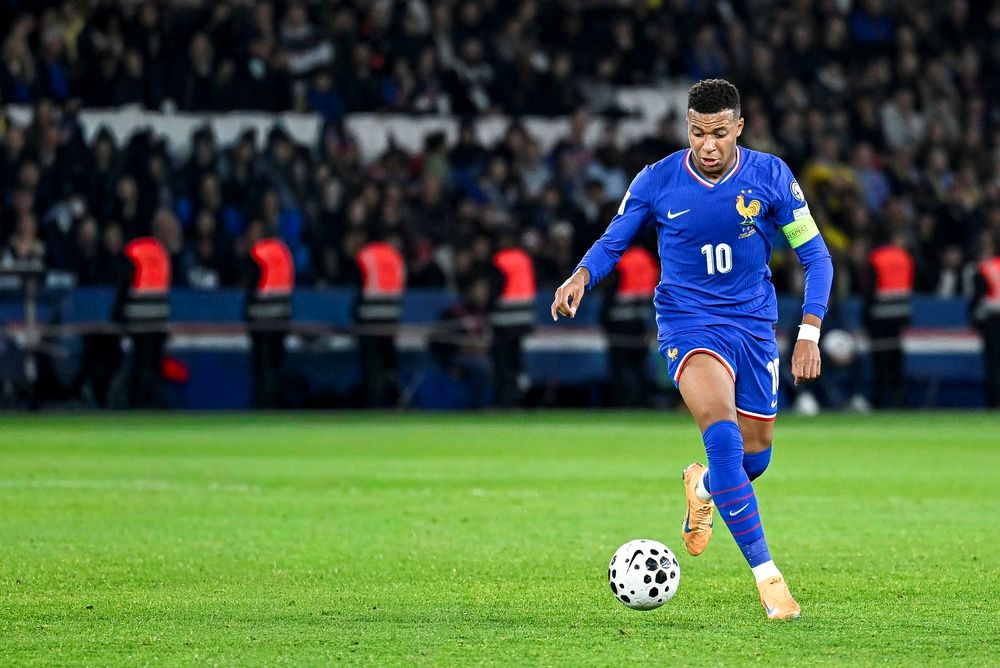
The France national team striker has the most impressive goal average among athletes who continue to have active careers on the national team scene. The young player has scored 12 goals in the FIFA tournament. The Frenchman shares the historic fifth position with Pelé. Kylian Mbappé reached this mark with just two appearances in the international sporting event.
The athlete’s record includes four goals scored in decisions at the world football tournament. The number 10 of the European team found the net in the final played in Russia and scored a hat-trick in the decisive clash held in Qatar. His physical speed and precision in mid-range completions make the player a constant threat to opposing defenses. The striker has the collective structure of one of the most stable teams in contemporary football.
The athlete’s youth suggests that this will not be his last opportunity to expand his personal records in competition. The player needs four goals to equal Miroslav Klose’s record. The objective of taking the solitary lead requires five conversions throughout the national team championship. The recent record in European qualifiers shows that the striker maintains his efficiency in high-pressure games.
Tactical factors that influence brand search
The new format of the continental competition significantly changes the planning of the technical committees of the participating teams. The increase in the number of teams extends the path necessary to reach the decisive confrontation for the FIFA trophy. The semi-finalists will play a total of eight matches throughout the official schedule of the sporting event. The addition of a knockout game increases the real chances of submissions for the world’s top strikers.
Managing physical exhaustion represents the main obstacle for athletes seeking to break goal records in the tournament. The European football calendar imposes a heavy load of commitments before the start of the national teams’ preparation period. The ability to recover physically between decisive clashes will determine the success of Kylian Mbappé and Lionel Messi in the knockout stage. The tactical scheme adopted by France and Argentina seeks to protect their main finalists from exhausting defensive roles.
