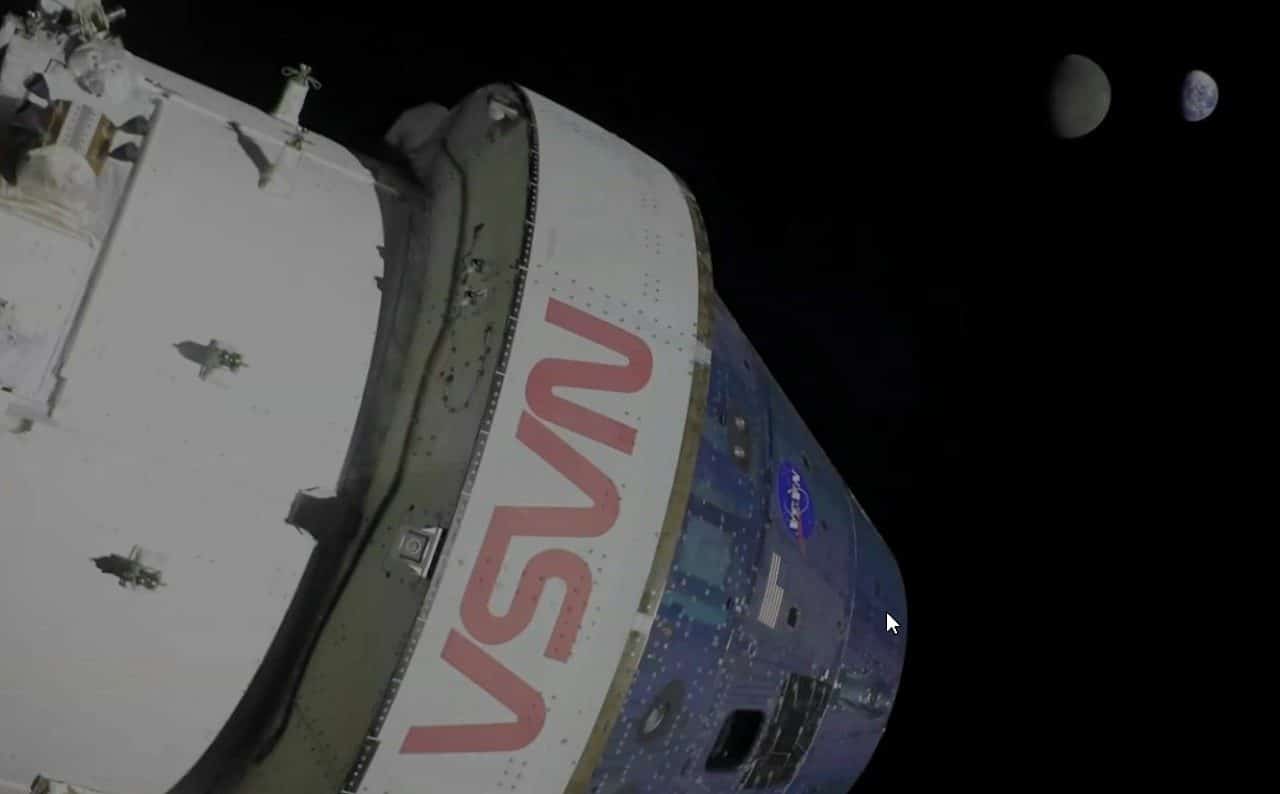
NASA has confirmed the new team of astronauts that will be part of the Artemis III mission. The group is made up of four men with extensive experience in the aerospace sector. The official announcement took place this Tuesday and marks a fundamental step towards humanity’s return to the lunar surface. The operation focuses on complex orbital tests and validation of flight equipment.
Commander Randy Bresnik leads the group alongside pilot Luca Parmitano, official representative of the European Space Agency. Mission specialists Frank Rubio and Andre Douglas complete the core team assigned to the trip. Bob Hines will serve as a reserve member throughout the ground preparation process. Professionals begin training immediately on the Orion spacecraft’s navigation and life support systems.
Profile of the crew and the partnership with the European Space Agency
The choice of names reflects a combination of technical capacity and strategic international partnerships for scientific advancement. Luca Parmitano makes history as the first representative of the European Space Agency to join an Artemis flight mission. The director general of the European institution, Josef Aschbacher, praised the professional’s appointment. He stated that the choice demonstrates confidence in the continent’s operational capacity in situations of high pressure and calculated risk.
Andre Douglas brings representation as a black astronaut in the deep space exploration program. Frank Rubio also has an important milestone in his professional career. He was the first specialist of Salvadoran descent to travel to space in previous American agency missions. The diversity of origins and technical specialties was a factor considered when assembling the team of experts that will conduct the tests.
The official duties of the main crew were divided as follows for the execution of the flight schedule:
- NASA astronaut Randy Bresnik, commander
- ESA astronaut Luca Parmitano, pilot
- NASA astronaut Andre Douglas, mission specialist
- NASA astronaut Frank Rubio, mission specialist
The group will be responsible for assisting in the development of test versions of commercial landing modules. The joint work involves direct operations with equipment manufactured by Blue Origin and SpaceX. The preparation routine requires exclusive dedication in the flight simulators at the Kennedy Space Center, located in the state of Florida. Engineers follow each stage of the training to adjust the interface and propulsion software.
Changes to internal guidelines and team composition
The absence of women on the Artemis III crew generated questions from the media during the official announcement. NASA administrator, Jared Isaacman, addressed the topic in a direct conversation with the press after the names were presented. He asked that the decision not be misinterpreted by the public or industry analysts. The executive guaranteed that the agency selected the best professionals available to carry out and complete the objectives proposed by the mission.
Isaacman preferred not to detail the specific criteria adopted during the rigorous internal selection process. He recalled that the last class of astronaut candidates initiated by the institution had a female majority in its ranks. The statement seeks to reaffirm the organization’s technical commitment to operational competence, regardless of the final composition of a specific crew. The focus remains on safety and the perfect execution of orbital maneuvers.
The current scenario contrasts with previous promises made by the American space organization. NASA maintained a public commitment to landing the first woman, the first black person and the first non-American citizen on the surface of the Moon. This directive was removed from the official website weeks after the Trump administration began a federal crackdown on diversity, equity and inclusion initiatives in early 2025. The change reflects the new political direction applied to government agencies.
Flight operations and in-orbit docking tests
The architecture of the Artemis III mission requires technical precision unprecedented in the recent history of space exploration. The launch will take place aboard the Orion spacecraft, powered by the powerful Space Launch System rocket. After initial verification of support systems, the spacecraft will perform complex orbital maneuvers at high speed. The main objective is to demonstrate real rendezvous and docking capabilities in deep space.
The tests involve physically connecting to experimental versions of the human lunar landing systems under development. SpaceX is working on a manned adaptation of the Starship spacecraft to meet the program’s requirements. Blue Origin develops a specific version of the Blue Moon module for the same purpose. Both private companies accelerate the construction of the test articles to meet the schedule set by the space agency.
Agency engineers are moving quickly in preparing the physical flight infrastructure. The connection between Orion’s crew module and service module takes place this summer. The unprecedented docking system will undergo rigorous validations before being released for official launch. Technicians also finalize the integration of the engine section of the rocket’s central stage, installing the four RS-25 thrusters.
The legacy of the previous mission and the next steps of the program
Current planning takes advantage of crucial data collected during the Artemis II flight, which ended successfully in April. That expedition sent astronauts Reid Wiseman, Victor Glover, Christina Koch and Jeremy Hansen to the vicinity of the Moon. The trip broke a gap of more than half a century without the presence of humans in the lunar orbital region. The composition of that team marked an era with the presence of the first woman and the first black man to orbit Earth’s natural satellite.
Jared Isaacman highlighted the importance of continuing exploration work for global science. The administrator said the previous team’s achievements had reignited public excitement for the space. The baton now passes to Randy, Luca, Frank and Andre, who take on the responsibility of expanding the operational limits of the spacecraft. The multiple release campaign will test the integrated hardware extensively.
The success of Artemis III will pave the way for even more ambitious goals in the next decade. The agency plans to send the first American astronauts to the lunar south pole in 2028, during the execution of the Artemis IV mission. The establishment of a sustainable human presence on the Moon serves as a testbed for the organization’s ultimate goal. The practical knowledge acquired in these operations will enable future manned missions to the surface of Mars.
