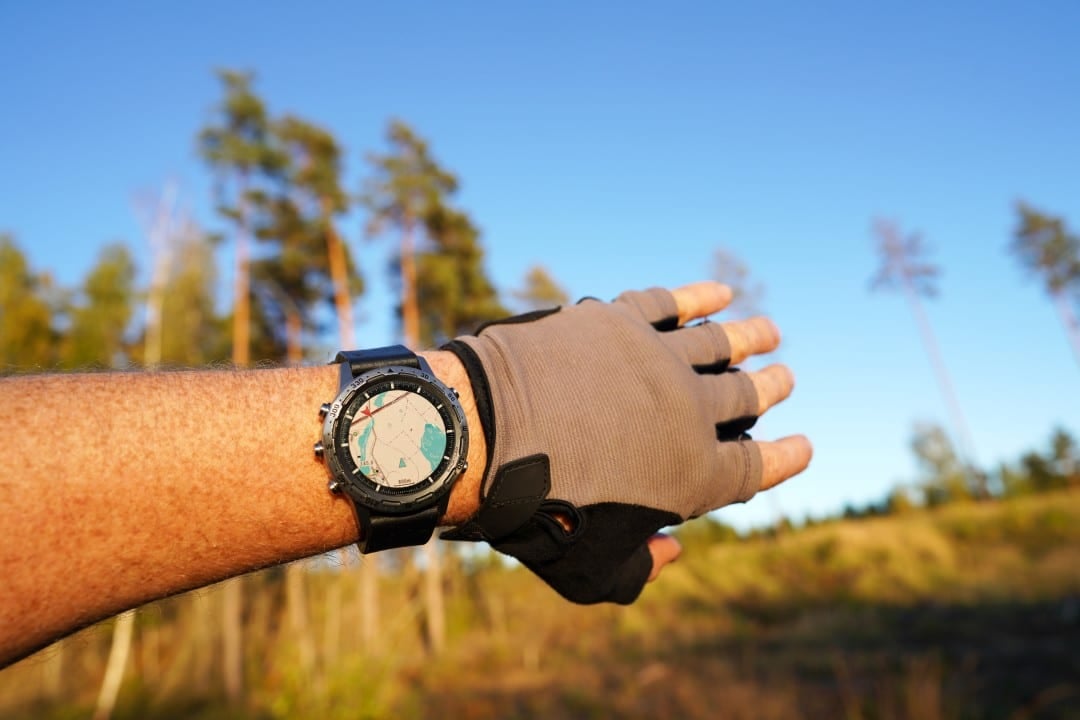
A GPS smartwatch goes beyond just a stylish accessory on your wrist: it works like a personal trainer that accompanies the user at all times. The device allows you to monitor your pace, distance covered, heart rate and even sleep quality in real time, without the constant need for a smartphone. For those who run or play sports, this precise data helps identify progress or stagnation points in training. TechTudo selected eight models with integrated GPS, ranging from more compact bracelets to more robust options.
8 smartwatch models with GPS tracking
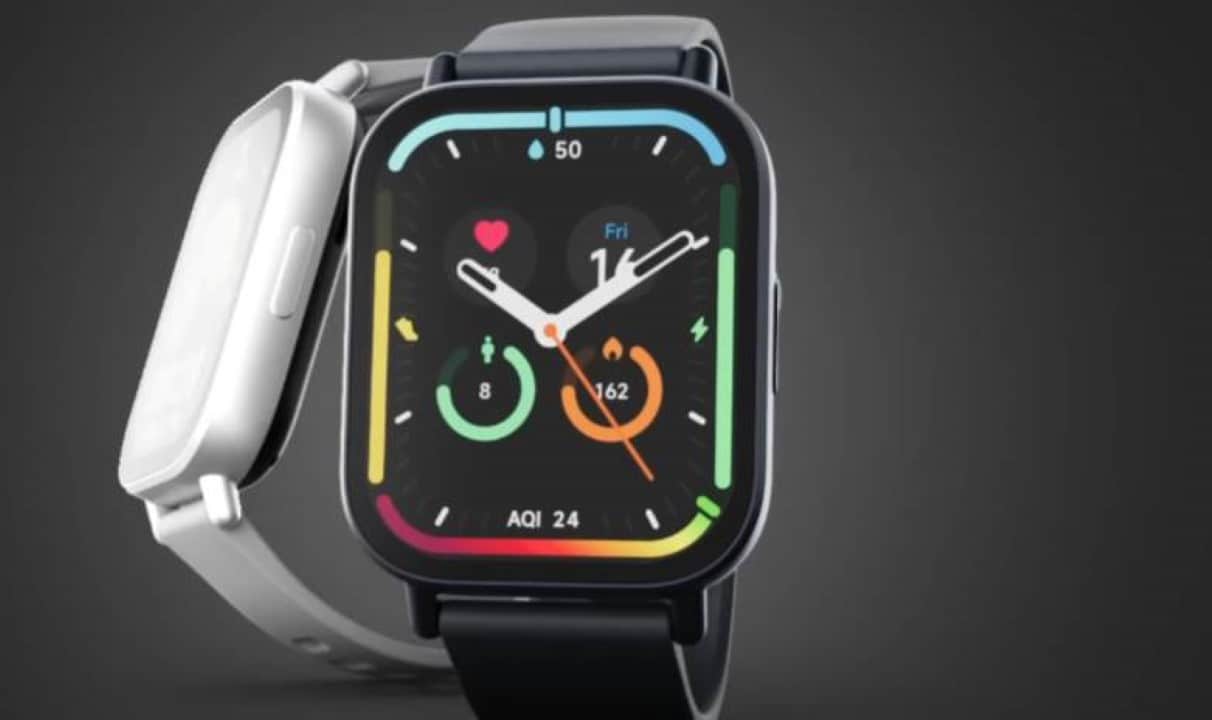
1. Redmi Watch 5 — affordable smartwatch with large screen and built-in GPS
Launched in Brazil in February 2025, the Redmi Watch 5 stands out for those looking for a smartwatch with GPS without spending a lot. In sports performance, it tracks more than 150 physical activities, such as running, swimming, cycling, football and dancing. The integrated GPS records mileage, pace and route independently of the cell phone.
With a 2.07-inch AMOLED panel, one of the largest in the range, the model offers brightness of up to 1,500 nits, which makes viewing easier on sunny days. It includes Bluetooth 5.3, 5ATM protection and compatibility with Android and iOS. The available colors are black and silver, with several extra bracelet options. The 550 mAh battery delivers up to 24 days of typical use, although intense GPS or music will reduce the time. The frame uses aluminum alloy with a sandblasted finish, giving it a premium look for the price.
The watch allows you to answer calls with a noise-cancelling microphone and play music via Bluetooth directly on your wrist. All health data is centralized in the Mi Fitness app, free for Android and iOS. The Redmi Watch 5 is available from R$353 at Magazine Luiza.
Pros:2.07-inch AMOLED screen with 1,500 nits; battery life of up to 24 days; Built-in GPS with tracking of over 150 activities
Cons:absence of Wi-Fi; internal storage limited to 164 MB available
2. Xiaomi Smart Band 9 Pro — compact smart bracelet with GPS and AMOLED screen
With a 1.74-inch AMOLED screen and anodized aluminum frame, the Xiaomi Smart Band 9 Pro is the most complete option in the Band 9 line. It differs from the standard version with its integrated GPS and larger screen. Compatible with Android and iOS, it has 5ATM resistance and is well suited for frequent outdoor activities, with routes independent of the smartphone.
Connectivity uses Bluetooth 5.3, and the model supports more than 150 sports modes, including running, swimming, cycling and bodybuilding. The GPS connects to five satellite systems, with Xiaomi reporting a 33% gain in accuracy over the previous generation. The tracking serves casual running and cycling, though it lags a bit behind dedicated sports watches in distance and pace accuracy.
The 350 mAh battery guarantees up to 21 days of autonomy in typical use, according to the manufacturer. Health monitoring covers heart rate, blood oxygen (SpO2), stress, sleep and menstrual cycle, with data in the Mi Fitness app. The Xiaomi Smart Band 9 Pro is available from R$439 on Amazon.
Pros:GPS integrated with five satellite systems; autonomy of up to 21 days; complete health monitoring at an affordable price
Cons:distance and pace accuracy below dedicated sports watches; absence of NFC
3. Huawei Watch Fit 3 — ultra-thin design with GPS and full health monitoring
Launched in Brazil in June 2024, the Huawei Watch Fit 3 stands out for its ultra-thin design, perfect for athletes who prioritize comfort in various activities. The watch is available in white, black, green, pink and gray, with the gray version being the only one with NFC. It is compatible with Android and iOS.
Just 9.9 mm thick and 26 grams without a bracelet, the model has a clean look thanks to the aluminum alloy structure, which balances strength and lightness. The 1.82-inch AMOLED screen has a resolution of 480 x 408 pixels and a maximum brightness of 1,500 nits, ensuring good visibility in outdoor environments.
The TechRadar portal tested the Huawei Watch Fit 3 and pointed out the battery as the main highlight: in moderate use with Bluetooth and music, it reached 14 days, exceeding the 10 days announced. The built-in GPS recorded runs with good accuracy for distance, pace and heart rate. The website also praised the intuitive interface, more than 100 sports modes and warm-up per modality. The downside is the limited support for third-party apps and the dependence on Huawei Health. The Huawei Watch Fit 3 is available from R$679 on Mercado Livre.
Pros:9.9mm ultra-thin design; battery that exceeded the 10 days announced in the tests; GPS with good accuracy for runs
Cons:limited support for third-party apps; NFC only available in gray version
4. Amazfit Bip 6 — good autonomy, bright AMOLED screen and GPS with offline maps
Launched in April 2025, the Amazfit Bip 6 marks an evolution in the Bip family, with a partial aluminum alloy structure replacing the previous plastic and a 1.97-inch AMOLED screen with a resolution of 390 x 450 pixels and brightness of up to 2,000 nits. The watch weighs just 27.9 grams without a strap, has 5ATM resistance and supports more than 140 sports modes, including one dedicated to HYROX. It is compatible with Android 7.0 or higher and iOS 14.0 or higher, via the Zepp app.
The integrated GPS supports five satellite systems and offers offline navigation, with maps downloaded via the app for areas without signal. The TechRadar portal evaluated the Bip 6 as an option that exceeds expectations in the price range, praising accuracy in health monitoring, Zepp Flow voice assistant and construction quality.
The 340 mAh battery promises up to 14 days of typical use and up to 32 hours of continuous GPS, a number higher than some direct competitors. The smartwatch includes Zepp Coach, which creates personalized training plans with AI, with programs for 5km, 10km, half marathon and marathon races. The Amazfit Bip 6 is available from R$680 on Mercado Livre.
Pros:2,000 nits AMOLED screen; GPS with offline navigation; Zepp Coach with AI; 32 hours of continuous tracking
Cons:absence of physical crown for navigation; original silicone strap that accumulates sweat
5. Huawei Watch Fit 4 — updated version with AI, 2,000 nits screen and accurate GPS
Launched in June 2025, the Huawei Watch Fit 4 impressed TechTudo during an event in Morro da Urca, in Rio de Janeiro, with the screen’s readability even in strong sunlight. Among the highlights, the integrated GPS tracks running, cycling and more than 100 sports in real time, with a more advanced barometer than its predecessor for altitude and atmospheric pressure.
The Huawei Watch Fit 4 evolves directly from the Fit 3, maintaining an ultra-thin 9.5 mm design (0.4 mm thinner), aluminum alloy structure and weight of 27 grams without bracelet. The 1.82-inch AMOLED screen now reaches 2,000 nits of brightness, compared to 1,500 nits on the previous model, improving outdoor visibility. Compatible with Android 8 or higher and iOS 13 onwards, it is available in white, black, gray and purple.
The battery promises up to 10 days in typical use or 7 days with intense use, dropping to 4 days with Always On Display. A full charge takes about 75 minutes. The AI feature generates personalized training plans based on user behavior, while monitoring covers sleep, heart rate, SpO2, menstrual cycle and emotional well-being. The gray version is the only one with NFC. According to TechTudo, the watch proved to be comfortable for prolonged use. The Huawei Watch Fit 4 is available from R$852 at Magazine Luiza.
Pros:2,000 nit screen, advanced barometer for trails and mountaineering; AI for personalized training; 9.5mm ultra-thin design
Cons:autonomy drops to just 4 days with Always On Display active; NFC restricted to gray version
6. Garmin Forerunner 55 — entry-level reference for runners with GPS and long-lasting battery
Aimed at beginner runners, the Garmin Forerunner 55 balances advanced sports functions with simplicity. Launched in 2021, the smartwatch has a 42 mm circular design, weighs 37 grams and an interchangeable silicone strap for wrists measuring 126 to 203 mm.
Available in black, white and aqua green, it has 5ATM resistance for swimming and rain, and compatibility with Android and iOS via Bluetooth. The 1.04-inch color and transflective MIP LCD display is smaller than AMOLED screens, but more readable in direct sunlight due to reflective technology.
In performance, the Forerunner 55 features high-precision GPS. TechRadar approved tests: fast signal even in urban areas, with minimal error on routes. Includes Garmin Coach, which generates personalized plans by objective, suggestions based on history, recovery time and incident detection with location alert.
The battery lasts up to 14 days in smartwatch mode and up to 20 hours with active GPS. 128 MB storage stores up to 200 hours of history. The Garmin Forerunner 55 is available from R$1,190 on Mercado Livre.
Pros:High-precision GPS approved in tests; Free Garmin Coach; incident detection; up to 20 hours of autonomy in GPS mode
Cons:low-resolution MIP LCD screen without touchscreen; lack of sleep widgets directly on the watch
7. Samsung Galaxy Watch 8 — full-featured smartwatch with Gemini, Wear OS, and advanced health features
Launched in July 2025, the Galaxy Watch 8 is Samsung’s latest and the first with Google’s Gemini assistant built-in. With it, the user issues voice commands to start training, respond to messages, create reminders and control functions without taking their cell phone out of their pocket.
The watch has an Exynos W1000 processor, 2 GB of RAM and 32 GB of storage, running Wear OS 6 with One UI 8 Watch. The design uses Armor Aluminum, with IP68 certification, 5ATM resistance and a Super AMOLED screen of up to 3,000 nits with sapphire crystal. The integrated GPS comes with dual-band Wi-Fi, Bluetooth 5.3, LTE and NFC.
Six-month tests highlighted a comfortable and resistant design, high-quality screen, integration with the Google ecosystem (Wallet, Maps, Gmail, Play Store) and advanced health sensors, such as ECG, bioimpedance and antioxidant analysis. Sleep monitoring was praised for its depth, with phases and a “sleep animal” system. The critical point is the battery: in training sessions with exercise and music, it drops by around 20% in an hour. GSMArena pointed out autonomy below two days and a high price. The Samsung Galaxy Watch 8 is available from R$1,495 on Amazon.
Pros:Integrated Gemini; 3,000 nit Super AMOLED screen with sapphire crystal; ECG, NFC and extensive app catalog via Wear OS
Cons:battery life below two days with intense use; functions such as ECG and blood pressure restricted to Samsung cell phones
8. Garmin Forerunner 165 — Premium AMOLED display and training tools for runners
For runners who want to evolve without investing in top-of-the-line Garmin models, the Forerunner 165 occupies a strategic position. With a fiber-reinforced polymer structure and 1.2-inch AMOLED screen (390 x 390 pixels), it weighs 39 grams and offers a visual experience superior to the Forerunner 55’s LCD.
Compatible with GPS, GLONASS and Galileo, it guarantees good accuracy in most environments. 5ATM resistance and Bluetooth with ANT+ complete the list.
TechRadar gave it the maximum score (5/5) in performance, with GPS comparable to the Garmin Epix Pro (more expensive), practical interface and real autonomy of around 9 days with frequent GPS. The AMOLED screen was praised for its clarity in indoor environments and night runs.
Features for runners include Morning Report (recovery and training suggestions), Garmin Coach (personalized plans), Race Predictor (estimation of future times by VO2 max) and Running Power calculation on the wrist. The negative point is the absence of the Training Readiness Score, present in superior models. The Garmin Forerunner 165 is available from R$1,857 on Mercado Livre.
How do we choose the best GPS smartwatches?
The selection considered marketplace rankings, sales volume, consumer reviews and manufacturers’ reputation on Reclame Aqui. The priority was models with their own integrated GPS, which do not depend on a cell phone to track outdoor activities, launched from 2024 or with current relevance in the market.
The base included benchmarks from portals specializing in wearables, such as GSMArena and TechRadar, for the best rated in sports tracking. TechTudo’s impressions and reviews also included models analyzed by the editorial team, ensuring depth in performance, screen, battery and use.
What should a good smartwatch have?
The best GPS smartwatch for running depends on each user’s experience level and budget. For beginners, the Garmin Forerunner 55 is a solid gateway, with reliable GPS and tools for new athletes. Those looking for more features without spending a lot will find the Forerunner 165 AMOLED screen and advanced training planning.
For casual use with a focus on health and cost-benefit, models from Amazfit, Huawei and Xiaomi are competitive alternatives. In addition to the model, other aspects influence the race and deserve attention when purchasing:
- Built-in GPS vs. Connected GPS: models with their own GPS track routes without a cell phone; those connected lose accuracy if the signal drops.
- Battery autonomy in GPS mode: the advertised duration considers typical use; check specific time with active GPS.
- Supported satellite systems: Compatibility with GPS, GLONASS, Galileo and BeiDou provides more stable signal in cities, trails and obstacles.
- Heart rate monitoring: Optical sensors are practical, but can lose accuracy at high intensity.
- Available sports modes: in addition to running, check out support for swimming, cycling, weight training or other activities.
- Water resistance: 5ATM rating allows use in the rain and pool.
- Cell phone compatibility: check that it works well with Android or iOS.