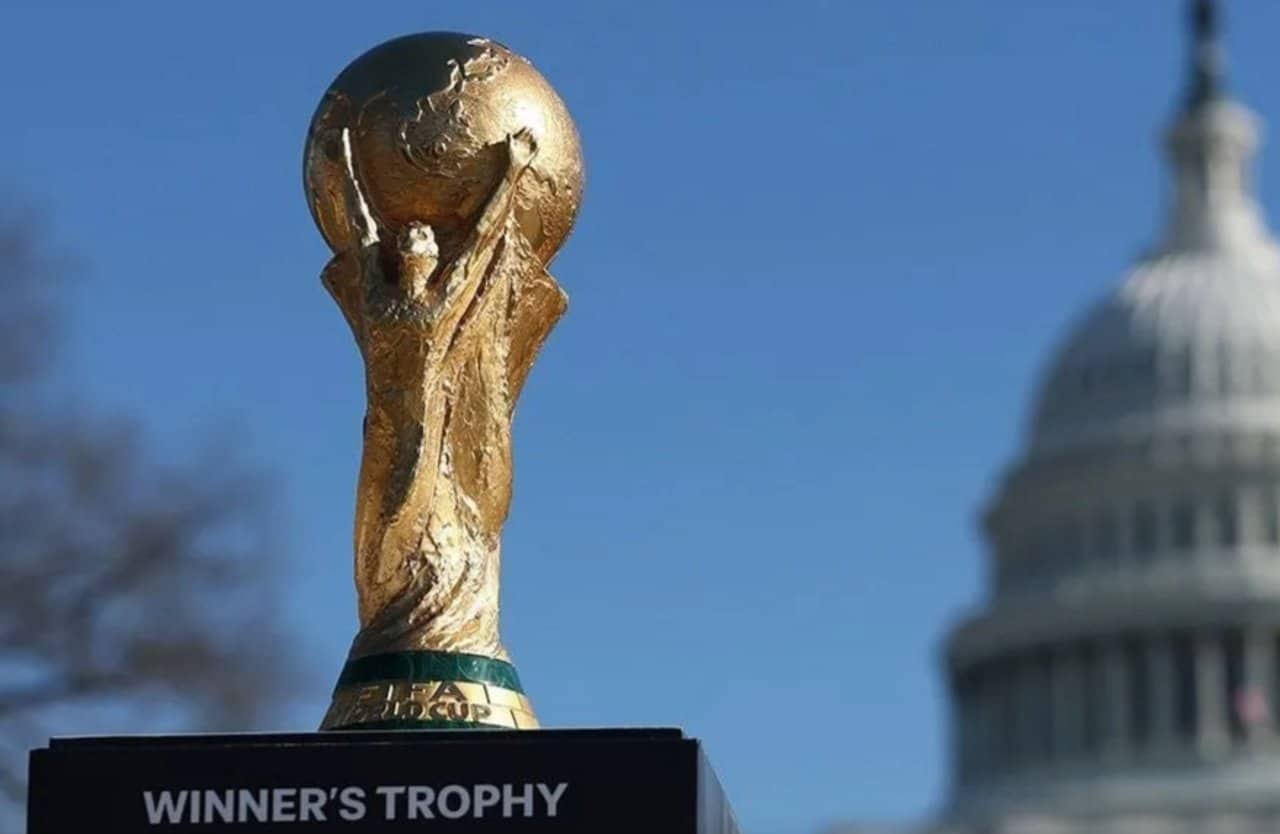
The 2026 global football tournament, which will take place between June 11 and July 19 under the joint organization of the United States, Mexico and Canada, will feature an unprecedented format with 48 participating countries. The teams will be distributed into 12 groups of four members, which considerably increases the mathematical probability of equal scores at the end of the three initial rounds. To prevent any room for doubt or subjective interpretation, the organizing entity created a strict manual to determine those classified in the knockout phase. The precision of these standards aims to ensure that sporting performance is the only decision factor in scenarios with identical tables.
Goal difference and offensive efficiency act as primary filters
The basis of any classification in the tournament continues to be the total number of points achieved over the three clashes in the group. When two or more delegations finish this stage with equal numbers, the official document determines the immediate verification of the overall goal difference. This mathematical calculation represents the exact difference between the balls sent into the opponent’s net and the goals conceded by the defense itself during the group stage matches. Experts and analysts consider this metric to be the most reliable barometer for evaluating the solidity of a squad during the short shooting competition.
If the impasse persists even after carefully checking the balance, the following rule analyzes the total volume of goals scored by each nation. An emblematic case of this guideline occurred at the World Cup in Russia in 2018, when two European forces shared the leadership of Group B. Spain secured first place over Portugal because they managed to break through the opponent’s defenses six times, while the Lusitanians only celebrated five goals. Both teams had five points and a positive goal, leaving the definition of the top of the table exclusively to attack power.
Official order of parameters to separate tied teams
The tiebreaker structure approved by the organization follows an inflexible chronological sequence before considering the results of direct confrontations. The initial parameters that referees and table officials need to apply to the official spreadsheets are the following:
- Total points obtained in the three matches played in the bracket
- General goal difference accumulated throughout the first phase
- Absolute number of goals scored in favor during the tournament
If equality involves only two countries and the numbers remain identical after applying these three filters, the score of the direct duel between them defines who advances. On the other hand, in more complex situations involving triple draws, the mathematical system restarts counting the balance and pro goals. In this specific hypothesis, the organizers only count the results of the games held exclusively between the three nations involved in the impasse, isolating the fourth member of the group from the equation.
Card system punishes indiscipline and resolves extreme scenarios
When all technical resources with the ball in motion fail to separate the teams, the organization uses the players’ behavior history. The fair play mechanism operates as a subtraction of points based on the punishments applied by the referee throughout the 90 minutes. A simple yellow card deducts one point from the team, while an expulsion generated by two yellow warnings costs three negative points. A straight red card results in the loss of four points, and the extreme combination of a yellow followed by a straight red takes five points off the delegation coefficient.
The history of world competitions records the dramatic application of this disciplinary rule during the 2018 edition. Japan qualified for the round of 16 and left Senegal behind solely by presenting a squad that was more restrained when it came to fouls. The two teams ended their participation in the group with four points, a neutral balance and four goals scored in their respective campaigns. The African team suffered early elimination because they accumulated two more yellow card warnings than the Asians during the three rounds played.
In the unlikely situation that the teams present the exact same index of cards, the last alternative in the regulation falls on the position in the entity’s world ranking. The 2026 event increases the pressure on these guidelines because the new bracket guarantees the classification of the first two placed and also the eight best third places. This parallel dispute between the third parties will require the constant and rigorous application of all tiebreaker criteria to form the unprecedented round of 16 finals.
Recent eliminations highlight the importance of mathematics in football
Mexico fans experienced the cruelest face of sports mathematics during the tournament held in Qatar in 2022. The team needed a specific combination of scores in the final round of Group C and managed to beat Saudi Arabia 2-1. A goal conceded in the extra minutes dropped the team’s balance to negative, decreeing an early return to North America. Poland, who lost to Argentina at the same time, secured their place because they managed to maintain a zero goal difference.
The Mexican scenario presented such complexity that even a 2-0 victory against the Saudis could result in failure. In this hypothetical projection, the Mexicans would be tied in points, balance and goals scored with the Europeans, pushing the decision directly to the cards criterion. Poland had a significant advantage in fair play, forcing Mexico to look for a third goal anyway so as not to depend on the disciplinary behavior of its defenders.
The expansion of the championship to a total of 104 matches in 2026 turns every shot and every foul into crucial components for survival in the tournament. In the previous model of 32 participants, a stumble in the debut game already made classification difficult, but the new structure allows reactions that inevitably come up against the tiebreaker rules. Care with statistical details needs to start at the exact moment the referee authorizes the first touch of the ball.
Technical commissions adapt routines to avoid punishments
The high level of demand of contemporary sport forces coaches and physical trainers to master every line of the rule book. Current training includes simulations of unfavorable results and express orders on emotional intelligence to inhibit cards generated by outrageous complaints. Performance analysis professionals occupy the stands with computers that update fair play instantly, passing data to the bench on the urgency of pacing the match or attacking massively.
Setting up an impenetrable defensive scheme is no longer an exclusive tactic to avoid setbacks and has become a vital instrument for accumulating a positive balance. At the same time, the front players receive severe demands so as not to waste clear opportunities, as an additional goal against a weakened rival can set up a more accessible cross in the knockout stage. Tactical obedience now goes hand in hand with the behavioral discipline of athletes on the field.
Countries with less tradition in sport see these regulations as a real chance of overcoming technically and financially superior opponents. A team that protects its area well, avoids violent fouls and converts the few chances created has a great chance of advancing as one of the best third-placed teams. World powers take on the responsibility of building elastic victories at the beginning of the tournament so as not to depend on calculators in the final round of the group stage.
Regulations protect the tournament against result manipulation
The implementation and improvement of these rules over the last few decades act as a shield for the integrity of the sport. Before the adoption of such rigid and varied criteria, international competitions dealt with suspicions of illicit agreements when two teams needed a tepid draw to move forward together. The multiplicity of filters, which culminates in the meticulous counting of cards, makes it unfeasible to manipulate results without assuming a very high risk of accidental disqualification.
The World Cup hosted in North America will deliver a dense, long and extremely calculated group stage. With 48 nations vying for space, the tiebreaker criteria will act as ruthless judges of the technical merit and disciplinary stance of each delegation. Progressing to the next stage will require refined talent with the ball at their feet and the psychological coolness to understand that a simple yellow card in midfield has the power to ruin the work of an entire cycle of four years of preparation.
