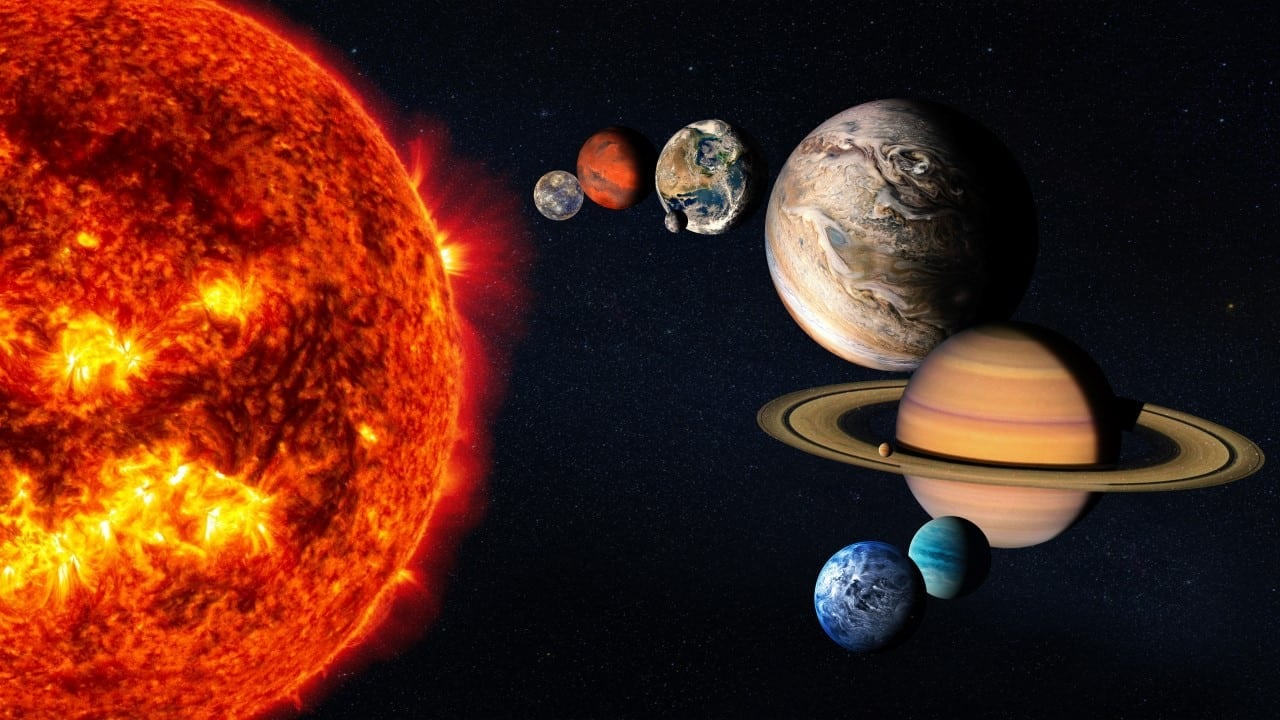
The Solar System we know today, with its eight planets in relatively stable orbits, hides a much more turbulent past. New research published in the journalIcarussuggests that, in the first 100 million years of existence, our cosmic neighborhood may have had up to six giant planets. Two of them would be super-Earths, worlds with masses intermediate between Earth and Neptune, which ended up ejected into interstellar space after violent gravitational interactions.
This conclusion comes from detailed computer simulations that tested more than 120 possible evolutionary trajectories for the early Solar System. The international team, led by Matthew Clement, from the Johns Hopkins University Applied Physics Laboratory, included Brazilian researcher Rogério Deienno, from the Southwest Research Institute. The results indicate that the presence of these extra planets was crucial in explaining the current configuration of the gas giant moons.
During the so-called instability of the giant planets, a period of orbital chaos that occurred hundreds of millions of years after the formation of the Sun, close encounters between these worlds caused total reorganization. The additional planets acted as gravitational buffers, reducing the risk of catastrophic collisions that could have completely destroyed the moon systems of Jupiter and Uranus. Without them, the probabilities of simultaneous survival of these planets’ regular moons drop dramatically, below 15% in many simulated scenarios.
The moons of Uranus deserve special attention in this context. Miranda, one of the smallest and most intriguing, displays a surface marked by faults, cliffs and regions that appear to have been rebuilt. Nathan Kaib, co-author of the study and scientist at the Planetary Science Institute, explains that interactions with the lost super-Earths generated instabilities that led to multiple episodes of collisions and fragmentations between the original moons. What we see today would be the result of reconstructions after these destructions.
This model differs from previous proposals, which generally considered only four or five giants. The new analysis reinforces that the current Solar System is the product of an unlikely evolution. Very close encounters, with distances of less than 0.02 astronomical units in some cases, practically guaranteed the destruction of satellite systems. The researchers identified only one scenario in which both the moons of Jupiter and Uranus survive consistently with the extra smaller planets.
What the moons reveal about the violent past
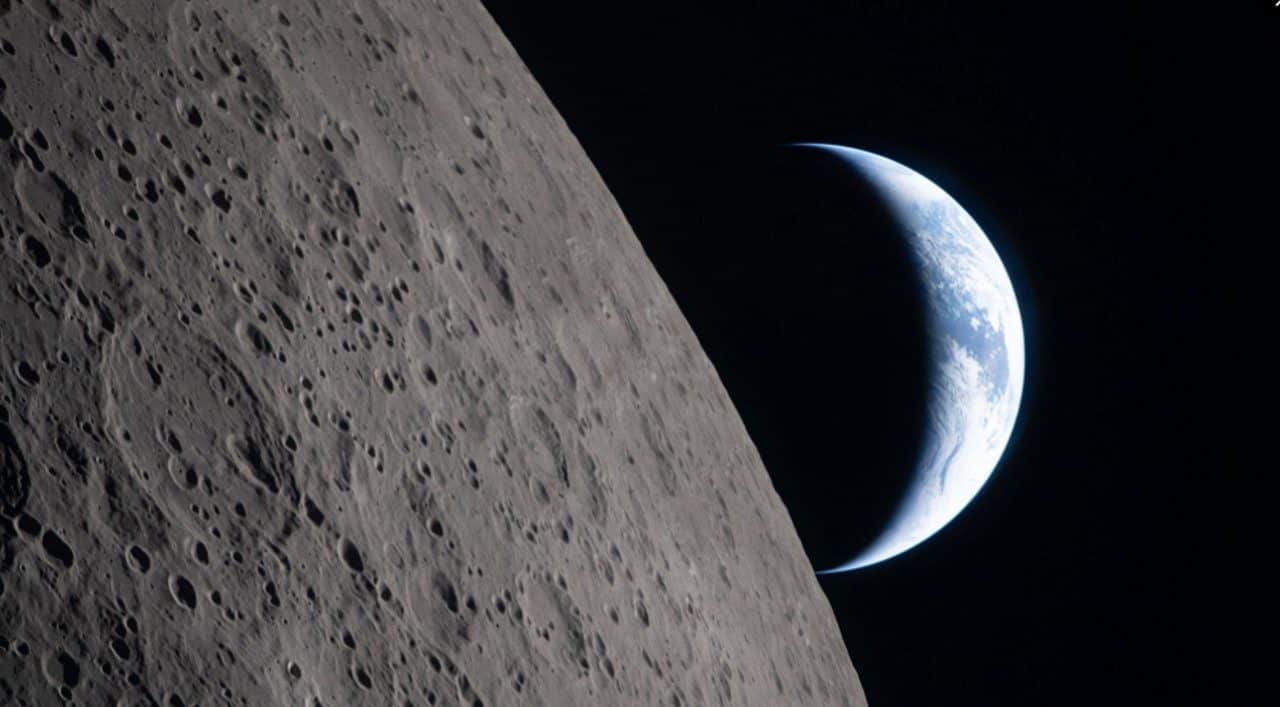
Moons function as dynamic fossils. Their orbits and compositions hold evidence of ancient disturbances. In the case of Uranus, the study suggests that the planet likely suffered at least two significant instabilities: one related to the impact that caused its tilted rotation axis and another during the giant instability. These events explain why Miranda’s icy composition looks like a geological “patchwork”, with materials from different origins brought together after collisions.
For Jupiter, simulations show that scenarios with two extra smaller giants offer better survival conditions for its large moons, such as Io, Europa, Ganymede and Callisto. The Laplace resonance between them, which still exists today, would probably not have maintained if the system had experienced large-scale destructive collisions.
Implications for planetary formation
This vision of a more populated early Solar System aligns with what astronomers observe in other star systems. Super-Earths are common around other stars, often detected by missions like Kepler and TESS. In our case, their absence today raises questions about how the early dynamic environment influenced the development of the inner rocky planets and the distribution of material in the protoplanetary disk.
The ejection of these extra worlds also contributes to the understanding of rogue planets, which roam interstellar space without a host star. Some of these recently detected objects may have similar origins to our system’s lost super-Earths.
The work also highlights the role of planetary migration and close encounters. Models like the Nice Model, which describes the reorganization of giants, gain more robustness with these details about satellites. Without the extra gravitational buffers, Jupiter or Uranus could have lost much of their moons, drastically altering the appearance of the Solar System we observe.

Why this matters for current astronomy
Understanding this chaotic past helps refine planetary formation simulations and interpret data from future space missions. Probes like NASA’s Europa Clipper, which will study the Jovian moons, and possible missions to Uranus and Neptune benefit from more precise context about the history of these systems. Furthermore, the study reinforces the importance of Brazilian researchers in international planetary science.
Rogério Deienno contributed expertise in the dynamics of the outer Solar System, helping to validate the scenarios that best explain current observations. The paper tested hypotheses that connect the fragility of the Uranian moons directly to the presence of additional planets, offering a path to reconciling discrepancies between different evolutionary models.
Although the ejected planets can no longer be observed directly, their influences remain etched in the tilted orbits, resonances, and irregular compositions of several moons. The Solar System is not a static reliquary, but the result of a turbulent childhood that shaped the conditions for life on Earth and the diversity of worlds we still explore.
Future research, with more precise data from telescopes like the James Webb or dedicated missions, could look for indirect evidence of these events, such as chemical signatures or distributions of objects in the Kuiper Belt. For now, simulations indicate that our Solar System was, in its youth, a much denser and more violent environment than we imagined.
