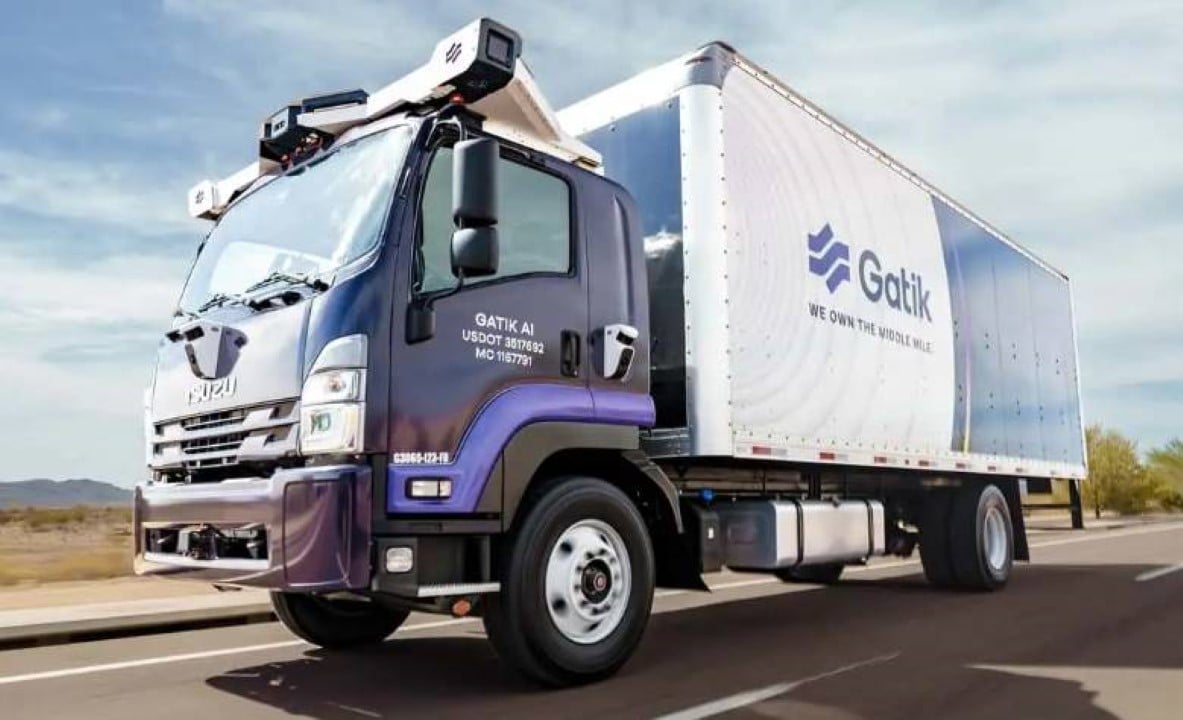
The dynamics of freight transport in the North American market has just reached a new level of innovation with PepsiCo’s decision to integrate driverless heavy vehicles into its daily distribution network. The corporation has established a long-term alliance with Gatik, an emerging company focused on autonomous driving technology, to power its portfolio of beverages, snacks and processed foods. This initiative is not an isolated pilot project, but rather the most extensive commercial application of automated freight ever recorded in the global logistics sector, actively operating on public roads in three American states.
The food company’s strategic move comes at a critical time for the United States’ transportation infrastructure, which faces profound structural challenges. Recent data from the American Trucking Associations indicate a historic deficit of approximately eighty thousand professional drivers in the country, a bottleneck that compromises delivery efficiency and increases operating costs. By adopting automation on regional routes, the company not only mitigates dependence on scarce labor but also sets a new standard of resilience for the continuous flow of essential goods.
The logistics revolution in medium-range transport
The technical collaboration between the two corporations began in 2022, going through rigorous validation phases before reaching the current commercial scale. The central focus of this operation is what the industry calls the “middle mile,” a logistics segment that connects large manufacturing facilities to regional distribution centers. In specific scenarios, these vehicles also travel directly from the warehouses to the docks of large retail chains, including industry giants such as Walmart and Dollar General, optimizing product shelf life.
Unlike last-mile delivery, which involves the complexity of navigating residential neighborhoods and interacting with the end consumer, the middle-mile offers a more predictable environment for artificial intelligence. Trucks travel fixed and known routes, which drastically reduces the unpredictable variables of urban traffic. At the final ends of each trip, human intervention continues to be essential, with the food manufacturer’s own employees assuming responsibility for receiving the vehicles, carrying out safe docking and physically unloading the pallets.
This hybrid approach, where the machine takes on the exhaustive work on the road and the human manages the complexity of the cargo at the destination, demonstrates unprecedented operational maturity. The transition to this model requires a subtle but profound restructuring of the safety protocols and opening hours of distribution centers, which can now receive supplies uninterruptedly, regardless of working hours restrictions affecting traditional drivers.
Strategic fleet distribution across the United States
The backbone of this operation is made up of trucks from manufacturer Isuzu, which have been deeply modified to receive Gatik’s artificial intelligence and steering control package. Currently, the operational fleet has forty-one medium-sized commercial vehicles, strategically distributed across regions that offer both logistical demand and favorable regulations for testing and operating autonomous vehicles. Fleet expansion is already scheduled for the coming months, aiming for even deeper integration with the beverage giant’s supply chain.
The current allocation of autonomous trucks reflects the company’s priority logistics hubs in the United States, divided as follows:
- Thirty-five units operating full-time on highways and expressways in the state of Arizona.
- Five vehicles designed to serve the complex distribution routes in the state of Texas.
- A truck dedicated to regional transport operations in the state of Arkansas.
Despite being controlled by advanced computer systems, the physical design of the trucks maintains the appearance and structure of a conventional cargo vehicle. The cabin preserves the steering wheel, pedals, seats and even the air conditioning system. The main internal difference lies in the installation of high definition monitors that transmit, in real time, the images captured by the set of external cameras. Furthermore, the propulsion continues to be based on internal combustion engines, guaranteeing the fuel autonomy necessary for long daily journeys without the need for long stops for electrical recharging.
How repetitive route technology works
The success of this logistics venture is based on the concept of repeatable routes, a strategy where predictability is the greatest ally of safety. When traveling the same routes every day, which include a challenging mix of high-speed highways and busy urban streets, the navigation system accumulates terabytes of data. This constant repetition allows machine learning algorithms to continually refine their responses to traffic patterns, complex intersections, and local weather variations.
To ensure impeccable environmental awareness, each truck is equipped with a military-grade sensor suite. The system integrates high-resolution optical cameras to identify lanes and license plates, long-range radars to measure the speed of other vehicles, and lidar sensors, which emit laser beams to create a three-dimensional map of the surroundings in real time. This hardware redundancy ensures that if a sensor is dazzled by heavy rain or direct sunlight, the other systems compensate instantly, keeping navigation safe.
The absolute engineering priority behind the project is peaceful and safe co-existence with human drivers in mixed traffic environments. The software is programmed with a defensive driving profile, strictly adhering to speed limits, maintaining safe braking distances and anticipating erratic passenger car behavior. This conservative approach to programming is essential to gaining the trust of transit authorities and the general population.
Operational impact and the future of retail supply
The results achieved in this phase of commercial implementation have exceeded the most optimistic projections of sector executives. The most impressive performance indicator is the punctuality rate: the automated fleet records a rate of over ninety-eight percent of deliveries made exactly at the scheduled time. This level of precision is rarely achieved in operations dependent on human driving, especially when considering periods of peak consumption, long holidays or moments of crisis when hiring qualified professionals.
Jim Farrell, senior vice president of supply chain at the food corporation, points out that the key to success is eliminating variability. According to the executive, the consistency of repetitive routes turns each trip into a more efficient operation than the previous one. Embedded technology allows the company to expand its cargo handling capacity and raise the standard of service to retail customers, all without the need to promote drastic disruptions or costly restructuring of the existing logistics network.
The impact of this initiative transcends the boundaries of the company itself, serving as a definitive case study for the entire consumer goods industry. By proving that midsize freight automation is commercially viable and operationally superior at large scale, the company establishes a new competitive frontier. Direct competitors and other global retail giants will inevitably need to accelerate their own investments in autonomous technologies to avoid losing efficiency in an increasingly volatile, demanding consumer market dependent on ultra-fast supply chains.
