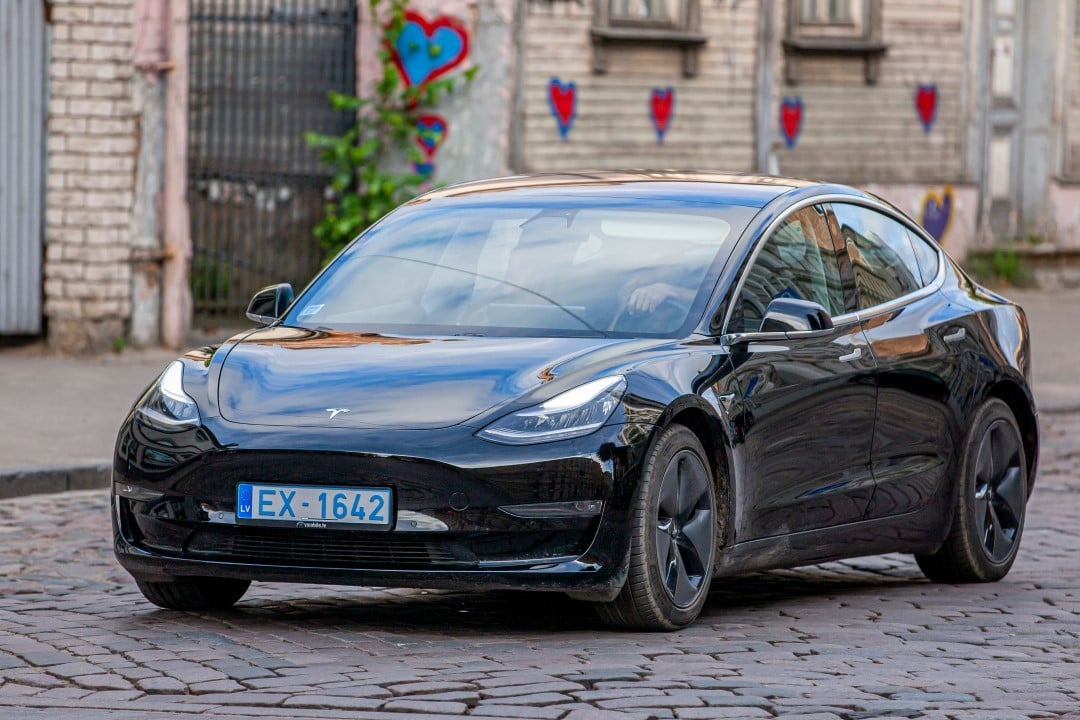
Official range measurement for electric vehicles, traditionally dominated by stringent government standards, is getting a practical overhaul on the streets. For a long time, the numbers released by the North American environmental agency served as the maximum limit that a driver could expect from their car. However, recent independent evaluations show that several models can go considerably further than what is stated on paper. The most recent case involves the electric sedan from Elon Musk’s automaker, which surprised experts by delivering better-than-expected performance in everyday conditions of use.
The test conducted by one of the main automotive publications in the United States put the rear-wheel drive, single-engine version to the test on a mixed circuit. The final result showed an impressive mark of 393 miles covered on a single full charge, which is equivalent to approximately 632 kilometers. This number represents a thirty-mile jump from the official estimate plastered on the vehicle’s window at dealerships. In percentage terms, the car delivered an autonomy gain of 8.3% above the original projection.
The impact of the urban cycle on energy efficiency
The substantial difference between the official numbers and the practical result lies fundamentally in the methodology applied during driving. Standard government protocol tends to place greater weight on road journeys, where electric vehicles face greater aerodynamic drag and are unable to take advantage of energy recovery. On the other hand, the independent assessment adopted a division closer to the reality of most drivers, with sixty percent of the route taken on urban roads and forty percent on highways.
This predominance of traffic in cities greatly favors the architecture of battery-powered cars. At lower speeds and with frequent stops at traffic lights or traffic jams, the regenerative braking system acts continuously, returning energy to the set of cells. Furthermore, the absence of high speeds drastically reduces wind drag, allowing the electric motor to work with minimal effort. Experts consider this mixed method to be a much more faithful representation of the population’s daily commute pattern.
The direct reflection of this driving dynamics appeared in the electricity consumption rate recorded by the evaluators. The sedan reached a mark of 4.61 miles traveled for each kilowatt-hour consumed from the battery. This level of energy efficiency was 13.2% above what official documents predicted for the model. This is a clear indication that the software management and calibration of the single engine can optimize every drop of stored energy when the car is not subjected to constant cruising speeds.
Charging performance at high power stations
The experience of using an electric vehicle is not just about the distance it can travel, but also the speed at which it recovers this capacity on long journeys. During practical tests, the technical team also evaluated the behavior of the sedan’s fast charging system. The model’s electrical architecture is designed to support a theoretical peak power of 250 kilowatts at compatible superchargers.
In practice, the car came extremely close to its design limit, registering a real peak of 246 kilowatts in the first few minutes of plugging it in. As the battery fills, the charging curve naturally decreases to protect the cells from overheating, resulting in a sustained average of 108 kilowatts throughout the session. This efficient thermal management allowed the vehicle to regain one hundred miles of range, approximately 160 kilometers, in just twelve minutes and three seconds of waiting.
Direct comparison with luxury rivals in the electric market
The current automotive market offers fierce competition, with traditional German automakers launching highly efficient products to try to displace the North American company’s leadership. The result of 393 miles puts the entry-level model in a privileged position when compared to considerably more expensive and complex vehicles. The publication organized a ranking of recent tests that illustrates this technological dispute well.
The data collected on the same test routes reveals the sedan’s positioning against its main rivals and even against other versions of the brand itself:
- The previous base version of the sedan itself, tested in December, achieved 339 miles, falling 54 miles behind the current rear-wheel-drive model, with a lower efficiency of 4.34 miles per kilowatt-hour.
- The luxurious Mercedes-Benz CLA350, equipped with two electric motors, ended its test with 385 miles driven, failing to surpass its single-engine rival.
- The recently launched Audi A6 Sportback E-Tron came very close, but stopped at the 392 mile mark, one less than the segment leader.
- The exception was the single-engine Mercedes-Benz CLA250+, which handily surpassed its own official estimate of 374 miles and remained a formidable competitor.
Veteran engineering that still dominates the automotive sector
The most intriguing aspect of these practical results is the age of the original design of the tested vehicle. The Texan automaker’s compact sedan has been on the market for almost a decade, having received its last major structural and design update about three years ago. In an industry where battery technology advances by leaps and bounds every semester, staying at the top of the efficiency charts with a veteran platform is a remarkable feat of engineering.
The explanation for this competitive longevity involves an initial obsession with weight reduction and aerodynamics. The car remains one of the lightest electric vehicles in its category, which reduces the workload on the engine and suspension. This structural lightness, combined with continuous software updates sent over the internet, ensures that the model extracts maximum performance from existing hardware.
For the end consumer, these numbers reinforce the commercial appeal of a product that has already proven itself on the market. The vehicle offers a cost-benefit ratio that is difficult to beat by more recent designs, delivering luxury car range numbers for a fraction of the price. Whether in the entry-level version or in the more equipped variants, the platform demonstrates that a project well executed from the drawing board can withstand the test of time and the arrival of dozens of new Asian and European competitors.
Perspectives for the future of official measurements
The recurring discrepancy between government seals and the reality on the streets raises debates about the need to modernize approval protocols. While regulatory bodies maintain rigid test cycles, created at a time when combustion engines dictated the rules, independent publications take on the role of guiding buyers with empirical data. The modern consumer of electric cars is beginning to understand that autonomy is not a fixed number, but rather a variable that closely depends on their daily commute.
The North American sedan’s success in this specific test serves as a reminder that energy efficiency goes far beyond the size of the battery pack. It is a complex symphony between aerodynamics, weight, management software and cellular chemistry. As charging infrastructure advances and vehicles prove they can go beyond official expectations, the range anxiety that once turned off potential buyers is starting to become a concern of the past.
