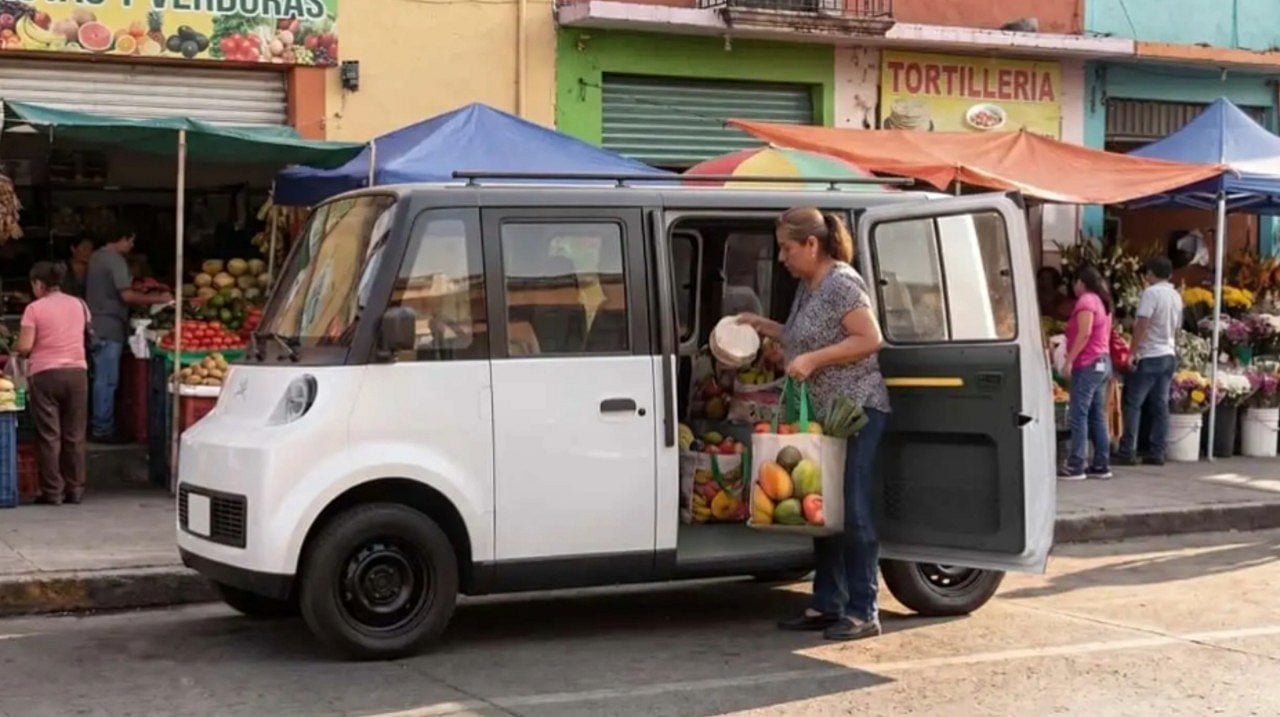
Last Sunday, the Mexican government presented a new bet for the sustainable mobility sector, focused on democratizing access to battery-powered cars. President Claudia Sheinbaum unveiled the Olinia Uno, an electric vehicle designed, developed and manufactured entirely in Mexico. The project uses the installed capacity of the local supply chain and national engineering talent to create a viable urban transport alternative. The goal established by the creators is to sell the model for approximately US$8,600, placing it in an unprecedented price range for the region’s automotive market.
The initiative appears as a direct response to the accelerated transformation of the country’s fleet. In recent years, Mexico has seen a massive influx of imported electric vehicles, driven by favorable trade relations with China and less restrictive local safety regulations compared to European and North American markets. This situation flooded dealerships with relatively low-cost Asian models, changing the dynamics of consumption in large urban centers and forcing the national industry to rethink its production strategies.
Despite the greater supply of imported models, the financial barrier remains an insurmountable obstacle for the majority of the population. An entry-level Chinese electric car costs around US$17,000 in the Mexican market. This amount represents an economic abyss in a country where the average salary of workers is around US$1,000 per month. Olinia Uno was designed exactly to fill this gap, offering a mobility solution that dialogues with the local financial reality and, simultaneously, promotes the internal industrial park, historically focused on assembling vehicles for foreign manufacturers.
Technical specifications and proposed urban use of the new model
The Olinia Uno’s mechanical architecture moves away from the standard of conventional passenger cars and approaches the category of neighborhood electric vehicles, designed for short journeys and controlled speeds. The powertrain is powered by a compact electric motor that delivers 18 horsepower. This configuration limits the car’s maximum speed to 50 km/h, restricting its operation strictly to urban roads and making safe use on fast-traffic highways unfeasible.
Energy storage is provided by a lithium iron phosphate battery with a capacity of 14.7 kWh. The choice for this specific chemistry reflects a global trend in the manufacture of entry-level electric vehicles, as the material offers greater thermal stability and lower production costs than traditional lithium-ion batteries. The component guarantees the model a maximum range of 124 kilometers on a single full charge, a distance considered suitable for daily commute routines within metropolises.
To reach the final price stipulated by the developers, the project required severe concessions in the list of safety and thermal comfort equipment. The vehicle will leave the assembly lines without the installation of airbags for the occupants and without an air conditioning system. The absence of these items highlights the absolute focus on reducing manufacturing costs and delivering a purely functional means of transport, aimed at consumers who currently depend on public transport or low-displacement motorcycles.
Standard equipment and focus on passenger transport
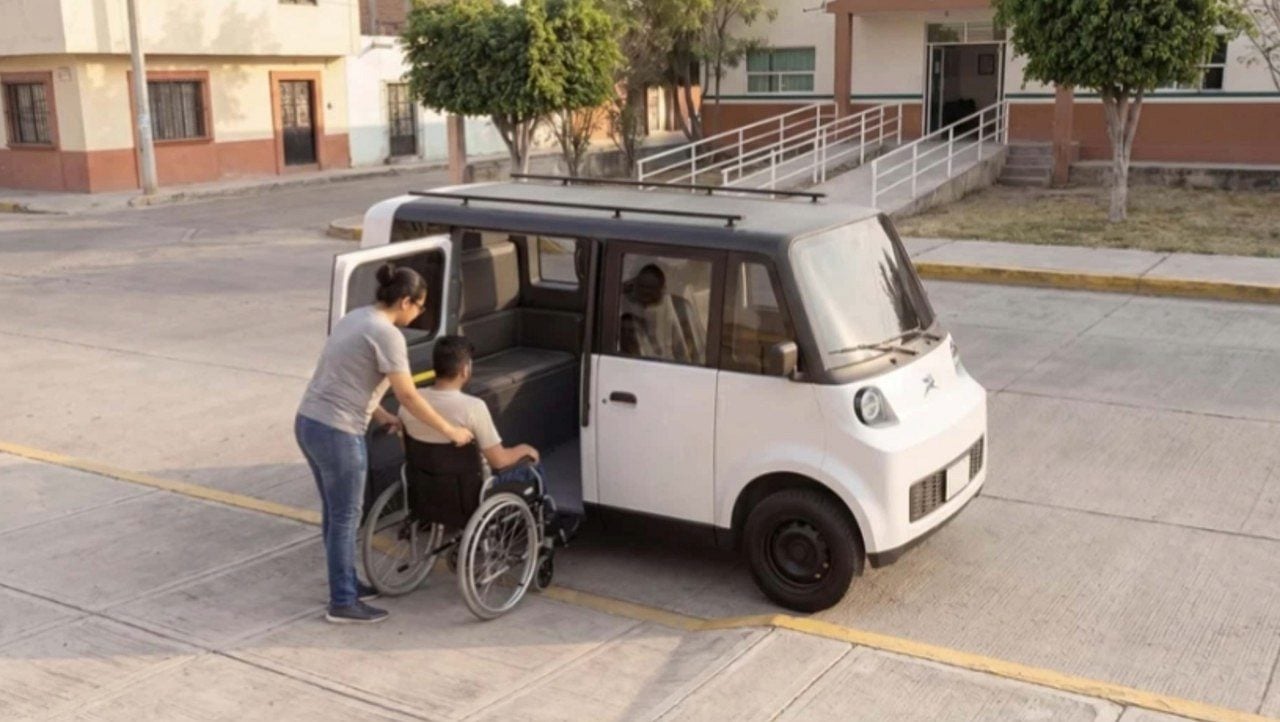
Even with the project’s budget constraints, the cabin was designed to offer a basic package of electronic conveniences. Engineering prioritized the use of internal space, creating a modular platform that serves both large families and professionals in the passenger transport sector. The shape of the body allows it to accommodate up to six people simultaneously or adapt the rear space for the safe transport of a wheelchair.
The list of factory equipment was defined to guarantee the driver’s daily operability, including the following standard items:
- Front headlights equipped with LED technology for nighttime lighting.
- Electrically operated windows on the front doors.
- Central electric locking system.
- Rear-view camera integrated into the dashboard to assist with parking maneuvers.
- Radio with Bluetooth connectivity, paired to a two-speaker audio system.
The ability to transport multiple passengers or guarantee accessibility for wheelchair users makes the model highly attractive for fleet operators and taxi drivers. Data released by the manufacturer indicates that the operating cost per kilometer traveled for the Olinia Uno will be less than half the amount spent on a motorcycle taxi. When compared to a traditional combustion-powered sedan, running-in expense drops to about one-fifth, creating a strong economic incentive to replace aging commercial fleets.
Charging infrastructure and market launch schedule
The viability of a popular electric vehicle directly depends on the ease of energy replacement. The Olinia Uno is not compatible with fast charging stations, a technical decision that simplifies the onboard electronic components and makes the final product cheaper. The system was sized to be connected directly to a common 220V three-pin socket. The full recharge cycle takes up to four hours, allowing owners to top up the battery overnight at home or during work breaks.
To support the introduction of the model on the streets, the government and those responsible for the project structured a plan to expand public infrastructure. During the presentation event, the goal of installing two thousand new charging stations throughout Mexico was confirmed. This support network aims to ensure that app drivers and taxi drivers have access points to electricity throughout their working hours, mitigating the fear of a lack of charge in the middle of the workday.
The official schedule establishes that the first Olinia Uno units will reach the market in the summer of 2027. The extended deadline provides the supply chain with the necessary time to approve local suppliers and scale up production of national parts. The project signals a strategic movement by the country to retain intellectual property in the automotive sector, seeking technological autonomy in an industry that is going through the biggest energy matrix transition in its history.
