The head of NASA, Jared Isaacman, defended this Wednesday the formation of the crew for the third mission of the Artemis program, which aims to return humans to the Moon, made up entirely of men. The announcement of a 100% male team provoked questions and criticism about possible political interference, since, since returning to the White House, President Donald Trump ordered federal agencies to end initiatives linked to diversity and inclusion.
Isaacman, however, highlighted in social media posts that the crew’s choice “has no relation to political decisions”. “The Astronaut Office selects the team that offers the mission the greatest chance of achieving its objectives,” he declared, explaining that aspects such as the profile, experience and availability of the astronauts guide the process.
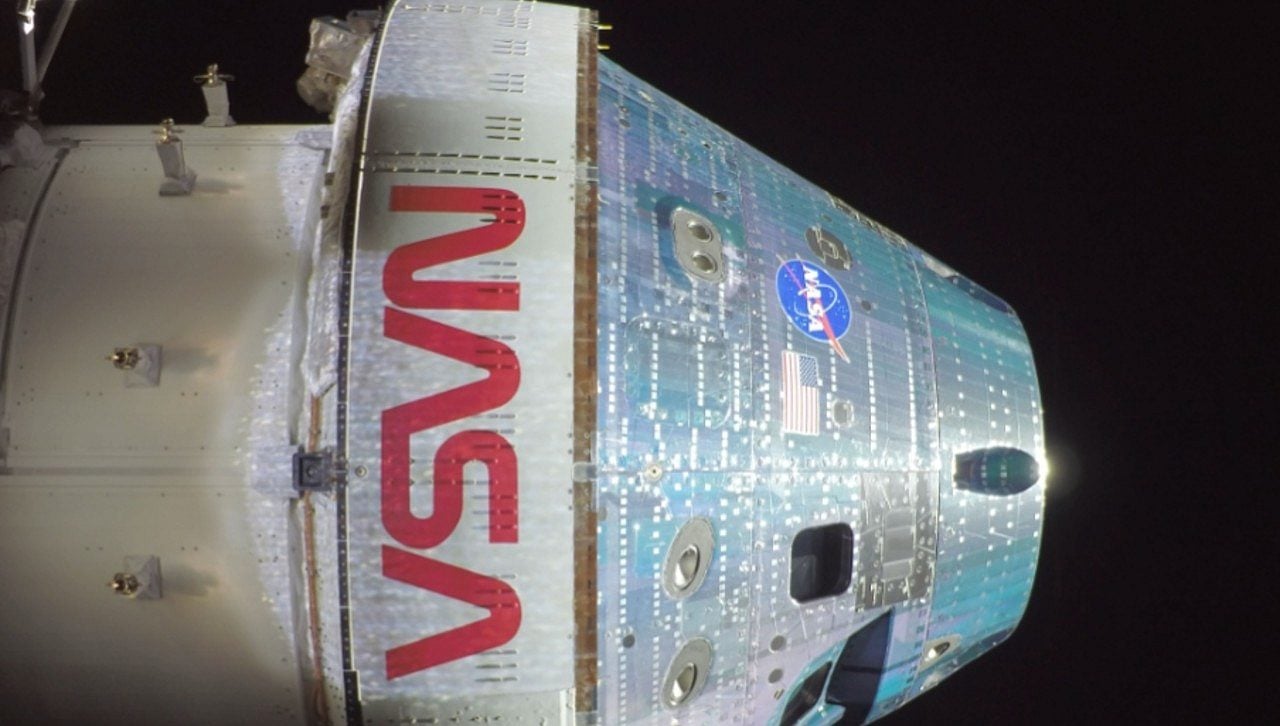
The third phase of the Artemis III program will involve tests with the Orion spacecraft and rendezvous and docking maneuvers with lunar landing modules. The mission will not include a trip to the surface of the Moon.
The crew announced on Tuesday includes American astronauts Randy Bresnik, Andre Douglas and Frank Rubio, as well as Italian Luca Parmitano, the first European to join an Artemis mission.
Diversity promise
NASA had promised to take a woman and a black person to the Moon. Last year, however, the agency removed mention of this commitment and, more broadly, diversity from some internet pages. This does not necessarily mean that the promise was discarded, but it was no longer mentioned explicitly.
Isaacman stated that those who express this concern may not be familiar with the crew training process and recalled that there are already astronauts in specific training for the Moon who would be better suited for future landing missions.
‘Passive witness’
In February, NASA announced that, instead of heading to the Moon as initially planned for Artemis III, the mission would function as a test flight to demonstrate the ability to rendezvous and dock with at least one lunar landing module in low Earth orbit. This change sets the stage for two lunar landing attempts by NASA in 2028, on the Artemis IV and V missions.
Despite the optimism, experts are skeptical about the feasibility of meeting the deadline by 2028.
I think I and most people would say that’s not a realistic date, Casey Dreier, head of space policy at the Planetary Society, told the New York Times.
According to Dreier, the involvement of private companies, such as Blue Origin and SpaceX, allows the return to the Moon plan to be carried out at a much lower cost than in the Apollo era — but it also places the agency’s lunar ambitions largely dependent on the decisions of two billionaires, Elon Musk and Jeff Bezos.
It’s a lot of power and a lot of hope placed in just two people to provide a capability that is truly essential to a national objective, he said. NASA is a passive witness to its own destiny.
Neither SpaceX nor Blue Origin has completed development of a lunar lander. The rockets intended to take these modules to the Moon are not yet ready: SpaceX’s Starship has experienced repeated failures in test flights, and Blue Origin’s New Glenn exploded and damaged the company’s only launch pad in May. These situations could delay NASA’s goal of landing on the Moon in 2028. External factors, such as bad weather conditions or government shutdowns, could also interfere with the schedule.
“It’s unrealistic,” wrote Phil McAlister, former director of NASA’s commercial space division, in an email. “At the same time, I’m not going to say it’s impossible.”
Landing on the Moon has always represented a challenge, even on unmanned missions. In 2023, Russia attempted its first lunar landing since the 1970s, but the spacecraft crashed into the surface. A Japanese spacecraft carrying two rovers landed upside down on the Moon in 2024. Intuitive Machines, a private company based in Houston, landed a rover that toppled on its side last year.
China, for its part, has had notable success with lunar landings. It sent rovers to the surface in 2013 and 2019, and collected lunar dust samples from the visible side in 2020 and the far side in 2024. The country plans to land humans on the Moon by 2030.