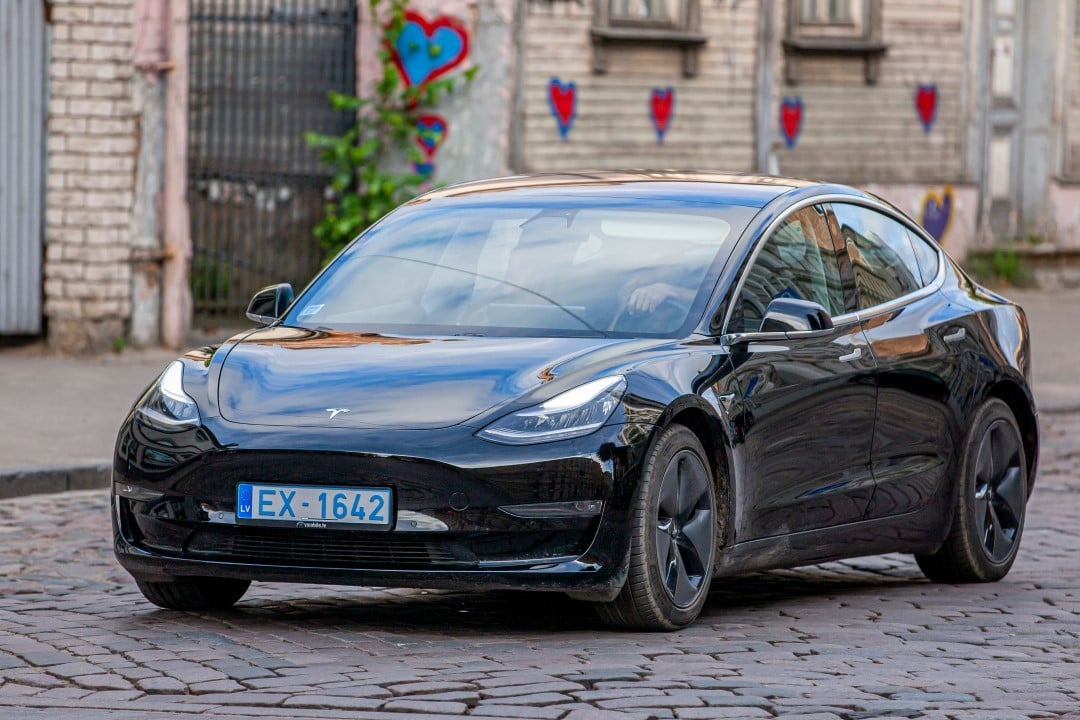
The EPA number was once the gold standard for measuring the range of electric vehicles, as it was the closest to what the cars delivered in practice. Now, however, EVs often surpass that mark, and after the Mercedes-Benz CLA EV last week, it’s the Tesla Model 3’s turn.
Edmunds was able to squeeze 393 miles out of a single-engine Model 3 RWD, exactly 30 miles more than the official EPA estimate, representing an 8.3% increase. The result came thanks to higher than advertised efficiency of 4.61 miles per kWh, 13.2% above what the EPA predicted.
This performance puts the Model 3 RWD about 54 miles ahead of the Model 3 Standard, which achieved a good 339 miles in a December test. At the time, the Standard beat its EPA estimate of 321 miles by just 5.6%, but recorded worse average efficiency than the RWD, at 4.34 miles per kWh.
Edmunds’ range test is made up of 60% urban sections and 40% highway, which explains why many vehicles are able to surpass the official mark. The EPA’s procedure, by comparison, places a slightly greater weight on highway driving, which consumes more energy. Edmunds considers its method to be a better representation of how people drive on a daily basis.
Those responsible for the test also recharged the Model 3 RWD, which has an expected peak power of 250 kW. The vehicle came close, with a peak of 246 kW and an average of 108 kW. It took 12 minutes and 3 seconds to add an extra 100 miles of range.
At 392 miles on a single charge, this single-motor Tesla bested the two-motor Mercedes-Benz CLA350, which got 385 miles, and the Audi A6 Sportback E-Tron, which got 392 miles. It had no rival to match the single-engine Mercedes-Benz CLA250+, which broke its EPA estimate of 374 miles.
Even with more rivals appearing on the market, the Tesla Model 3 remains difficult to dismiss, and results like this range test are a reminder of why it’s persistently popular. Even though it’s been on sale for almost a decade and received its last major update three years ago, it’s still more than enough to compete with newer models.
The car remains light for an EV of its size, is more efficient than most competitors and offers excellent value for money in both the basic version, previously called Standard, and the more equipped Premium variant. The fact that such an old project remains competitive, or even a leader in some aspects, proves the engineering work invested in the Model 3, both in the initial version and in the improvements accumulated over the years.
