
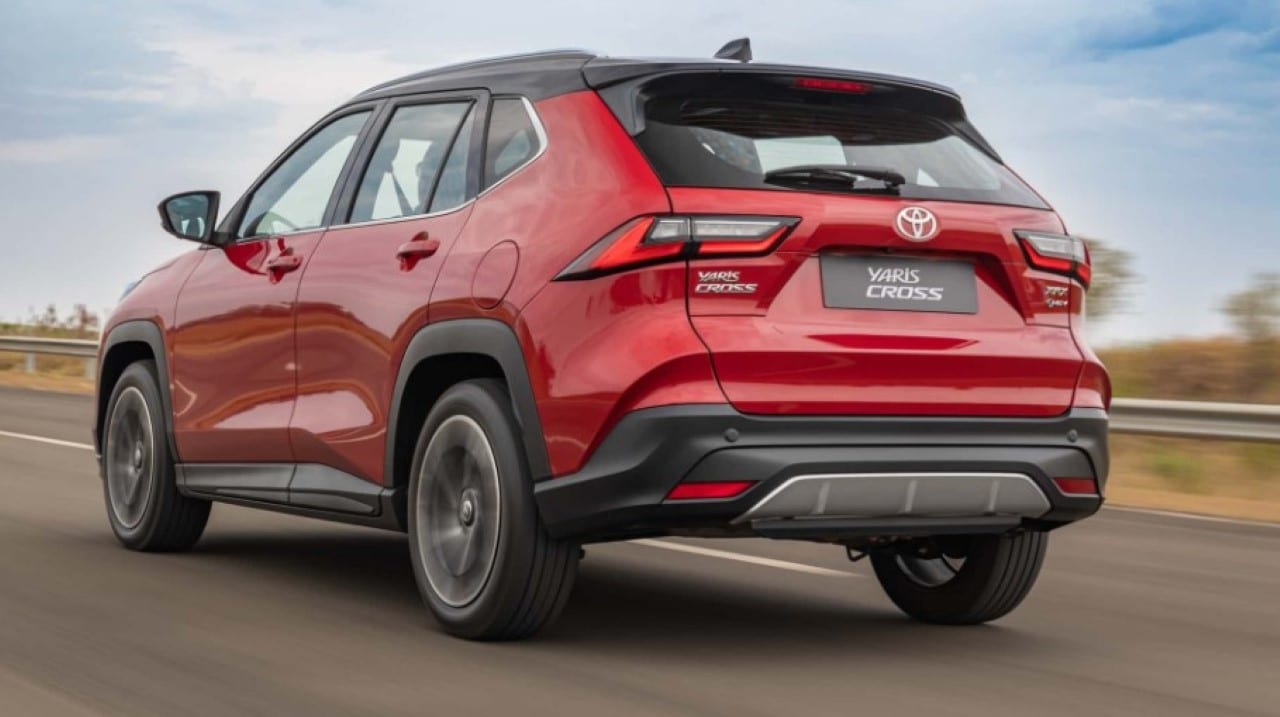
Toyota Yaris Cross XR 2026 now costs R$149,990 after a R$2,000 cut on the entry-level version. The measure brings the Japanese brand’s SUV closer to its main rival, the Honda WR-V EX, listed at R$149,000, and seeks to recover ground in 2026 sales.
Toyota decided to act at a strategic moment in the compact SUV market. Data from Fenabrave show that the Honda WR-V leads the year’s accumulated sales, with 14,092 registered units compared to 11,738 for the Yaris Cross. The price reduction eliminates one of the competitor’s main advantages and places the two models practically at the same value level.
Dispute for space in the license plate ranking
Toyota’s move reflects growing pressure in the entry-level SUV segment. The Yaris Cross, launched with a more refined proposal and focus on technology, lost momentum in sales despite the strength of the brand. Now, with the adjustment, the expectation is that the model will gain momentum to compete with the WR-V, which stands out for its internal space and cost-benefit perceived by the public.
Industry experts point out that the difference of R$2,000 was enough to make many buyers opt for the Honda. With prices so close, the choice must depend more on attributes such as drivability, equipment and warranty.
What the Yaris Cross XR offers for R$149,990
Toyota’s SUV maintains the 1.5 flex aspirated engine with direct injection, which delivers up to 122 hp of power and 15.3 kgfm of torque. The CVT automatic transmission simulates seven gears and prioritizes smoothness in urban use.
In the standard package, the model features electric steering, manual air conditioning, six airbags, ABS brakes and hill start assistant. The look features 17-inch alloy wheels, full LED headlights and a face-to-face key. Inside, the highlight is the 10-inch multimedia center with wireless Android Auto and Apple CarPlay, as well as a fabric finish.
Honda WR-V responds with its own attributes
While the Yaris Cross bets on a more premium finish and the Toyota dealership network, the Honda WR-V stands out for offering greater interior space and a more generous trunk. Recent comparisons indicate that the Honda model has an advantage in real day-to-day consumption and in dynamics tests, with superior acceleration and braking in some scenarios.
The fight is even more balanced because the WR-V also features a 10-inch multimedia, six airbags and a CVT transmission, but with a 1.5 engine that favors robustness and proven economy.

What changes for the consumer
With prices tied, the buyer gains greater choice. Those who prioritize refinement, modern design and the support of Toyota can lean towards the Yaris Cross. Those looking for more space for their family and better performance in mixed use tend to stay with the WR-V.
Toyota still offers a warranty of up to 10 years on some components, while Honda traditionally offers six years. This detail can weigh on the final decision of anyone thinking about future resale.
The price reduction of the Yaris Cross XR signals that the competition in the compact SUV segment will intensify in the coming months. Analysts expect other manufacturers to readjust offers so as not to lose market share. For the consumer, the moment is favorable: two renowned Japanese models are more accessible and close in value.
