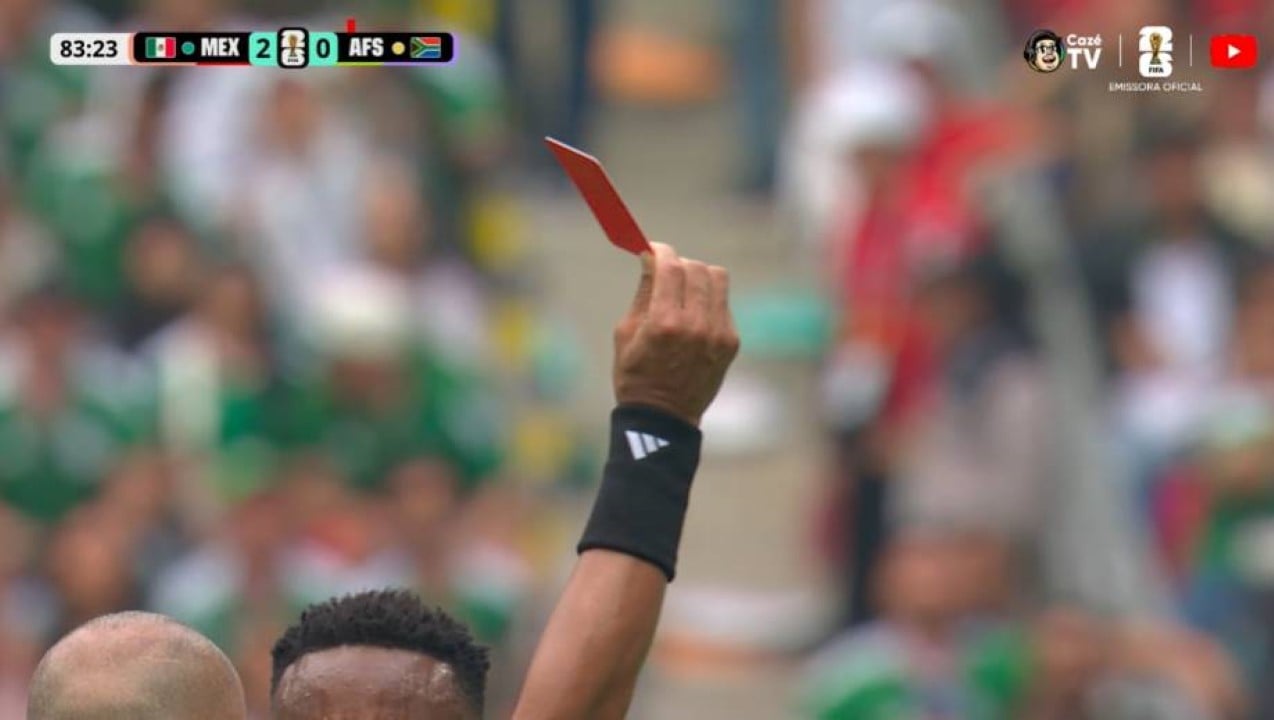
In an electrifying clash for the 2026 FIFA World Cup, the Mexican team demonstrates its superiority on the Azteca Stadium field, maintaining a two-goal lead over South Africa. With the score currently at 2-0, the match continues intensely in the second half, with the clock showing 50 minutes and 4 seconds, under the watchful eye of rigorous refereeing who has already distributed expulsions, shaping the rhythm and strategy of the teams on the field.
Raúl Jiménez’s goal extends Mexico’s advantage
Mexico managed to expand its lead with a spectacular goal from Raúl Jiménez. The play, started on the right side of the attack, featured a precise assist from Quiñones and a precise cross from Alvarado to the second post. There, the number 9 rose with style and headed down, with no chance for the opposing goalkeeper, consolidating the 2-0 for the home team in the mythical Azteca.
Follow the Match Details with Mix Vale Coverage
Stay up to date with every moment and crucial play of this historic clash with live minute-by-minute coverage from the Mix Vale news portal. Our goal is to provide you with an immersive experience, following the main plays, goals and important decisions in real time. To ensure you don’t miss any news, subscribe to notifications on our website, www.mixvale.com,, for free and receive information directly on your device, always staying up to date with your favorite team.
South Africa seeks reaction and Mexico defends itself
In the 48th minute of the second half, the South African team tried a rehearsed move in an attempt to reduce the difference on the scoreboard. However, the execution did not go as planned, and the solid Mexican defense managed to ward off the danger without any major difficulties, frustrating the visitors’ hopes of an immediate reaction.
Red Card for Montes Increases the Game
A moment of great impact occurred in the 46th minute of the second half, when defender Montes, from the Mexican national team, was sent off with a straight red card. Brazilian referee Wilton Pereira Sampaio interpreted the foul, committed in a one-on-one play, as interrupting a clear scoring opportunity, leaving Mexico with one player less and increasing the tension of the match.
Significant Additions in the Final Stage
The referee indicated that the second half will be extended by another seven minutes, totaling 52 minutes of play. This addition of time increases expectations and the possibility of new twists in the confrontation, maintaining the intensity until the final moments of the match.
Mexico Fight in Midfield
In the 44th minute of the second half, the Mexican team suffered a foul in the central area of the field. The move involving the player Álvarez shows the fierce competition for every meter of the pitch, with the teams seeking to control possession of the ball and impose their pace of play.
Chance Missed by Mexico in Attack
A few minutes earlier, in the 41st minute of the second half, striker González received the ball at the edge of the South African area with a good opportunity to finish. However, the player ended up messing up when shooting, and South Africa’s defense acted quickly to remove the danger, preventing Mexico from expanding their advantage even further.
Zwane sent off after VAR review
In the 38th minute of the second half, South Africa also had a player sent off. Zwane received a straight red card for an attack, a move that was crucial to the dynamics of the game. The decision came after Brazilian referee Wilton Pereira Sampaio used the video system.
VAR Analysis Confirms Aggression
Minutes before the expulsion, in the 36th minute of the second half, Wilton Pereira Sampaio decided to review the play in the VAR to evaluate a possible expulsion of Zwane. The South African midfielder had hit Alvarado in the face, in a move that generated a lot of controversy and stopped the match until the referee confirmed the attack.
Tala Rangel Makes Important Defense
In the 35th minute of the final stage, midfielder Appollis, from South Africa, risked a shot from outside the area, trying to surprise the Mexican goalkeeper. However, Tala Rangel was attentive and made a safe save, without giving a rebound, keeping the score unchanged and ensuring the safety of his goal.
Mexico Persists in Marking
Even with the advantage on the scoreboard, the Mexican team continued its pressure strategy, trying to disarm the opponent in the attacking field in the 34th minute of the second half. Although South Africa’s defense managed to ward off the danger at that moment, Mexico’s intention to suffocate their rival was evident.
Tactical Change in the Mexican Team
In the 33rd minute of the second half, the coach of the Mexican national team opted for a substitution, aiming to breathe new life into his team. Striker Quiñones entered the field in place of Vega, in a tactical change that sought to maintain offensive intensity and the ability to create plays.
Chronology of the Main Moves of the Match in Progress
Follow the highlights of the 2026 FIFA World Cup debut:
- Indefinite Minute, 2nd Half:Raúl Jiménez scores Mexico’s second goal, after a cross from Alvarado, consolidating the 2-0 lead.
- 46′ of the 2nd Half:Montes, Mexico defender, is sent off with a straight red card for blocking a clear chance to score.
- 38′ of the 2nd Half:Themba Zwane, South Africa midfielder, receives a straight red card for attacking Alvarado.
- 36′ of the 2nd Half:Referee Wilton Pereira Sampaio goes to the VAR to analyze Zwane’s aggression, culminating in the player’s expulsion.
- 35′ of the 2nd Half:Oswin Appollis, from South Africa, takes a risk from outside the area, and Tala Rangel makes a crucial save, without giving a rebound.
Ball Personalities at the Opening of the World Cup
The iconic Ronaldinho Gaúcho was one of the illustrious presences in the Globo booth during the match, expressing his satisfaction with the good relationship he cultivates with Mexican fans. His presence added a special shine to the inaugural World Cup event.
Artistic Performances at the Opening Ceremony
The grand opening ceremony of the 2026 World Cup was marked by high-level musical performances. Renowned singer Shakira enchanted the audience with her performance, setting the stage for the disputes to begin.
Music Stars Shine on the Azteca Stage
In addition to Shakira, other big names in music such as Maná and J Balvin also took to the stage at the Azteca Stadium to celebrate the opening of the 2026 World Cup. The diversity of artists provided a vibrant and unforgettable show for those present and viewers.
Football Idols Attend the Party
Legends of world football, such as Ronaldo Fenômeno and again Ronaldinho Gaúcho, were seen arriving to attend the opening party of the 2026 World Cup. The presence of such emblematic figures highlights the magnitude and importance of the tournament.
The Beginning of the Great Celebration in Azteca
The opening party of the 2026 World Cup kicked off at the historic Azteca Stadium in Mexico City. The event set the stage for the first game, immersing the public in the atmosphere of celebration and competition that the World Cup provides.
Remembering the 2010 Confrontation
It is interesting to note that, on another June 11, the teams of Mexico and South Africa had already faced each other in the opening match of a World Cup, in 2010. This historical coincidence adds an extra layer of meaning to the current duel, evoking memories of a recent past on the world football stage.
Detailed Team Lineups and Tactics for the 2026 World Cup
The teams entered the field with different formations, seeking their strategies for the initial confrontation. Mexico, under the command of Javier Aguirre, opted for a 4-3-3 formation, valuing offense and pressure in attack. South Africa, led by Hugo Broos, lined up in a 5-3-2 formation, prioritizing solid defense and exploring counterattacks.
-
Mexican Football Team:
- Goalkeeper:Tala Rangel (1)
- Defenders:Israel Reyes (15), Montes (3), Vásquez (5), Gallardo (23)
- Midfielders:Érik Lira (6), Edson Álvarez (4), Gutiérrez (26), Luis Chávez (24), Fidalgo (8), Gilberto Mora (19)
- Attackers:Alvarado (25), Raúl Jiménez (9), Armando González (14), Quiñones (16), Vega (10)
- Reservations:Acevedo (12), Ochoa (13), Jorge Sánchez (2), Mateo Chávez (20), Romo (7), Vargas (18), Pineda (17), Santi Giménez (11), Huerta (21), Guillermo Martínez (22)
- Technical:Javier Aguirre
- Tactical Scheme:4-3-3
-
South African Football Team:
- Goalkeeper:Williams (1)
- Defenders:Mudau (20), Okon (21), Sibisi (19), Mbokazi (14), Modiba (6)
- Midfielders:Appollis (7), Mokoena (4), Sithole (13), Adams (23), Zwane (11)
- Attackers:Foster (9)
- Reservations:Chaine (16), Goss (22), Matuludi (2), Ndamane (3), Makhanya (24), Kabini (18), Cross (26), Moremi (8), Mofokeng (10), Sebelebele (25), Maseko (12), Mbatha (5), Rayners (15), Makgopa (17)
- Technical:Hugo Broos
- Tactical Scheme:5-3-2
Referee Team and Match Venue Details
The match is being conducted by an experienced refereeing team. The main referee is Wilton Pereira Sampaio, assisted by Bruno Raphael Pires and Bruno Boschilia. The role of fourth referee is played by Juan Benítez. The venue for this clash is the legendary Azteca Stadium, known for its rich history in world football.
Group Situation at the 2026 World Cup
In this group stage of the 2026 World Cup, teams are looking for their first points to advance in the tournament. In Group A, both Mexico and South Africa started with a point from one game, while South Korea and the Czech Republic are still awaiting their debuts. The competition promises to be fierce in all keys.
Statistical Performance of Teams on the Field
Match statistics provide a detailed overview of each team’s performance. Ball possession, for example, is a clear indicator of who dictates the pace of the game, while the number of passes and accuracy reveal the quality of the ball exchange and tactical organization.
Efficiency in Exchanging Passes
With 544 total passes and an accuracy of 90%, the Mexican team demonstrates significant control in the construction of their plays. In contrast, South Africa made 326 passes with 82% accuracy, indicating less fluidity in their movement and distribution on the field.
Offensive Potential and Finishing
In terms of attack, Mexico appears more aggressive, with 17 shots, 5 of which hit the goal and 1 hit the post. South Africa had only 3 shots, with 2 on goal, which points to a lesser ability to create clear opportunities and put pressure on the opposing defense.
Defensive Robustness and Tackling
In defense, Mexico registered 2 saves made by its goalkeeper and 9 tackles, demonstrating effectiveness in regaining possession of the ball. South Africa, in turn, had 5 goalkeeper saves and 13 tackles, highlighting the need for their backline to work harder to contain the opponent’s advances.
Discipline and Card Occurrences
The disciplinary aspect of the game reflects the intensity and competitiveness of the confrontation. Both teams committed 11 fouls, highlighting the physical dispute. Mexico received 1 yellow card and 1 red card, while South Africa accumulated 2 yellow cards and 2 red cards, showing the firm intervention of Brazilian referees to maintain order on the field.
