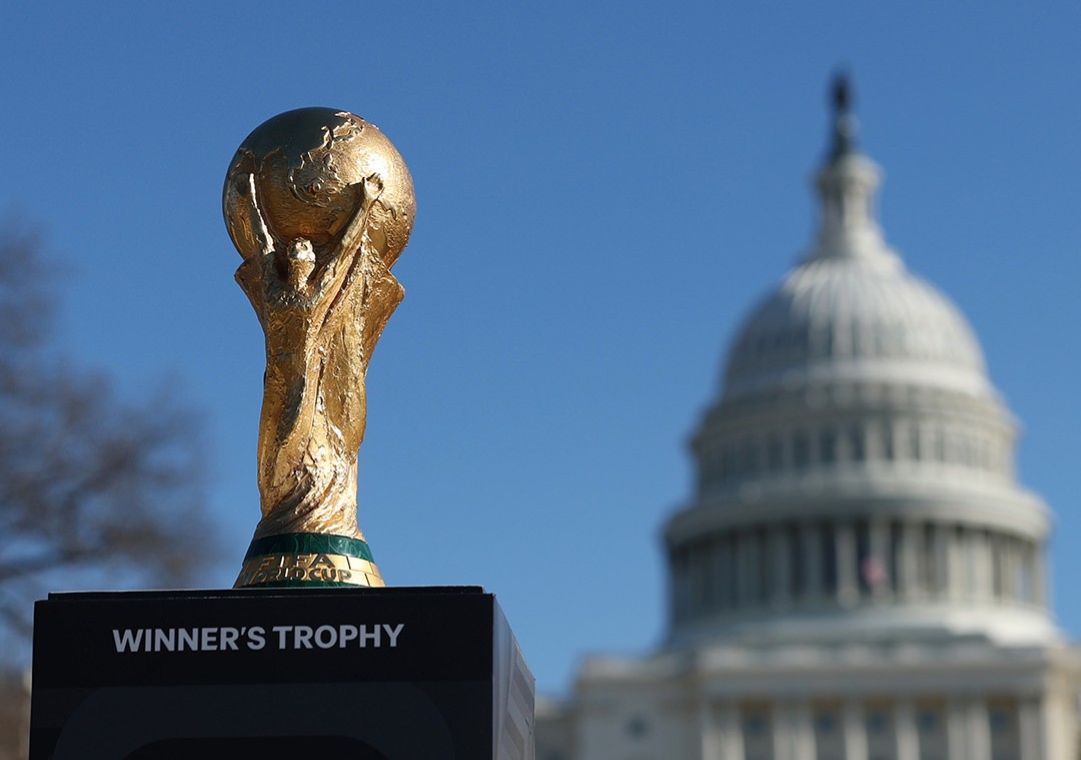
Today, June 11, 2026, marks the start of the FIFA World Cup in a historic edition, hosted by the United States, Mexico and Canada. The stage is set for 48 teams in an expanded tournament, but the memory of the great champions still resonates. Before the ball rolls onto North American lawns, let’s remember the trajectories of the five nations that have lifted the Jules Rimet Cup and the World Cup trophy the most.
Brazil: five-time champion and football legend
The Brazilian team holds a record of five world titles, consolidating itself as the greatest force in football. Its history is marked by generations of unforgettable talents and moments that changed the sport.
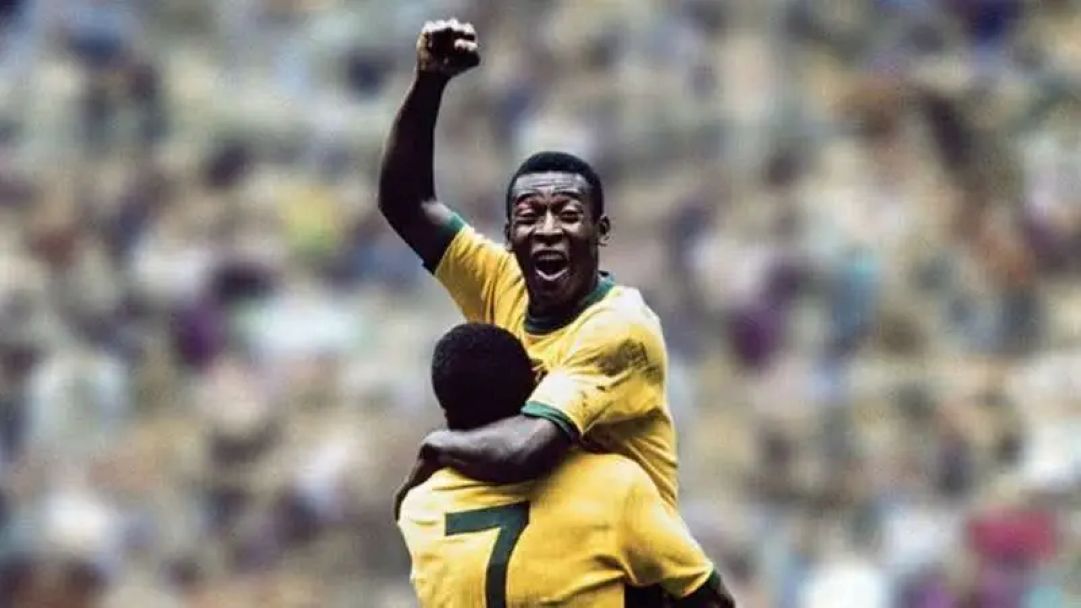
1958 World Cup: Pelé’s rise in Sweden
Brazil won its first world title in 1958, in Sweden, under the leadership of coach Vicente Feola. It was the tournament that introduced Pelé, then 17, to the world. The team enchanted with offensive and engaging football, overcoming the traumas of previous editions.
In the group stage, Brazil demonstrated its strength by beating Austria 3-0 and the Soviet Union 2-0, as well as a goalless draw with England. In the quarter-finals, Pelé scored the only goal in the 1-0 victory over Wales. The semi-final was a spectacle, with a 5-2 victory over France, in which Pelé scored a hat-trick. The final, against the Swedish hosts, ended in a memorable 5-2, with two goals from Pelé, including one of the most beautiful in World Cup history, and two from Vavá, as well as Zagallo. Pelé was the team’s top scorer with 6 goals in the tournament.
1962 World Cup: Garrincha leads in Chile
Four years later, in Chile, Brazil became two-time world champions, an unprecedented feat at the time. Despite Pelé’s injury in the second game of the group stage, the team found its new driver in Garrincha. The “Angel with Crooked Legs” shined brightly, carrying the team to victory.
The path began with a 2-0 victory over Mexico and a 0-0 draw with Czechoslovakia. Pelé’s injury occurred in the second match, giving way to Amarildo. The group stage ended with a 2-1 victory over Spain. In the quarter-finals, Garrincha scored twice in a 3-1 victory over England. In the semi-final, Brazil defeated Chile 4-2, with two more goals from Garrincha, who also scored in the final. The decision against Czechoslovakia was won 3-1, with goals from Amarildo, Zito and Vavá, guaranteeing the second consecutive title for Brazil. Garrincha and Vavá shared the Brazilian artillery with 4 goals each.
1970 World Cup: the “Dream Team”‘s third title in Mexico
The 1970 World Cup in Mexico is often cited as the best team of all time. With stars like Pelé, Jairzinho, Tostão, Rivelino and Gérson, Zagallo’s team presented an artistic style of football that enchanted the planet, winning the third championship and definitive possession of the Jules Rimet cup.
Brazil won all of its games in the tournament. In the group stage, they beat Czechoslovakia (4-1), England (1-0) and Romania (3-2). In the quarter-finals, they eliminated Peru 4-2, and in the semi-final, the very tough match against Uruguay ended 3-1. The final against Italy was a gala performance, with a 4-1 victory. Pelé opened the scoring with a header, Gérson and Jairzinho scored and Carlos Alberto finished with an iconic goal after a spectacular collective play. Jairzinho became the only player to score in every World Cup game, with 7 goals. Pelé scored 4 goals.
1994 World Cup: the fourth championship after 24 years in the USA
After 24 years of fasting, Brazil returned to the top of the world in the 1994 World Cup, in the United States. Carlos Alberto Parreira’s team, focused on defense and the strength of the attack with Romário and Bebeto, brought the cup back home.
In the group stage, victories over Russia (2-0) and Cameroon (3-0), and a draw with Sweden (1-1). In the round of 16, a 1-0 victory against the hosts, with a goal from Romário. In the quarterfinals, Brazil beat the Netherlands 3-2 in an electrifying game. The semi-final was a rematch against Sweden, won 1-0. The final, against Italy, was the first decided on penalties in the history of the World Cup, after a 0-0 score in normal time and extra time. Roberto Baggio’s error on the last penalty guaranteed Brazil’s fourth championship. Romário was the team’s top scorer, with 5 goals.
2002 World Cup: Ronaldo’s fifth championship in Japan and South Korea
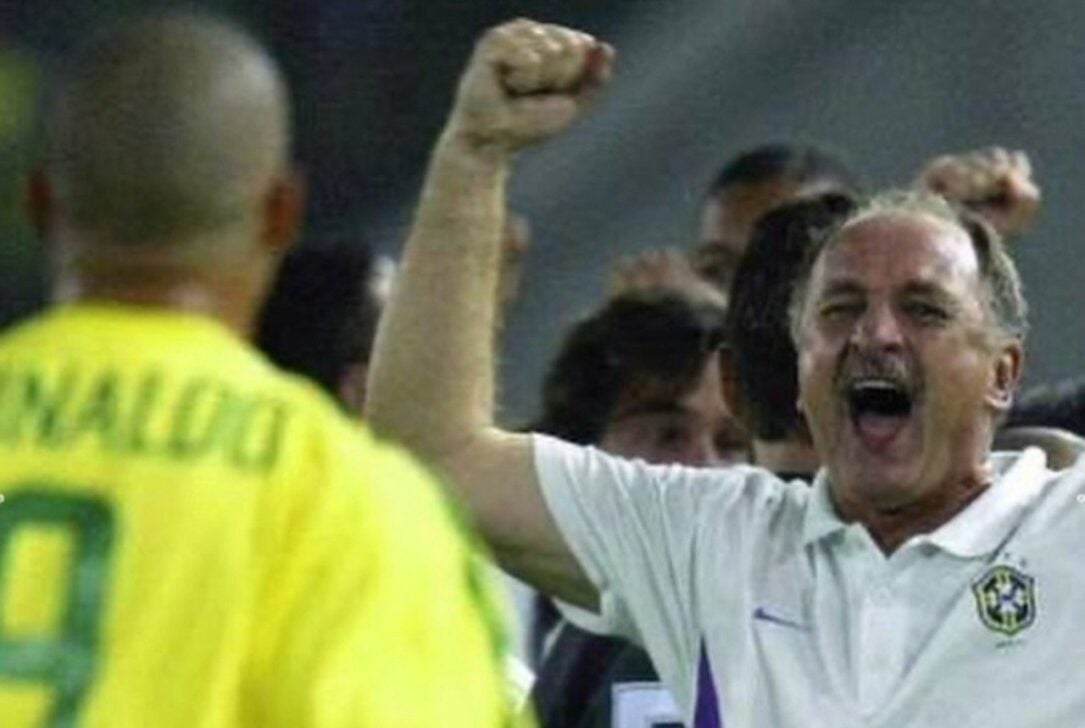
Brazil won its fifth title in 2002, in the first World Cup held in Asia, hosted by Japan and South Korea. Led by Luiz Felipe Scolari and with the RPP trio (Ronaldo, Rivaldo and Ronaldinho Gaúcho) in great form, the team had an impeccable campaign, winning all their games.
The group stage saw victories over Turkey (2-1), China (4-0) and Costa Rica (5-2). In the round of 16, Brazil eliminated Belgium 2-0. In the quarterfinals, they beat England 2-1 in a game marked by a free kick from Ronaldinho Gaúcho. The semi-final was a repeat of the first game against Turkey, with Brazil winning 1-0. The grand final was against Germany, an unprecedented match in World Cups. Ronaldo, in his redemption after the 1998 World Cup, scored both goals in the 2-0 victory, establishing himself as the tournament’s top scorer with 8 goals and guaranteeing Brazil’s fifth championship.
Germany: the strength of the four-time European champion
Germany, in its various formations (West Germany, Germany), is one of the most consistent and successful teams in World Cup history, with four titles and an impressive number of finals played.
1954 World Cup: the “Miracle of Bern” in Switzerland
The first German title came in 1954, in Switzerland, in a feat known as the “Miracle of Bern”. West Germany, still recovering from the Second World War, surprised by beating the favorite and undefeated Hungary team, led by Ferenc Puskás, who had beaten the Germans 8-3 in the group stage.
The German campaign included victories over Turkey (4-1) and a draw with Hungary in the group stage, which was actually an 8-3 defeat by Hungary. To advance, West Germany needed a play-off game against Turkey, which they won 7-2. In the quarter-finals, the team beat Yugoslavia 2-0. In the semi-final, they defeated Austria 6-1. In the final, against Hungary, despite losing 2-0 in the first minutes, Germany turned it around to 3-2, with goals from Max Morlock and two from Helmut Rahn, winning a title that went far beyond football, symbolizing the country’s reconstruction. Helmut Rahn scored 4 goals in the tournament.
1974 World Cup: home victory in West Germany
Twenty years later, at home, West Germany lifted the cup again. Led by Franz Beckenbauer and Gerd Müller, Helmut Schön’s team demonstrated the tactical efficiency and discipline that would become their trademark, beating Johan Cruyff’s “A Clockwork Orange” in the final.
West Germany has had a challenging path. In the first group stage, victories over Chile (1-0) and Australia (3-0), but a 1-0 defeat to East Germany in a historic confrontation. In the second group stage, the team beat Yugoslavia (2-0), Sweden (4-2) and Poland (1-0), guaranteeing their place in the final. The decision against the Netherlands, who had impressed with their “total football”, was won 2-1, coming from behind. Johan Neeskens opened the scoring from the penalty spot, Paul Breitner also equalized from the penalty spot, and Gerd Müller scored the winning goal just before half-time. Gerd Müller was Germany’s top scorer with 4 goals.
1990 World Cup: the third championship in Italy
The third star came in 1990 in Italy, with Franz Beckenbauer now as coach. West Germany, on the verge of reunification, beat Diego Maradona’s Argentina in the final, in a rematch of the previous World Cup. Lothar Matthäus was the highlight of that team.
West Germany had a solid campaign. In the group stage, a 4-1 victory over Yugoslavia, a 5-1 victory over the United Arab Emirates and a 1-1 draw with Colombia. In the round of 16, a European classic against the Netherlands was won 2-1. In the quarterfinals, the team eliminated Czechoslovakia 1-0, and in the semi-final, they beat England on penalties after a 1-1 draw. The final against Argentina was a tense match with few chances. Andreas Brehme scored the winning goal in a 1-0 penalty, securing a third title for West Germany. Lothar Matthäus was the team’s top scorer with 4 goals.
2014 World Cup: Brazil’s fourth title
Germany won its fourth title in 2014, in Brazil, with a modern, tactically flexible team full of talents such as Philipp Lahm, Bastian Schweinsteiger and Thomas Müller. Joachim Löw’s team marked the history of the tournament with memorable performances, including the historic defeat of Brazil.
The campaign began with a dominant 4-0 win over Portugal, followed by a 2-2 draw with Ghana and a 1-0 win over the United States in the group stage. In the round of 16, Germany beat Algeria 2-1 in extra time. In the quarterfinals, they beat France 1-0. The semi-final was the most shocking game in World Cup history: a 7-1 thrashing of hosts Brazil, a result that will never be forgotten. The final, at Maracanã, was against Lionel Messi’s Argentina. Mario Götze’s goal in extra time secured the 1-0 victory and the fourth German championship. Thomas Müller was the team’s top scorer with 5 goals.
Italy: tradition and resilience of four-time champions
Italy is another giant of world football, with four World Cup titles, all of them marked by strong defense and moments of individual brilliance. The Azzurra is synonymous with determination and tactical tradition.
1934 World Cup: Italy’s first home title
Italy hosted and won its first World Cup in 1934, under the command of the legendary Vittorio Pozzo. The tournament was marked by an intense political climate in fascist Italy, and the team played under great pressure.
The Azzurri began their campaign with a 7-1 victory over the United States in the round of 16 (knockout format from the start). In the quarterfinals, they faced Spain in an epic clash, which required a tiebreaker game (1-0 victory after a 1-1 draw in the first game). In the semi-final, Italy beat Austria 1-0. The final was against Czechoslovakia. After a 1-1 draw in normal time, Italy won 2-1 in extra time, with goals from Raimundo Orsi and Angelo Schiavio, winning their first World Cup. Angelo Schiavio was the Italian top scorer with 4 goals.
1938 World Cup: the second championship in France
Four years later, in France, Italy became the first team to win two consecutive titles, a feat that solidified them as a powerhouse. Vittorio Pozzo remained in charge, proving to be one of the greatest coaches in history.
Italy’s 1938 campaign began with a 2–1 victory over Norway in the round of 16. In the quarterfinals, Italy faced hosts France and won 3-1. In the semi-final, they beat Brazil, who had spared players, 2-1. The final was against Hungary, in a game where Italy dominated and won 4-2, with two goals from Gino Colaussi and two from Silvio Piola. Silvio Piola was the team’s top scorer with 5 goals.
1982 World Cup: the resurrection in Spain
After a period of disappointing results, Italy surprised the world in 1982, in Spain. Led by Enzo Bearzot and driven by the explosion of Paolo Rossi, who seemed out of sorts before the tournament, the team overcame strong opponents and won their third title.
Italy got off to a slow start, with three draws in the first group stage (Poland 0-0, Peru 1-1, Cameroon 1-1). In the second group stage, however, the team grew. In a difficult group, they beat Argentina 2-1 and, in a legendary game, they beat Zico and Sócrates’ Brazil 3-2, with a hat-trick from Paolo Rossi. In the semi-final, Italy defeated Poland 2-0, with two more goals from Rossi. The final was against West Germany, and Italy won 3-1, with goals from Paolo Rossi, Marco Tardelli and Alessandro Altobelli, winning their third title. Paolo Rossi was the tournament’s top scorer and star player with 6 goals.
2006 World Cup: the fourth championship in Germany
Twenty-four years later, Italy became world champions again in 2006, in Germany. Marcello Lippi’s team, with a solid defense and the leadership of Fabio Cannavaro, overcame internal scandals and a strong France in the final, in an epic game.
The Italian campaign was consistent. In the group stage, victories over Ghana (2-0) and the Czech Republic (2-0), and a draw with the United States (1-1). In the round of 16, Italy eliminated Australia 1-0. In the quarter-finals, they beat Ukraine 3-0. The semi-final was a classic against hosts Germany, won 2-0 in extra time, with goals from Fabio Grosso and Alessandro Del Piero. The final against France, marked by Zidane’s header on Materazzi, ended 1-1 in normal time and extra time (Zidane and Materazzi). Italy won on penalties 5-3, with Grosso’s decisive shot, guaranteeing their fourth title. Luca Toni and Marco Materazzi were the team’s top scorers with 2 goals each.
Argentina: Maradona and Messi’s third championship
Argentina, home to some of football’s greatest talents, won three world titles, each with a protagonist who transcended the sport: Mario Kempes, Diego Maradona and Lionel Messi.
1978 World Cup: Argentina’s first home title
Argentina won its first world title in 1978, at home, under the military dictatorship. Led by Mario Kempes, top scorer and star of the tournament, César Luis Menotti’s team overcame the Netherlands in an exciting final.
The Argentine campaign began with victories over Hungary (2-1) and France (2-1), and a defeat to Italy (1-0) in the first group stage. In the second group stage, Argentina beat Poland (2-0) and Peru (6-0), and drew with Brazil (0-0), advancing to the final due to goal difference. The final was against the Netherlands, who had been runners-up in 1974. Argentina won 3-1 in extra time, with two goals from Mario Kempes and one from Daniel Bertoni, winning their first title. Mario Kempes was the tournament’s top scorer with 6 goals.
1986 World Cup: Maradona’s magic in Mexico
In 1986, in Mexico, Diego Maradona led Argentina to their second world title in one of the most dominant individual performances in World Cup history. The Argentine number 10 was the maestro, top scorer and central figure of a team that became legendary.
Argentina had a remarkable campaign. In the group stage, they beat South Korea (3-1) and Bulgaria (2-0), and drew with Italy (1-1). In the round of 16, Argentina eliminated Uruguay 1-0. In the quarterfinals, in the famous game against England, Maradona scored the “Hand of God” goal and an amazing goal, dribbling past half the opposing team, in a 2-1 victory. In the semifinals, Maradona shone again, with two goals in the 2-0 victory over Belgium. The final was against West Germany, in an exciting match. Argentina won 3-2, with goals from José Luis Brown, Jorge Valdano and Jorge Burruchaga, guaranteeing their second title. Diego Maradona scored 5 goals and was named the best player of the tournament.
2022 World Cup: Messi’s third title in Qatar
Thirty-six years later, in 2022, in Qatar, Argentina became world champions again, crowning Lionel Messi’s career with the long-awaited title. Lionel Scaloni’s team demonstrated resilience and offensive football, overcoming opponents and moments of pressure.
Argentina’s campaign began with a shock 2-1 defeat to Saudi Arabia in the group stage. However, the team recovered with victories over Mexico (2-0) and Poland (2-0), guaranteeing qualification. In the round of 16, Argentina eliminated Australia 2-1. In the quarterfinals, they beat the Netherlands on penalties after a thrilling 2-2 draw. In the semi-final, they beat Croatia 3-0. The final against Kylian Mbappé’s France is considered one of the greatest in World Cup history. After a 3-3 score in normal time and extra time (two goals from Messi, one from Di María, and a hat-trick from Mbappé), Argentina won on penalties 4-2, with Gonzalo Montiel’s decisive shot. Lionel Messi scored 7 goals and was named the best player of the tournament.
Uruguay: pioneering spirit and initial glories
Uruguay, although with fewer titles than the other giants, has a special place in the history of World Cups as the first champion and protagonist of one of the biggest shocks of the tournament.
1930 World Cup: the first champion at home in Uruguay
Uruguay hosted and won the first FIFA World Cup in 1930, a historic milestone for football. As host, Celeste demonstrated its strength and dominated the inaugural tournament.
With just 13 teams participating, the format included a simplified group stage. Uruguay beat Peru 1-0 and Romania 4-0, qualifying for the semi-finals. In the semi-final, they scored a 6-1 defeat over Yugoslavia. The final was a South American classic against Argentina, repeating the 1928 Olympic final. Uruguay won 4-2, in a match played at the Centenário Stadium, with goals from Pablo Dorado, Pedro Cea, Santos Iriarte and Héctor Castro, guaranteeing the first world title and making history. Pedro Cea was the Uruguayan top scorer with 5 goals.
1950 World Cup: the “Maracanazo” in Brazil
The second Uruguayan title came in 1950, in Brazil, in one of the most surprising results in the history of the sport: the “Maracanazo”. Uruguay, discredited, silenced the packed Maracanã by beating the host and favorite Brazilian team in the decisive match of the final quadrangular.
Uruguay began the group stage campaign with a single match, beating Bolivia 8-0 (as France withdrew, leaving just two teams in the group). In the final phase, a quadrangular, the team drew with Spain 2-2 and beat Sweden 3-2. The final match, against Brazil, was not technically a final, but a decision where Brazil only needed a draw to be champion. Uruguay, who needed to win, managed a historic 2-1 comeback, with goals from Juan Alberto Schiaffino and Alcides Ghiggia, after Brazil opened the scoring with Friaça. The Maracanazo became a legend, and Uruguay won its second and last world title to date. Oscar Míguez was the Uruguayan top scorer with 5 goals.
Greatest champions: a summary of glories and top scorers
The five biggest FIFA World Cup champions have a total of 18 titles, representing more than half of the editions already held. Their stories are intertwined with the most memorable moments in world football.
Marks of each champion
- Brazil (5 titles):1958, 1962, 1970, 1994, 2002. Top scorer in World Cups: Ronaldo Nazário (15 goals).
- Germany (4 titles):1954, 1974, 1990 (as West Germany), 2014. Top scorer in World Cups: Miroslav Klose (16 goals).
- Italy (4 titles):1934, 1938, 1982, 2006. Top scorer in World Cups: Paolo Rossi and Roberto Baggio (9 goals each).
- Argentina (3 titles):1978, 1986, 2022. Top scorer in World Cups: Lionel Messi (13 goals).
- Uruguay (2 titles):1930, 1950. Top scorer in World Cups: Oscar Míguez (8 goals).
The legacy for the 2026 World Cup
The opening of the 2026 World Cup in the United States, Mexico and Canada marks the beginning of a new era for the tournament. The expansion to 48 teams promises more opportunities and new rivalries, but it also renews expectations about which nations will be able to join this select group of champions or, who knows, add another star to their shirts.
With the complexity of logistics across three host countries and the increasing number of games, the next World Cup will be a test for the teams and a celebration for the fans. The memories of past glories serve as inspiration for teams that seek to immortalize their names in the history of football. Will the giants’ tradition continue or will new champions emerge in 2026? The answer will begin to be written today.
