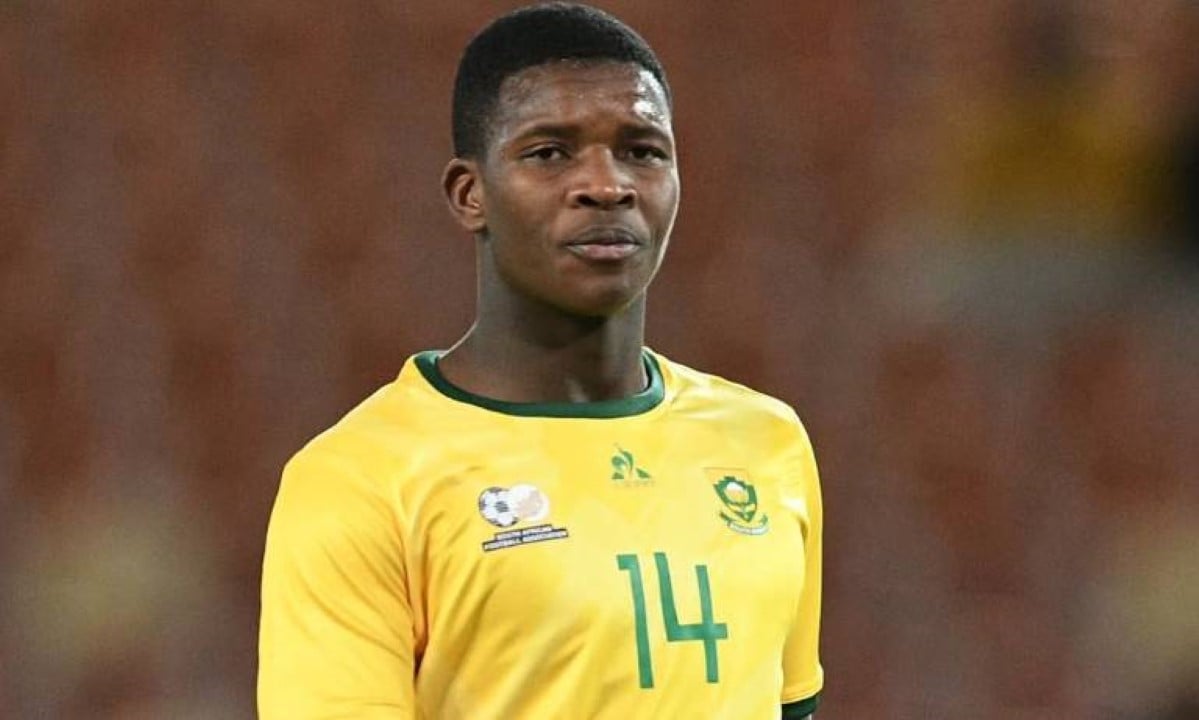
The kickoff of the 2026 World Cup will put the promising Mbekezeli Mbokazi in the spotlight of global football. The 20-year-old defender, who currently defends the colors of Chicago Fire in the United States, is coach Hugo Broos’ main bet to form the defensive system of the South African team. The inaugural clash against the Mexican team takes place this Thursday (11), starting at 4pm Brasília time, taking place at the legendary Azteca Stadium, in the capital of the host country.
The meteoric rise and characteristics of the new defensive pillar
Originally from the KwaZulu-Natal region, more specifically from the city of Hluhluwe, the athlete born in September 2005 quickly built a reputation for extreme solidity. Affectionately nicknamed TLB in reference to the strength of a backhoe, the defender compensates for his average height of 1.77m with impressive physical imposition. In addition to his strength in direct combat, the left-footed player demonstrates a rare leadership capacity for his age, surgical disarming and excellent vision of the game when passing the ball, becoming a fundamental piece for his nation’s tactical scheme.
His professional journey gained traction in the youth ranks of Orlando Pirates, where he wore the captain’s armband in the under-23 squad before moving up to the professionals in the 2025 season. His high-level performance caught the attention of the North American market, resulting in a transfer to Major League Soccer in early 2026, valued at around 2.5 million euros. On American soil, the young man accumulated twelve solid performances as a starter, including securing a nomination for the league’s prestigious All-Star Game, which consolidated his call-up to the FIFA tournament.
Challenge in Group A and memories of a memorable clash
The tournament’s initial bracket also includes the teams from the Czech Republic and South Korea, requiring the Africans to seek positive results even when playing in hostile territory to dream of qualifying. The clash carries an evident nostalgic weight, reversing the roles of the historic opening in 2010, when the South Africans hosted the Mexicans in Johannesburg. Now, in front of a crowd estimated at 87 thousand voices on the same pitch that honored idols like Pelé and Maradona in past editions, the visiting team will need a lot of tactical discipline and speed in counterattacks to neutralize the hosts’ momentum.
How teams should go to the field in the Mexican capital
Coaches prepare different strategies to seek the first three points in the expanded competition. While the home team is betting on a more offensive scheme to fire up the local fans, the visitors must focus on congesting the midfield and exploiting the spaces left by the opponent.
- Mexico team (4-3-3): Raúl Rangel takes over the goal; the defensive line has Jorge Sánchez (or Israel Reyes), César Montes, Johan Vásquez and Jesús Gallardo; the midfield sector has Erik Lira, Álvaro Fidalgo (disputing for a place with Edson Álvarez) and Roberto Alvarado; the attacking trio is made up of Brian Gutiérrez, Raúl Jiménez and Julián Quiñones.
- South Africa team (4-2-3-1): Ronwen Williams in goal; Khuliso Mudau, Ime Okon (or Olwethu Makhanya), Mbekezeli Mbokazi and Aubrey Modiba form the defense; Teboho Mokoena and Sphephelo Sithole play as midfielders; Themba Zwane, Elias Mokwana (or Oswin Appollis) and Oswin Appollis look after the frame; Lyle Foster plays isolated up front.
Unprecedented milestone for Brazilian refereeing at World Cups
The disciplinary command of the show will be under the responsibility of an entirely South American trio. Wilton Pereira Sampaio was chosen by the international federation to carry the whistle, assisted on the sidelines by Bruno Pires and Bruno Boschilia. The event establishes a historical record of great relevance for national sport, marking the first occasion in which a Brazilian judge is assigned to work in the opening game of a World Cup.
Alternatives to follow the transmission in national territory
Brazilian fans will have a wide range of options to watch the inaugural clash live. On open television, exhibition rights are divided, with transmissions confirmed by TV Globo and SBT. For audiences who prefer subscription channels or digital platforms, complete coverage will be guaranteed by signals from SporTV, NSports and the ge portal through Globoplay. In addition, the online environment will feature the duel on the CazéTV YouTube channel, expanding access to the first great moment of the tournament.
