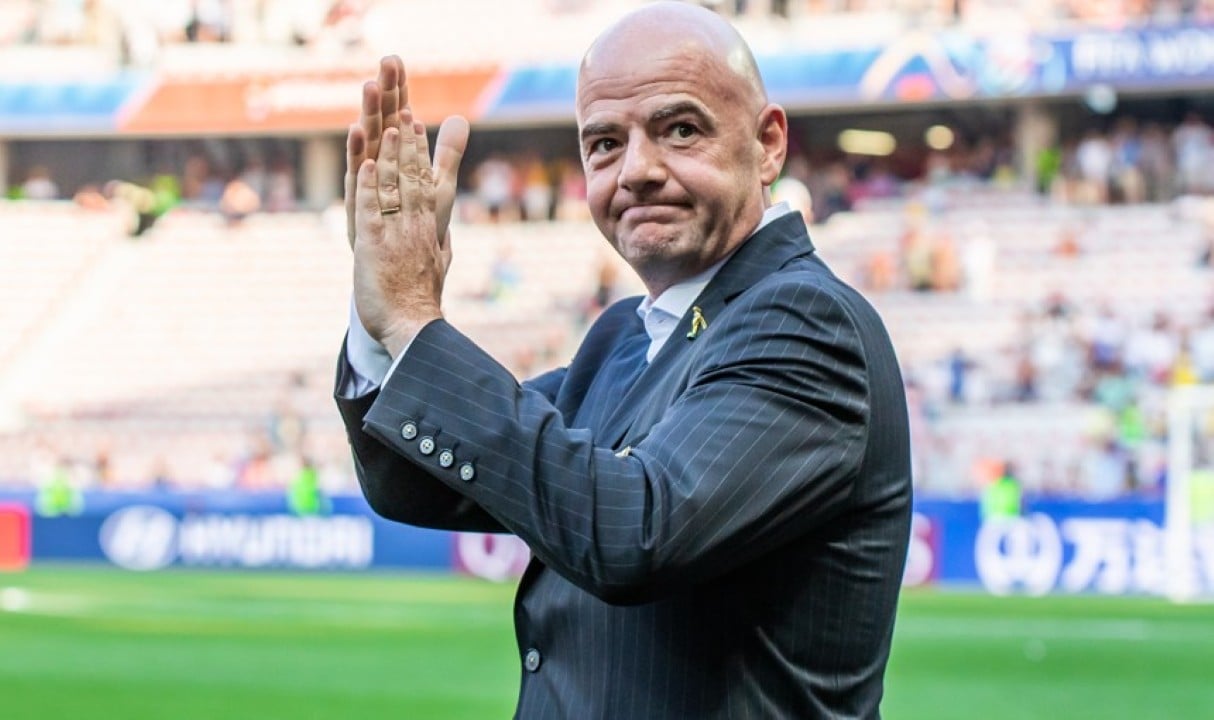
FIFA announced that president Gianni Infantino received gross remuneration of US$4.8 million for the 2025 financial year, an amount that will be paid throughout 2026 and is equivalent to around R$25 million at the current exchange rate.
The amount comes from a base salary of US$2.6 million and a bonus of US$2.2 million. The bonus varied according to the entity’s internal criteria and increased significantly compared to previous years, driven by the organization of the first expanded men’s Club World Cup, held in the United States.
Transparency since 2019
The highest governing body in world football has adopted a policy for disclosing the salaries of senior executives since 2019, when it began publishing these numbers publicly. In the first announcement, Infantino had total compensation of around US$2.9 million between salary and bonuses.
In charge of FIFA since 2016, the Swiss leader is in his third term, reappointed by acclamation in March 2023 with the support of the 211 national associations. The current term runs until 2027.
Growth over the years
Infantino’s pay quadrupled in about a decade. Reports and tax documents indicate that the total cost to FIFA of the president was around US$1.5 million eight years ago. In recent years, the package had already exceeded US$4 million, with adjustments in base and bonuses linked to events such as the 2022 World Cup in Qatar.
The increase in the bonus in 2025, of around 33% compared to the previous period, reflects the financial success of the Club World Cup expanded to 32 teams, which generated a significant boost in the entity’s revenue.
What changes in practice
For fans and federations, the disclosure reinforces FIFA’s commitment to transparency, which also distributes billions in revenue for the development of world football. Infantino’s high salary, paid with the organization’s resources, occurs in parallel with the planning of the 2026 World Cup, which will be hosted in North America and is expected to break box office and audience records.
Remuneration is defined by a FIFA compensation subcommittee and follows governance standards adopted after internal reforms.
