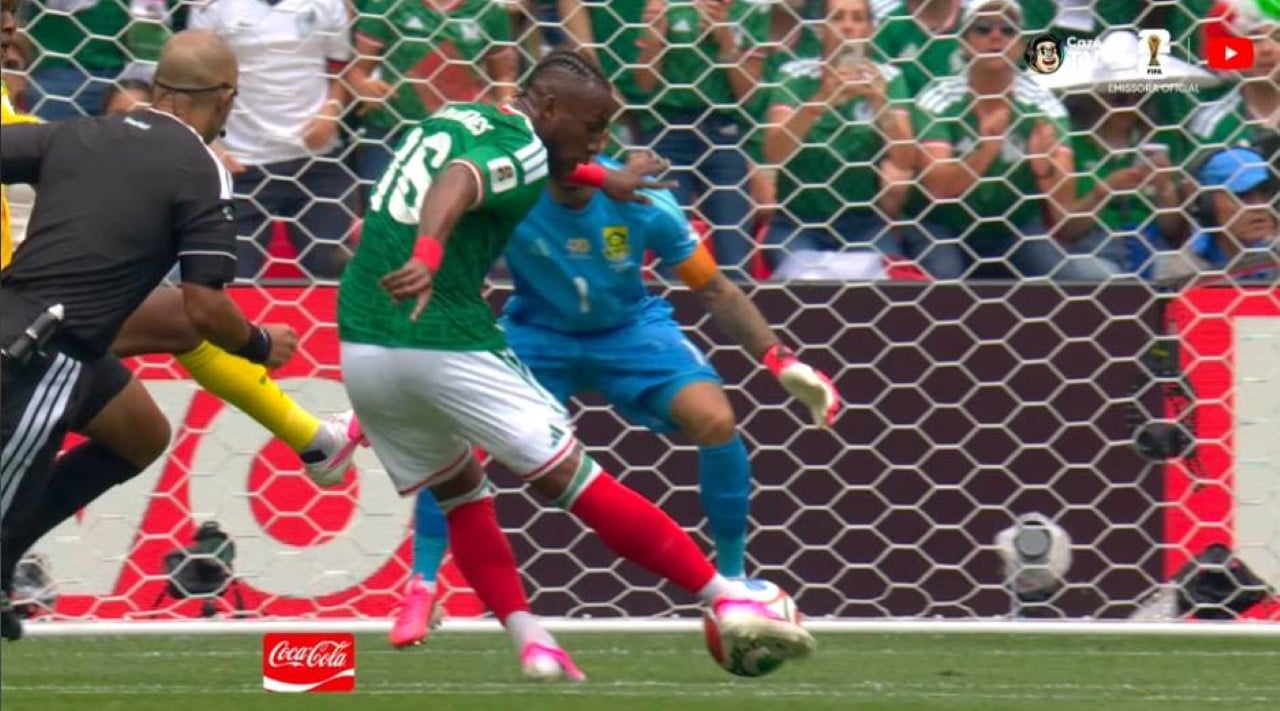
The opening whistle of the 2026 World Cup marked a historic moment at the Azteca Stadium, a stage that now holds the absolute record of hosting three editions of the global tournament. In front of a passionate crowd in Mexico City, the home team opened the scoring in the opening moments of the clash against South Africa. With just nine minutes on the clock, striker Julián Quiñones took advantage of an opponent’s mistake to score the first goal of the championship. The opening clash remains intense, with the hosts maintaining the minimum advantage on the scoreboard and setting the stands on fire.
Cauldron atmosphere in the Mexican capital dictates the rhythm of the opening minutes
Soon after the referee’s authorization, the atmosphere created by the public proved to be a differentiator for the home team. The Mexican fans exerted deafening pressure, alternating traditional shouts of encouragement with loud boos whenever the South African athletes dominated the ball. On the field, the home team assumed immediate leadership, valuing possession in the defensive sector to organize attacks calmly and undermine the visitors’ confidence right at the start of the competition.
The tactical stance adopted by the local team was clear from the first touch of the ball: retain control and dictate the speed of actions. While the hosts looked for gaps with short passes, the South African squad retreated their lines, relying on a compact defense to try to surprise in quick transition plays. The weight of playing in the opening game seemed to motivate the Mexican squad, who used the energy of the iconic stadium as fuel to push the opponent against their own goal without any ceremony.
Missed opportunities and crucial saves before scoring opened
The intensity applied in the opening moments quickly generated risky situations close to the two goals. With just two minutes on the clock, Modiba committed a dangerous foul, giving the home team a golden chance. Gutiérrez took responsibility for the direct kick, but the shot stopped at the barrier set up by the visitors, showing that the South African defensive system was alert to contain the home team’s initial momentum in set pieces.
Without slowing down, the host team continued to hammer and almost opened the scoring after four minutes. Raúl Jiménez was called to the edge of the penalty area and fired a violent shot, requiring a spectacular intervention from goalkeeper Williams to prevent the worst. After the same minute, South Africa tried to mount a quick counterattack, but a hasty pass from Foster returned possession for free to the Mexican archer, highlighting the natural nervousness of a debut and the weight of individual decisions in moments of pressure.
Mexican striker makes history by opening the tournament’s goals
The outcome that changed the outlook of the confrontation was born from a well-executed high marking combined with a fatal hesitation by the visiting defense. At the eight-minute mark, Sithole tried to play in the defensive sector, but ended up being surgically disarmed by midfielder Edson Lira. The steal of the ball completely messed up the protection system and left Julián Quiñones free from any blockage, in a forward position to clearly define the play.
Showing extreme coolness, the number 16 hit low and beat the goalkeeper, sending the thousands of fans present in the stadium into absolute delirium. The goal scored in the ninth minute established the athlete’s name in the official records as the first scorer of the 2026 edition, crowning the offensive effort of the home team. In addition to the celebration in the stands, the early blow destabilized South African tactical planning, forcing the visitors to abandon the defense to seek immediate damage.
Chronology of the main events at the beginning of the clash
To keep readers informed about every detail of this opening of the World Cup, the Mix Vale team prepared a detailed summary of the first thirteen minutes of the ball rolling. Monitoring developments in real time is essential to understand the dynamics of the confrontation. Check below the chronological record of the plays that defined the initial scenario of this historic match:
- 00′ (First Half):The referee authorizes the start of the confrontation on the legendary Mexican lawn. The home team leaves, officially marking the start of the global competition amid wild celebrations in the stands.
- 01′ (First Half):The home team starts running the ball in defense to gain confidence. The public participates actively, shouting “olé” with each successful pass and intensely booing any dominance of the visiting team.
- 02′ (First Half):The first infringement of the game occurs near the South African box. Modiba takes down the opponent, creating a clear dead ball opportunity for the local team to scare the rival goal.
- 03′ (First Half):Gutiérrez goes for the free kick and risks a direct shot. The shot explodes into the defensive barrier and loses speed, making it easier to cut through the defense without any major complications.
- 04′ (First Half):First big chance of the match. Raúl Jiménez receives a sweet pass near the half-moon and releases a first-time bomb, forcing goalkeeper Williams to make a plastic save to save his team.
- 04′ (First Half):Right after the scare, the visitors try to respond at speed. Foster starts to attack, but misses the decisive pass and passes the ball directly into the hands of the host archer.
- 06′ (First Half):The Mexican team intensifies the volume of play on the wings. The team explores the side corridors to try to break through, maintaining possession of the ball almost entirely in the offensive field.
- 08′ (First Half):The scoreboard opens! After Sithole’s serious mistake in releasing the ball, Edson Lira regains possession and serves Julián Quiñones. The attacker finishes in the corner and cheers the local fans. Mexico 1-0.
- 10′ (First Half):With the advantage guaranteed, the home team reduces the rotation. The team exchanges short passes in midfield to manage the result and cool down any attempt at a quick response from the opponent.
- 12′ (First Half):The offensive momentum returns. In another dangerous descent down the left wing, the Mexican attack forces the defense to move the ball away along the baseline, winning a corner in their favor.
- 13′ (First Half):The panorama remains unchanged, with broad territorial control of the principals. The African team tries to reorganize itself tactically so as not to suffer a second blow before the break.
Tactical challenges and the urgency of recovering visitors
Even after finding the net, the host team proved that they were not satisfied with just the minimum advantage. After a brief period of cadence in midfield, the home team accelerated the game again, culminating in a corner won after twelve minutes. This attitude demonstrates a clear intention to suffocate the opponent and take advantage of the visitors’ moment of emotional instability to try to settle the bill as soon as possible, driven by the massive support from the stands.
On the other side, the goal conceded early on dismantled the initial strategy based on the 5-3-2 formation. The individual error that led to the goal serves as a maximum alert for the defensive system, which cannot make mistakes in a tournament of this level. Coach Hugo Broos will need to rack his brains to reorganize the midfield and offer support to the attackers, as the tactic of waiting for the opponent to make a mistake proved ineffective in the first moves of the match and took a huge toll.
The psychological weight of losing in a world premiere is an additional obstacle for the African squad. With the entire stadium playing alongside the local team, communication and calm become vital elements to avoid a defensive collapse. The visitors need to find a way to retain the ball and build plays safely, at the risk of offering even more space for the speedy Mexican wingers to increase their count before they even go to the changing rooms.
Projections for the remainder of the duel and the impact on the global tournament
The tactical design for the first half points to a clash of patience versus urgency. Pushed by thousands of voices, the Mexican squad has the ideal scenario to explore counterattacks if the opponent decides to advance their marking lines. For the South African defense, the immediate challenge is to stop the bleeding and prevent the disadvantage from increasing, keeping the team alive to seek eventual equality in the complementary stage with specific changes.
Resilience will be the biggest test for Hugo Broos’ men. The visiting coaching staff will need to adjust their positioning to make it difficult for the home team to make a quick transition, while at the same time trying to push the team forward. A draw before the final whistle of the first half would completely change the atmosphere of the game, shifting the pressure back onto the shoulders of the hosts and balancing the action on the pitch.
This inaugural duel for Group A serves as a calling card for the month of competitions that will define the new champion of the planet. While the ball is rolling in the Mexican capital, sporting giants such as Brazil, France, Argentina and Germany are finalizing their preparations to take the field in the coming days. The most prestigious tournament in world football began delivering exactly what fans expect: intensity, crucial failures and moments that will be immortalized in the history of international sport.
For sports lovers who don’t want to miss any details, the Mix Vale portal guarantees full coverage of all clashes. Stay connected to receive instant updates on scores, statistics and decisive plays from all participating teams. Activate alerts on your device and closely follow each chapter of this international journey, as the race for the most coveted cup in the world is just beginning to take shape.
