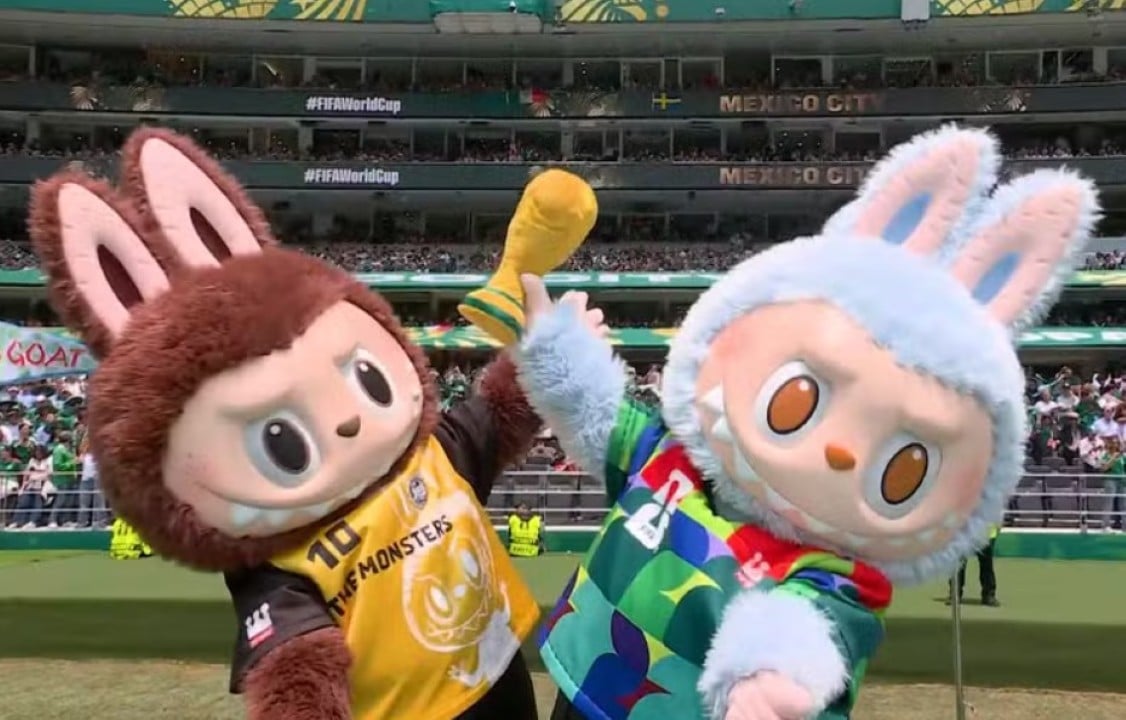
Two giant Labubu dolls, around two meters tall, appeared on the Azteca Stadium lawn during the opening ceremony of the 2026 World Cup, this Thursday (11). The moment caught the immediate attention of narrator Gustavo Villani, from TV Globo, who initially confused them with the tournament’s official mascots.
Villani quickly corrected himself after a message from his son. “Labubu is not the World Cup’s mascot. Labubu is a doll”, he joked live. The appearance took place shortly before J Balvin’s performance and generated quick memes on social media, marking one of the unexpected highlights of the party in Mexico.
Labubu is a character created in 2015 by Hong Kong designer Kasing Lung, inspired by Norse mythology. It is a small furry monster, with pointy ears and serrated teeth, which is part of the The Monsters line from the Chinese company Pop Mart. The brand popularized the doll in plush formats, keychains and collectibles sold in surprise boxes.
In 2025, the toy became a worldwide craze, with queues in stores and sold out sales. At its peak, Pop Mart had to temporarily close a unit in the United Kingdom because of fan unrest. The success boosted the market value of the Chinese company, which reached levels comparable to large global companies.
The presence at the opening of the World Cup was not accidental. It resulted from a commercial partnership announced by FIFA and Pop Mart at the end of March. The collaboration allowed the launch of an exclusive football-themed collection, including dolls wearing uniforms, holding the World Cup trophy and accessories such as keychains and pendants.
Themed versions expand reach
The Copa Labubus, sold for around US$150 (approximately R$770) in the main version, represent the first major official sports project in The Monsters line. The strategy includes pop-ups and activations in the host countries: Mexico, the United States and Canada.
Unlike the competition’s official mascots — the Maple moose (Canada), the Zayu jaguar (Mexico) and the Clutch eagle (United States) — the Labubus act as ambassadors for a lifestyle brand. FIFA is betting on the cultural strength of the doll among young people and collectors to attract audiences beyond traditional fans.
In Brazil, official sales recently started through Candide, with prices between R$299.99 and R$799.99. Previously, the market was dominated by cheaper replicas. The World Cup collection should reinforce the character’s presence here.
What changes in practice
The move turns the opening ceremony into a global marketing showcase for Pop Mart. As the event reaches millions of viewers, the doll gains free exposure and reinforces its transition from niche toy to cultural phenomenon. Analysts see the partnership as a way to sustain the company’s growth beyond the 2025 peak.
The case illustrates a trend: major sporting events are increasingly opening up space for collaborations with entertainment and consumer brands to maintain relevance among new generations.
