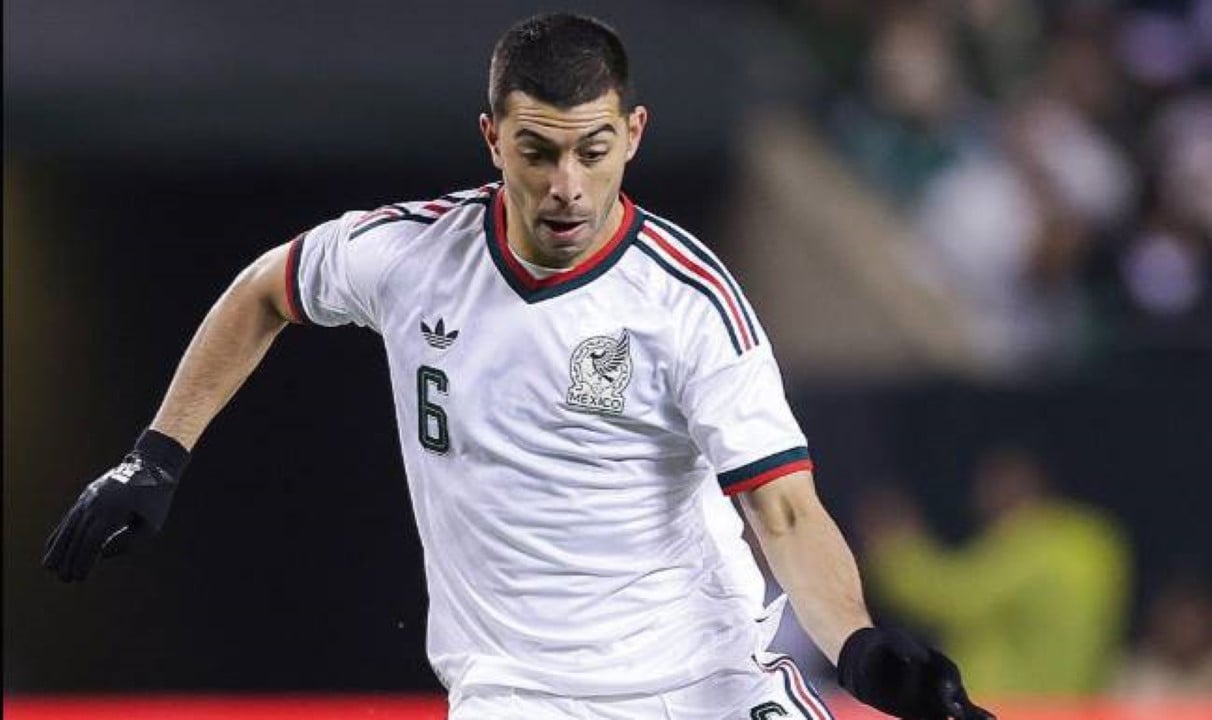
The host country’s journey to the 2026 FIFA World Cup begins with a clear focus on defensive solidity, with midfielder Erik Lira as the centerpiece of the tactical scheme. The inaugural clash against the South African team, scheduled for this Thursday (11), transforms the legendary Azteca Stadium, in the Mexican capital, into the stage of global attention. With the ball rolling from 4pm in the Brasília time zone, expectations fall on the Cruz Azul player’s ability to dictate the pace and protect the defense in an environment of extreme pressure. The choice of the 26-year-old athlete reflects the need to contain the rapid advances of the African opponent in the first minutes of the world tournament.
The weight of the armband and the athlete’s tactical evolution on the national scene
Born in Mexico City on May 8, 2000, Érik Antonio Lira Méndez built a reputation based on physical intensity and positional intelligence. Despite his average height of 1.72m, the midfielder compensates for any disadvantage in the air with an impeccable reading of the opponent’s passing lines and an enviable time on the ball for precise tackles. Currently sporting the Cruz Azul captain’s armband, the player has already surpassed the mark of two and a half dozen call-ups to defend his country’s colors. This background turned him into a true man of confidence for coach Javier Aguirre, who sees the containment shirt as the necessary pillar to balance the team’s offensive and defensive actions.
The scorer’s professional maturation went through different local football schools before reaching its current peak. Starting his journey in the Pumas youth categories and gaining ground during a loan period at Necaxa, it was wearing the Cruz Azul celeste shirt that he really established himself as a Liga MX star. During the 2025/2026 regular season, the midfielder’s numbers impressed sports analysts, leading the statistics for interceptions and minutes on the field. This efficiency in destroying rival plays is exactly what allows creative talents in the national squad, such as Álvaro Fidalgo and Brian Gutiérrez, to have the necessary peace of mind to float in the offensive sector without the constant worry about rebuilding the back line.
Group A scenario and the strategy to neutralize counterattacks
The hosts’ theoretical favoritism in Group A brings with it a huge emotional burden, especially considering that the group also hosts dangerous opponents such as South Korea and the Czech Republic. Performing in front of a passionate crowd of approximately 87 thousand spectators in the Azteca stands requires nerves of steel, remembering that the stadium makes history by hosting its third World Cup opening, repeating the memorable feats of 1970 and 1986. In this context of popular euphoria, the technical committee knows that any error in the transition could be fatal. The presence of the guard dog in the central circle serves precisely as a shield against initial anxiety, ensuring that possession of the ball is managed with coolness and objectivity.
On the other side of the pitch, the South African squad promises not to be mere spectators at the Latin American party. Characterized by lightning-fast offensive transitions and high-speed wingers, the visiting team will try to exploit the spaces left by the Mexican full-backs. It is exactly in this mapping of risks that the selection of Cruz Azul’s main tackler is fully justified. His main mission will be to act as a windshield wiper in front of the line of four defenders, cutting off the supply lines for center forward Lyle Foster and forcing the opponent to look for alternative, less efficient routes to reach the goal defended by Raúl Rangel.
Tactical design and the eleven chosen from each side for the duel
The commanders’ clipboards indicate formations that seek the balance between the aggression necessary to seek the result and the caution required in such a short competition debut. The home team should bet on a more fluid system, while the visitors set up a web in midfield to try to steal the ball and get out at speed. Below, we detail the likely formations that will enter the historic pitch for the first whistle of the tournament:
- The host team should line up in a classic 4-3-3, starting with Raúl Rangel under the sticks.
- The defensive system will feature Jorge Sánchez or Israel Reyes on the right, the defense duo formed by César Montes and Johan Vásquez, in addition to Jesús Gallardo on the left flank.
- The team’s engine will have Erik Lira centrally, flanked by Álvaro Fidalgo, who competes for position with Edson Álvarez, and Roberto Alvarado in creation.
- The offensive trident promises speed with Brian Gutiérrez, Raúl Jiménez centrally and Julián Quiñones closing the attack.
The visiting team also arrives with a defined structure to try to surprise the home team:
- The Africans respond with a 4-2-3-1 structure, with the experienced Ronwen Williams as goalkeeper.
- The back row features Khuliso Mudau, Mothobi Mvala, with Okon as shadow, Nkosinathi Sibisi and Aubrey Modiba.
- The steering duo will be made up of Teboho Mokoena and Sphephelo Sithole, responsible for the first containment barrier.
- The creation and wingers sector has Themba Zwane, Elias Mokwana and Oswin Appollis alternating sides, all supporting striker Lyle Foster.
Historic milestone for Brazilian refereeing in the FIFA tournament
In addition to the stars who will parade with the ball at their feet, the inaugural clash carries an unprecedented weight for the national sport outside the four lines. Referee from Goiás Wilton Pereira Sampaio was chosen by football’s highest governing body to lead the whistle in this match, marking the first time in history that a referee born in Brazil has the honor of commanding the opening match of a World Cup. Assisted by compatriots Bruno Pires and Bruno Boschilia at the flags, the professional crowns a trajectory that has already included outstanding performances at the World Cup in Qatar in 2022. The choice of the South American trio demonstrates the refereeing committee’s confidence in the capacity for disciplinary control in games of extremely high emotional voltage and pressure from the stands.
Multiple platforms guarantee broadcasting for fans in Brazil
For football fans who will follow Brazil’s kickoff, the screen options will be vast and democratic, reflecting the new dynamics of sports media consumption. On open television, the public will be able to choose between the tradition of TV Globo and the coverage of SBT, both showing the confrontation live throughout the country. Those who prefer subscription channels will have SporTV and NSports as alternatives with in-depth analysis and extended pre-game. In the digital environment, the streaming revolution is present with free transmission through the ge portal, integrated with Globoplay, and CazéTV coverage on YouTube, ensuring that no detail of the Mexican debut goes unnoticed by fans of the Breton sport.
