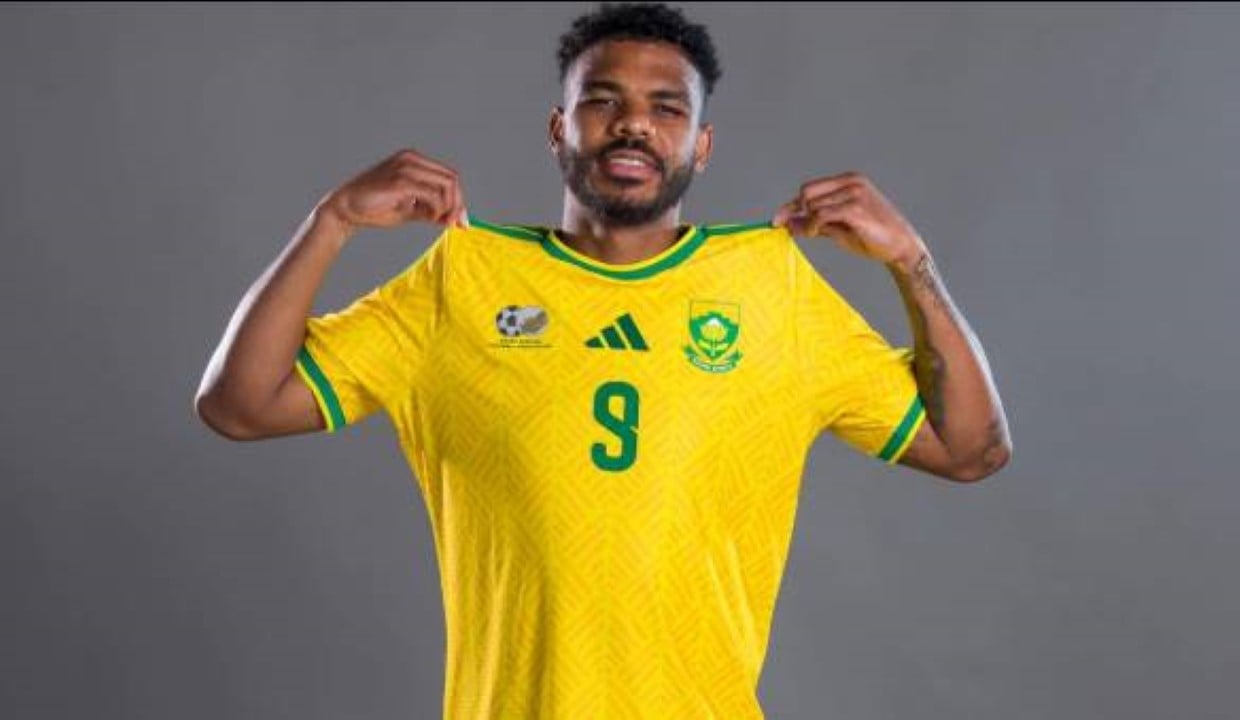
The kickoff of the 2026 FIFA World Cup pits the teams of Mexico and South Africa face to face this Thursday, June 11, at 4pm in the Brasília time zone. The legendary Azteca Stadium, located in Mexico City, hosts the opening match of the tournament, marking an unprecedented feat in the history of global football by hosting its third opening World Cup, after the 1970 and 1986 editions. For the visitors, the great hope of frustrating the hosts’ party goes by the name of Lyle Foster, a 25-year-old player who plays in English football and is responsible for being the main offensive piece in the scheme set up by coach Hugo Broos.
This year’s competition inaugurates an expanded format with 48 participating teams, divided into a longer and more complex group stage. Within Group A, which also houses teams from South Korea and the Czech Republic, scoring in the first round becomes essential for qualification aspirations, as the margin for error has decreased considerably. The African team knows that it will face a highly hostile environment, with the expectation of more than 87 thousand Mexican fans pushing the home team from the first minutes of the ball rolling into the stands of the concrete giant in the Mexican capital.
The trajectory and tactical importance of Bafana Bafana’s main offensive player
Born in the city of Carletonville on September 3, 2000, Lyle Brent Foster built a solid career that made him the most experienced name in the current South African squad on European soil. At 1.85m tall, the athlete combines physical strength with a remarkable capacity for acceleration, characteristics that make him lethal in quick transition plays. His presence in the opponent’s area guarantees not only precise finishing with his feet, but also a strong resource in the air, an element that Belgian coach Hugo Broos intends to explore extensively during the competition to break through defensive blocks.
The center forward’s path to Burnley, the club he defends in the demanding English Premier League, involved progressive maturation on the old continent. Revealed by the youth teams of the traditional Orlando Pirates, the player needed to prove his value in smaller leagues, gaining prominence with the Westerlo shirt, in Belgium, before landing in England in 2023. During the 2025/2026 season, the striker demonstrated total adaptation to the intense pace of British football, accumulating goals and assists that justify his status as an absolute starter in the national team and place him as the main threat to opposing defenders.
Role reversal brings back memories of the opening clash of the 2010 tournament
This Thursday’s clash carries deep historical symbolism for the two nations involved, repeating exactly the same match that opened the 2010 World Cup. On that occasion, sixteen years ago, the South Africans played at home at the Soccer City stadium, in Johannesburg, and drew 1-1 with the Mexicans, in a duel immortalized by Siphiwe Tshabalala’s great goal that toured the planet. Now, the scenario is completely reversed, placing the African team in the difficult position of an indigestible visitor against a host country hungry for a victory in their debut to energize their fans.
The strategy designed by the South African technical committee is based on strong defensive discipline combined with the speed of its front men. Knowing that Mexico will take the initiative in the game driven by their passionate fans, the visitors plan to absorb the initial pressure and use long throws to get behind the opponent’s full-backs. This reactive game model depends directly on the ball retention capacity and the pivot performed by the number 9, who will need to physically fight against the Mexican defenders to give breathing space to his midfield sector and allow the midfielders to approach.
Tactical structures and names chosen to start the duel in the Mexican capital
The coaches defined their strategies based on classic formations, seeking balance between the creation and marking sectors. The home team bets on an offensive 4-3-3 system, prioritizing ball possession and triangulations along the sides of the field, while the visitors organize themselves in a more cautious 4-2-3-1, focused on closing central spaces and accelerating down the flanks as soon as they regain possession. The definition of the starting eleven reflects exactly these tactical positions adopted for the clash that opens the tournament calendar.
- Mexico team: Raúl Rangel assumes the goal; the defensive line has Jorge Sánchez or Israel Reyes on the right, César Montes and Johan Vásquez in the center of defense, and Jesús Gallardo on the left; the midfield has Erik Lira, Álvaro Fidalgo or Edson Álvarez, and Roberto Alvarado; The attack is made up of Brian Gutiérrez, Raúl Jiménez and Julián Quiñones.
- South Africa team: Ronwen Williams is the goalkeeper; the defense features Khuliso Mudau, Mothobi Mvala or Okon, Nkosinathi Sibisi and Aubrey Modiba; protection in the middle is with Teboho Mokoena and Sphephelo Sithole; the offensive creation line has Themba Zwane, Elias Mokwana or Oswin Appollis, and another open midfielder, providing center forward Lyle Foster.
Brazilian professionals take charge of arbitration at an unprecedented time
The opening whistle at the Azteca Stadium will have a South American accent, marking a historic moment for Brazilian refereeing on the global stage. Wilton Pereira Sampaio was the professional selected by the FIFA commission to conduct the match, becoming the first Brazilian referee to lead an opening game in the history of every edition of the World Cup. The choice reflects the judge’s accumulated experience in high-level international competitions in recent years, including qualifiers and continental tournaments.
To assist him in marking the field and applying the rules, the refereeing team will be completed by compatriot assistants Bruno Pires and Bruno Boschilia. The trio bears the immense responsibility of maintaining discipline in a game that promises high emotional tension, considering the natural pressure of a host country debut and the physical intensity characteristic of the two teams involved in the dispute for the first points in Group A.
Wide coverage guarantees several alternatives for the public to follow the match
Brazilian fans will have a wide range of options to watch the inaugural match of the 2026 World Cup, reflecting the new dynamics of sports media consumption. The broadcasting market in the country has dispersed exhibition rights, ensuring that the event reaches the public through multiple platforms, from traditional open television to modern free digital channels aimed at young audiences.
On open television, TV Globo and SBT share the attention, taking live images throughout the country with their respective narration teams. For those who prefer pay television or streaming services, SporTV, NSports and the ge platform offer dedicated coverage with in-depth analysis before and after the final whistle. The digital environment also features CazéTV broadcasting directly on YouTube, providing an interactive language for the millions of viewers connected to the internet.
