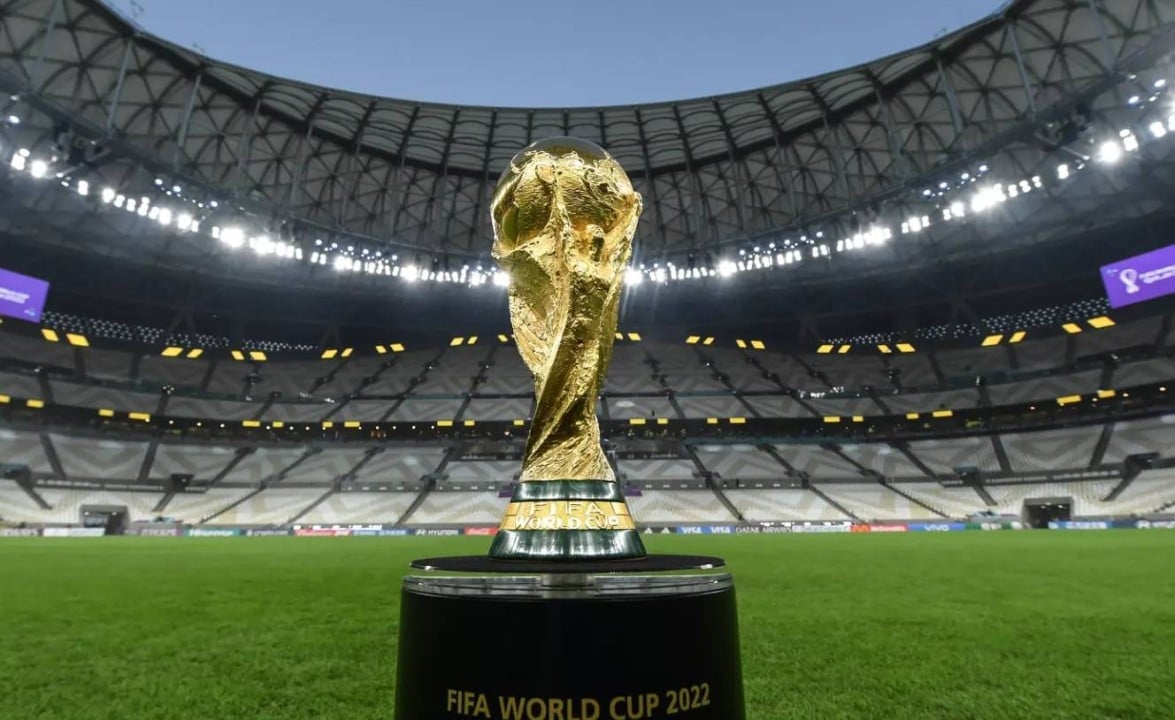
The FIFA tournament scheduled for 2026 will rewrite the history of the sport by hosting, for the first time, 48 nations in a single edition. Divided between the United States, Mexico and Canada, the competition will use 16 host cities to accommodate the new structure of 12 teams with four members each. There will be 104 clashes spread over almost forty days, starting on June 11th and ending on July 19th. The main objective of expanding the number of participants is to further globalize the event, ensuring that historically underrepresented continents gain more space, while the three host countries already have their places secured. The kickoff is scheduled for the legendary Azteca Stadium, in the Mexican capital, and the big cup decision will take place at the MetLife Stadium, located in the New York metropolitan region. All planning took into account the complex air network in North America to facilitate the movement of delegations and fans.
The race for a place in the tournament has been moving fields around the planet since last year. In South American disputes, traditional powers such as Brazil and Argentina, in addition to Ecuador, seek to consolidate their positions at the top of the table, while on the Asian continent, teams such as Japan and Iran show strength in the decisive phases. The current knockout cycle was designed to test teams’ limits, ensuring that only the most prepared squads get their passport to North America.

Organizing the event requires an unprecedented operation to integrate three vast territories, requiring modernization of arenas and optimized flight routes.
- The Mexican territory will be the stage for the inaugural match and decisive clashes in historic stadiums.
- The North Americans take the largest share of the calendar, providing 11 cutting-edge arenas, including the stage for the final.
- The Canadian side enters the circuit with two modern sports venues, ensuring representation of the extreme north of the continent.
How the unprecedented World Cup switch will work
The main change in the regulations ends the model used since the French edition in 1998, implementing an initial phase with 12 groups of four teams. To advance to the knockout stage, which now begins in the round of 32 stage with 32 teams, it is necessary to finish in the top two of the group or be among the eight best third-placed teams. The swelling in the number of participants makes the tournament jump to 104 matches, far surpassing the 64 games seen in Qatar. Football’s highest governing body even considered groups of three teams, but retreated to avoid the risk of combined results in the last round, preserving the simultaneous excitement of the final games.
With this configuration, any country that reaches the title or third place match will need to enter the field eight times, one more than in the old format. The calendar foresees the opening on June 11th in Mexico, culminating in the final on July 19th in the United States, with the semifinals allocated in strategic hubs such as Miami and Dallas. To mitigate physical exhaustion, the organization divided the map into east, central and west regions, preventing delegations from crossing the continent repeatedly during the first phase.
The scoring system remains unchanged, guaranteeing three points for the winner and one in case of equal scores. The tiebreaker criteria will continue to prioritize goal difference and the number of balls in the net, followed by direct confrontation between the tied teams. In addition to the four lines, the international federation promises to tighten the siege with advanced monitoring systems to prevent any attempt at sporting manipulation or use of banned substances.
The increase in the number of vacancies responds to a long-standing appeal from peripheral federations that rarely managed to break through the qualifying bubble. With more space, the probability of historic upsets and unprecedented clashes in the group stage grows exponentially, renewing global interest in the sport.
Division of continental quotas for the tournament
The new allocation of places was calculated based on the sporting weight and size of each continental federation. Europe (UEFA) continues with the biggest share, sending 16 representatives, while South America (CONMEBOL) is now entitled to six direct tickets and one for the playoff. The African continent (CAF) jumped to nine guaranteed places, Asia (AFC) had eight, and North and Central America (CONCACAF) closed the account with six places, a number that already encompasses the three host countries.
The design of this expansion was endorsed by sports directors in 2017, drastically changing the dynamics of local tryouts. On the European continent, for example, 54 nations were distributed into 12 brackets, where only the champions of each group get their passport automatically stamped, forcing the runners-up to face a tense playoff scheduled for March of the year of the World Cup.
The African scenario was also restructured, creating nine brackets where the first placed team packs their bags straight to North America. Asian football adopted a funnel system, culminating in a third phase with three groups of six teams, rewarding the best two in each group with early classification.
For the first time in history, Oceania has a direct place guaranteed, historically dominated by New Zealand, in addition to maintaining the chance to send a second country via repechage. The world repechage tournament, scheduled for the beginning of 2026, will bring together six nations in a mini-championship hosted by the host countries, defining the last two classified for the main competition.
- Europe (UEFA): 16 teams classified via groups and internal knockout stages.
- South America (CONMEBOL): 6 direct passports and 1 extra chance in the repechage.
- Asia (AFC): 8 automatic qualifications and 1 place in the world repechage tournament.
- Africa (CAF): 9 group leaders guaranteed and 1 team in the final playoff.
- North and Central America (CONCACAF): 3 confirmed venues, 3 disputed places and 2 repechages.
- Oceania (OFC): 1 permanent position and 1 extra opportunity.
The tough path of the South American qualifiers
South America’s straight points format was maintained, requiring the ten teams to face each other in turns over 18 exhausting rounds. With the increase in quotas, the six best placed teams guarantee an immediate presence in the World Cup, leaving seventh place for the repechage. Strong teams such as the Brazilian team and the current world champion, Argentina, usually dictate the pace of the table, although Brazil has faced recent fluctuations under the command of Dorival Júnior, needing crucial victories to eliminate any risk of a mathematical upset and seal their trip to the tournament.
Following the favorites, nations like Uruguay, Colombia and Ecuador demonstrate tactical consistency to secure their places without any scares. The intermediate squad, made up of teams like Paraguay and Bolivia, is fighting a particular battle for sixth place or the right to compete in the playoff, taking advantage of local factors, such as the feared altitude of La Paz, to score vital points against technically superior opponents.
The Conmebol calendar is divided according to the international windows released by FIFA, extending until the end of 2025. The regional entity has also reinforced surveillance over team behavior, applying fines and severe punishments to federations that do not comply with discipline and security regulations in stadiums.
With 54 points at stake for each participant throughout the entire cycle, the South American marathon continues to be widely considered the most even and demanding qualifying contest in world football.
The super arenas that will host the world’s stars
The organizing committee hand-selected 16 state-of-the-art sports complexes, concentrating 11 of them on US territory, three in Mexico and two in Canada. The legendary Azteca Stadium, with a capacity for 87,000 fans, will make history by hosting the opening, while the colossal MetLife Stadium, designed for 82,000 people, will crown the champion. The Canadian cities of Vancouver and Toronto joined the route with BC Place and BMO Field, respectively.
To meet the international federation’s strict specifications, several arenas are undergoing structural reforms and capacity expansion,
