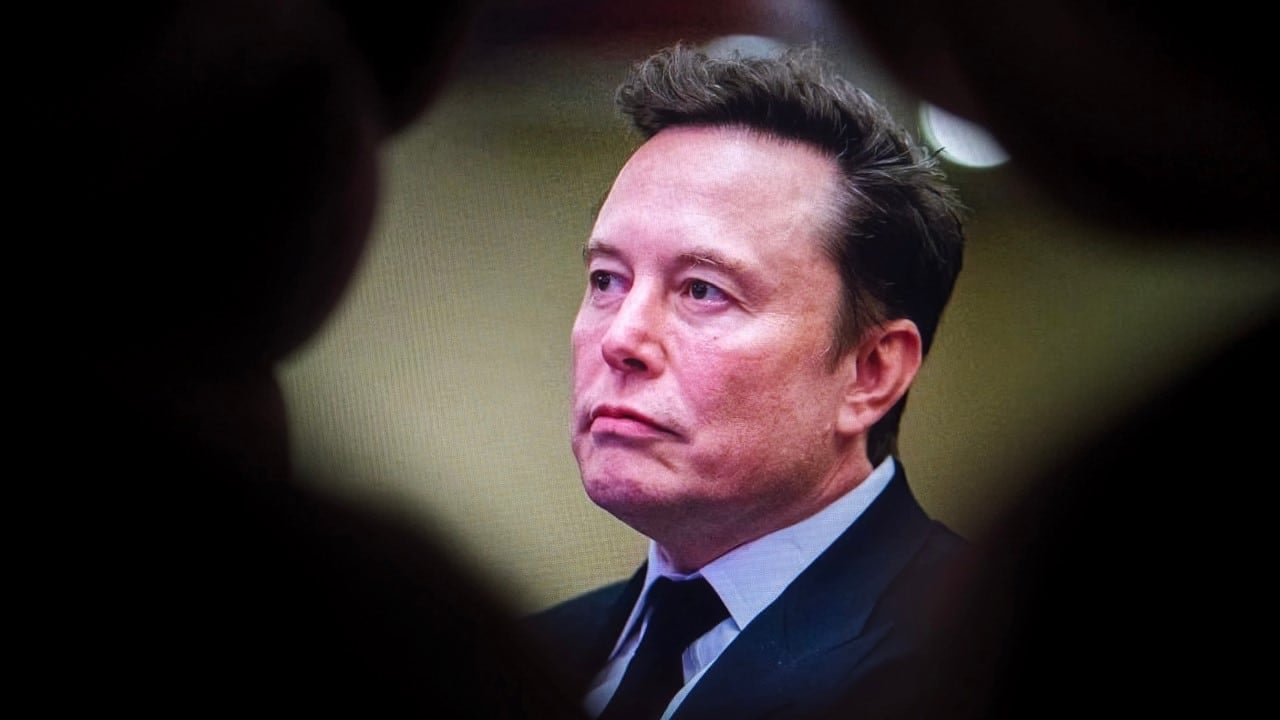
The space company SpaceX, led by Elon Musk, obtained an investment of 75 billion dollars (equivalent to 350 billion reais) from several financial institutions. This amount was raised on the eve of its listing on the stock exchange, scheduled for this Friday, in a move that promises to be the largest initial public offering (IPO) in history in terms of value.
According to documents filed with the United States Securities and Exchange Commission (SEC), the organization, which operates in space exploration and artificial intelligence, detailed the sale of its shares, priced at US$135 per unit, totaling US$75 billion.
This price is in line with SpaceX’s own projections, released the previous week, and boosts the company’s expected initial value to approximately 1.8 trillion dollars in the market.
Given this impressive assessment, CEO Elon Musk, already recognized as the richest individual on the planet, is getting closer to achieving the unprecedented status of the first global trillionaire.
In the initial process of going public, SpaceX will make only 5% of its total outstanding shares available for sale.
After trading begins, the price of shares may fluctuate, moving up or down. This variation will be directly linked to the number of shares offered in the IPO, the level of investor interest and the valuation that the market attributes to the company, functioning like an auction on an open market platform.
If SpaceX’s securities are traded at a value equal to or greater than the initially defined $135, the company will quickly consolidate itself among the most prestigious global public companies.
The expectation is that there will be great demand for a share of SpaceX, both from large investment funds and individual investors, popularly known as “retail investors”.
Financial market experts are already projecting a share price higher than the $135 estimated by SpaceX. Global brokerage Oppenheimer, for example, released an estimate on Thursday that the company’s shares could reach $190 per share.
Among those interested in investing resources in SpaceX is Peta Cooper, who shows great enthusiasm about the opportunity.
Advertising writer Peta Cooper, 43 years old, residing in Cornwall, United Kingdom, plans to allocate around 750 pounds sterling to acquire SpaceX shares, integrating them into her current portfolio, mostly made up of technology stocks and cryptocurrencies.
“It’s a truly exciting time. I have a great passion for the space industry. SpaceX, to date, has an impeccable track record in launching and developing innovations,” said Cooper, who spent his childhood in California.
Despite anticipating a possible devaluation of the shares at some point, she plans to “keep them in the portfolio and allow them to grow” with a long-term vision.
Many analysts see the IPO as a big bet on the artificial intelligence sector, and some are skeptical about the immediate potential.
“I consider it a risky investment,” said Sinead O’Sullivan, an economist with previous experience at NASA.
“There is a huge concentration of factors embedded in a single company and a single share value. Do I believe in Elon Musk’s ability to implement technological innovations? Yes. However, do I believe that the current share price faithfully reflects the future value that it has the potential to generate? Probably not…” added the expert.
SpaceX’s chief operating officer, Gwynne Shotwell, commented to CNBC on the initial uncertainty surrounding the company’s IPO, but stressed that “it seems like the right time right now.”
“In recent years, we have seen considerable pressure from ordinary American citizens and our circles of friends who have expressed a desire to acquire our shares,” Shotwell reported to the US economic news broadcaster.
The SpaceX executive emphasized that the company maintains long-term ambitions and that its management does not intend to focus on quarterly results. This positioning contrasts with the usual pressure from the financial market for immediate returns, reinforcing the company’s futuristic vision to the detriment of short-term goals.
“We’re not saying we won’t honor our investors, but what those interested in investing in SpaceX need to understand… is that the nature of our activities is extremely forward-looking,” she added.
Inclusion in the Nasdaq index, widely recognized as home to technology companies, is interpreted by some as a bellwether for other privately held companies with valuations approaching $1 trillion, such as Anthropic and OpenAI.
Recently, both Anthropic and OpenAI signaled that they are in the process of preparing for their own IPOs, with projections that this will occur later this year.
Despite the publicity generated by the listing, control over SpaceX will remain largely concentrated in the hands of Elon Musk.
He will hold approximately 40% of SpaceX’s total capital, distributed across various classes of shares that grant him privileged voting rights, resulting in effective control of approximately 85% of the organization.
This high concentration of power in Musk’s hands means that SpaceX will not be forced to include an “independent” member on its board of directors, that is, someone without direct personal or financial interests in the company.
An analysis by Harvard Law School points out that this control structure represents a considerable risk for investors. It allows SpaceX directors to make business decisions that could include acquiring other companies owned by Musk, as well as setting their own compensation, raising concerns about potential conflicts of interest.
SpaceX has already acquired xAI, a Musk startup that, in turn, acquired the social media platform X in 2025. Musk had purchased the platform, formerly known as Twitter, in 2022.
When asked about the company’s governance architecture, operations director Shotwell told CNBC: “Honestly, there is no other person capable of managing this company other than Elon. Our desire is for Elon to maintain this type of control.”
In recent years, Musk has divided public opinion, using his power and wealth in ways often considered controversial.
He sparked controversy by financially supporting Donald Trump’s second presidential campaign, before his relationship with the former president cooled. He also secured billion-dollar government contracts in the United States and intervened in the internal and political issues of other nations.
Musk’s publications and statements on topics related to the United Kingdom, Germany and other European nations have caused frequent irritation among political leaders, and on some occasions, such attitudes have appeared to have negatively impacted their endeavors.
Tom Mueller, SpaceX’s first formal employee and currently founder of Impulse Space, told BBC journalist Michelle Fleury that he finds the company’s evolution over time “unbelievable.”
Mueller recalled the initial challenges, mentioning the moment SpaceX’s first rocket engine activated, its subsequent explosion and the crash of another rocket. He celebrated the “finally” successful launch into orbit in 2008.
“It was a truly incredible journey,” he concluded.
Despite leaving SpaceX in 2020, Mueller maintains a significant financial interest in the organization.
