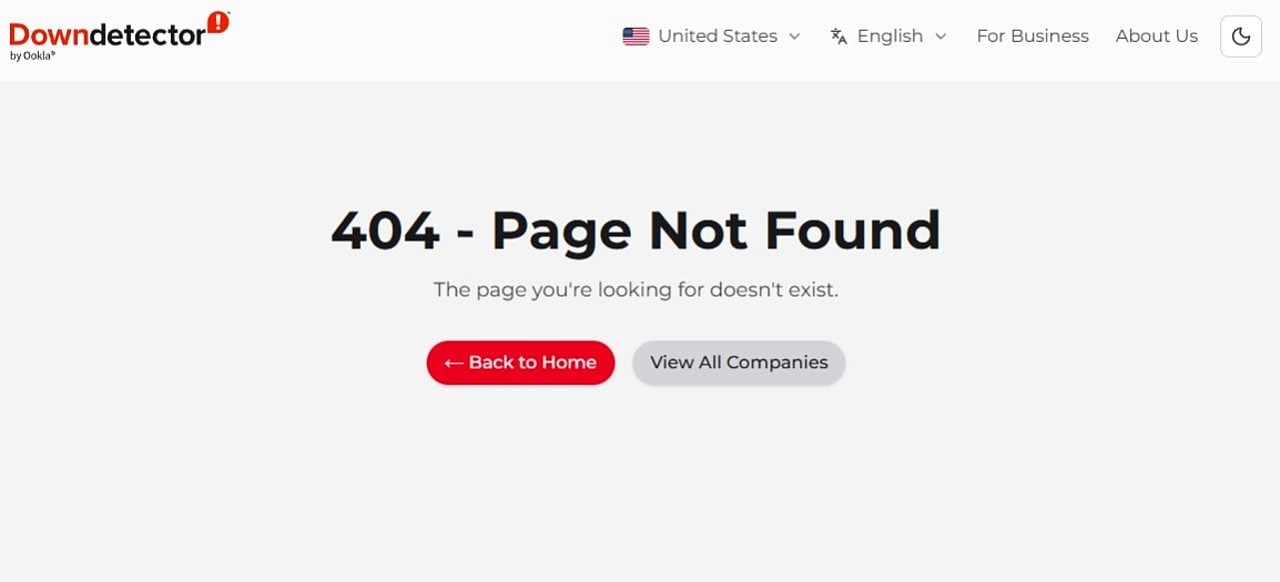
The main digital outage monitoring platform, Downdetector, faces a widespread failure in its own system this Wednesday, June 12, 2026. Users trying to access the site are faced with the notorious “Error 404: Page not found” in all its internal sections, both in the global (.com) and Brazilian (.com.br) versions of the service. The situation, recorded at around 10:54 am (Brasília official time), leaves millions of people without a reliable tool to check the status of other applications and online platforms.
The interruption of Downdetector, which acts as a barometer of internet failures, creates an irony in the digital landscape. The website, designed to inform about the inoperability of other services, itself became inoperative. This occurrence hinders users’ ability to confirm the extent of possible problems on other platforms, including the one that is also experiencing difficulties at this time.

Connectivity problems on Instagram add to digital glitches
Simultaneously with the Downdetector outage, the social network Instagram, which belongs to Meta, also registered significant instability. Several reports from users on other platforms and online forums indicate that the application has loading errors, problems accessing the feed and posting content. This combination of interruptions directly affects communication and access to information for millions of people around the world.
The recurrence of instabilities in large digital services raises questions about the infrastructure behind these platforms. The experience of users, who increasingly depend on these tools for work, leisure and communication, is directly impacted when such failures occur. The absence of a reliable channel to verify the extent of these problems compounds frustration.
What does Error 404 mean and what is the impact on users
Error 404, or “Not Found”, is an HTTP status code message that indicates that the client was able to communicate with the server, but the server was unable to find what was requested. In practical terms, it means that the page the user tried to access does not exist in the indicated location or has been removed. In the case of Downdetector, the widespread display of this error on all of its internal pages suggests a fundamental problem with the site’s structure or database.
This flaw prevents users from checking whether their own difficulties with other services are isolated or part of a larger outage. The Downdetector platform is crucial for companies and individual users who seek real-time information on the status of services such as telephone operators, banks, online games and social networks. Without it, the only way to confirm outages is through scattered reports in other media, which can be slow and inaccurate.
Silence from companies amid widespread outages
To date, there has been no official statement from Downdetector or Meta, Instagram’s parent company, about the outages. The lack of clear and immediate information from companies is a constant in times of digital crisis, which generates even more speculation and anxiety among users. The online community, in turn, turns to other social networks and communication vehicles to seek answers and share their experiences.
This lack of official manifestation makes it difficult to understand the cause and extent of the problems. For many, transparent communication in times of instability is as important as the quick resolution of the failure itself. User trust is a valuable asset that can be undermined by perceived misinformation or slow emergency response.
Issues Retrospective: Downdetector Has Faced Its Own Failures
While it’s the main source for tracking issues in other services, Downdetector itself is no stranger to outages. On several occasions over the years, the platform has faced its own technical glitches and instabilities, leaving its users without a tool to check for other issues. These occurrences, although rare, highlight the complexity of maintaining robust online systems and the intrinsic vulnerability of internet infrastructure.
Historically, Downdetector, which has been operating since 2012, has had times when it was unable to load status graphs or received error reports on its own website. A notable incident occurred in mid-2021, when the website was inaccessible for a few hours, precisely during a period of instability on several large platforms. The failure of the internet “watchman” in its own system highlights the interconnectivity and fragility of the digital environment as a whole. When the tool that measures disruptions fails, uncertainty and confusion are amplified as the main point of reference disappears.
History of major disruptions to Instagram and Meta ecosystem
Instagram, part of the vast Meta (formerly Facebook) empire, has a history of outages affecting millions of users globally. Although the company invests heavily in infrastructure, large-scale failures are not uncommon. One of the most notorious occurred on October 4, 2021, when Facebook, Instagram, WhatsApp and Messenger were down for approximately six hours, causing an unprecedented impact on global communication. This event was attributed to a failure in the configuration of routers that coordinate network traffic between the company’s data centers.
- March 2019:An outage that lasted around 24 hours affected Facebook and Instagram in several regions, making it one of the longest in the company’s history.
- April 2020:During the height of the COVID-19 pandemic, server issues caused sporadic outages, impacting communication at a critical time.
- July 2022:Users reported widespread issues on Instagram, including difficulties loading feeds and accessing direct messages, which were resolved after a few hours.
- October 2023:Once again, Instagram and Facebook faced instabilities that prevented millions of people from accessing their profiles and services, coinciding with problems on other platforms.
These repeated incidents underscore the complexity of maintaining such a vast and interconnected infrastructure. Even with billions of dollars invested in redundancy and engineering, the global scale of these platforms means that even small misconfigurations or hardware failures can have massive consequences. Reliance on a single ecosystem, such as Meta, for multiple services increases the user’s vulnerability to a single source of failure.
Impact on companies and users: dependence on digital connectivity
The simultaneous outage of essential platforms like Downdetector and Instagram has a multifaceted impact. For companies that use Instagram as their main marketing, sales and customer service channel, inactivity represents financial losses and reputational damage. Small businesses, in particular, that rely heavily on social media to reach their consumers, are most vulnerable to these outages.
For the average user, the failure means interruption of communication with friends and family, access to real-time information and the impossibility of carrying out various daily tasks. Digital connectivity has become so intrinsic to modern life that its absence, even if temporary, generates frustration and impedes the normal flow of activities. The combination of a crucial social media app down and the tool that was supposed to report that outage also down creates a vacuum of information and functionality.
Challenges in maintaining global online services
The current issues at Downdetector and Instagram serve as a vivid reminder of the challenges inherent in maintaining online services on a global scale. Complex architectures, the need for constant updates, protection against cyber attacks and managing traffic spikes are just some of the variables that engineering teams need to manage 24 hours a day. Failures can arise from a variety of sources, from human error in network configurations to large-scale hardware or software problems.
The expectation of “five nines” (99.999%) availability for essential services is an ambitious goal, but often unattainable in practice, especially for platforms serving billions of users. Rapid response and effective communication during these disruptions are crucial to mitigating the impact and maintaining public trust. The lesson is the continued need for robustness, redundancy and well-designed contingency plans to ensure that the digital world can function without major disruptions. The absence of a clear and functional reporting mechanism during a digital blackout demonstrates a significant gap in the resilience of the internet ecosystem.
