

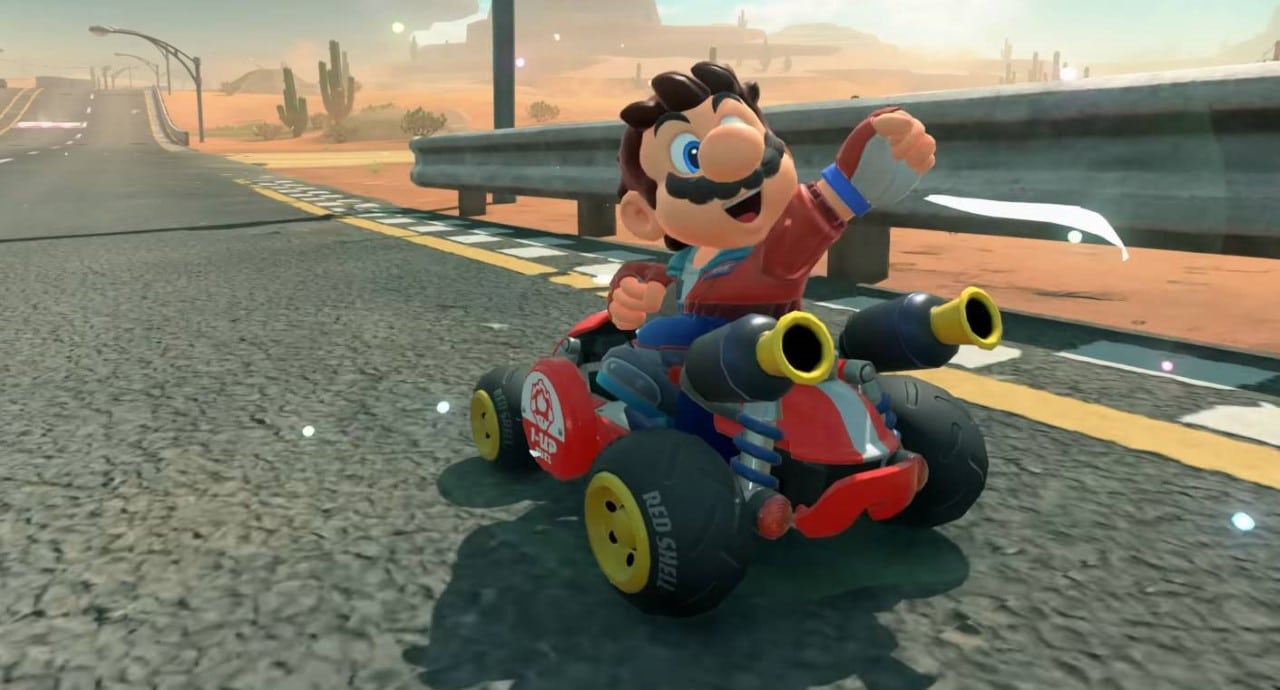
Retro racing enthusiasts have gained an unprecedented opportunity to revisit the tracks of the classic Mario Kart 64, originally released in 1996, through recent immersive technology. An unofficial modification, made available to the digital community in early August 2026, transports Nintendo’s iconic title directly to virtual reality glasses. This adaptation delivers a level of visual depth never before experienced in the 64-bit franchise, placing the user at the center of the action. However, the innovation comes with a stern warning for people with sensitive stomachs, as the sudden camera transition drastically increases the perception of movement and can trigger strong episodes of motion sickness during matches.
New visual perspective completely changes the dynamics of classic races
The project responsible for this radical transformation was led by the independent developer known as RaYRoD TV, a name already familiar in the community for adapting old works, such as Banjo-Kazooie and Star Fox 64, to the immersive format. To build this experience, the programmer used as a basis a specific conversion of the racing game for computers, called SpaghettiKart. The discovery of this functionality gained traction on social media after the profile BeardoBenjo shared the first tests on platform
Learn more: Free modification turns Mario Kart 64 into virtual reality game with risk of nausea
Sensory conflict during the journey generates warnings about intense nausea
The video record published by BeardoBenjo shows a complete lap of the Koopa Troopa Beach circuit, showing how the system tracks the user’s head movements in real time. The section that draws the most attention occurs during the passage through the cave shortcut, when the extreme speed generates a phenomenon known as sensory conflict, where the eyes perceive a rapid displacement while the physical body remains still, resulting in immediate nausea. Although the graphics made up of simple polygons take on a nostalgic and fascinating look in the three-dimensional environment, the physical impact of speed is undeniable. Several testers reported that the sensation goes beyond simply driving a virtual vehicle, resembling an uncontrolled free fall down the track’s sand ramps.
Path to download files requires copyright care
Players who want to test their physical limits in this immersive version can find the necessary files for free in the GitHub repository. The installation process, however, requires the user to have a legal digital copy of the original Nintendo 64 title, extracted directly from a physical cartridge, to avoid infractions related to piracy. In addition to ensuring compatibility with leading computer-oriented virtual reality glasses, the mod pack includes a dedicated menu for fine-tuning the visual experience.
On the same topic: Independent project turns Pokémon Red and Blue into a native PC game with 3D graphics
- Stereoscopic depth configuration, responsible for defining the apparent distance between objects in the scene.
- Camera height adjustment, simulating the exact height of the chosen character inside the cockpit.
- Customization of the graphical interface, offering the freedom to reposition the speedometer and circuit map on the screen.
The Japanese manufacturer’s history with immersive technologies accumulates setbacks
The independent community’s effort sheds light on the distant relationship that the franchise’s creator herself maintains with the virtual reality market. Historically, the Japanese giant has made few investments in this sector, the most remembered being the launch of the Virtual Boy in the nineties, a piece of hardware that only displayed graphics in shades of red and black. This portable console became one of the industry’s biggest commercial failures, receiving harsh criticism for causing severe headaches and extreme eye strain within just a few minutes of use. More recently, the company tried a playful approach with the Nintendo Labo VR kit, focused on assembling cardboard accessories, but the product functioned only as a children’s creative tool, without representing a definitive entry into the high-tech segment.
Given this absence of robust official projects, the work of independent programmers gains considerable weight in the preservation and modernization of the classic collection. The three-dimensional adaptation of kart racing meets an old demand from enthusiasts who invest in modern equipment and seek to relive childhood memories from a completely new perspective. This movement reinforces the public’s ability to prolong the relevance of historical works, providing tools that copyright holders choose not to develop. For those who plan to take on the virtual tracks and defy gravity, the developers’ final recommendation continues to be to avoid heavy meals before putting on the glasses.